










Thiel Purchase Heats Up Elite Buenos Aires
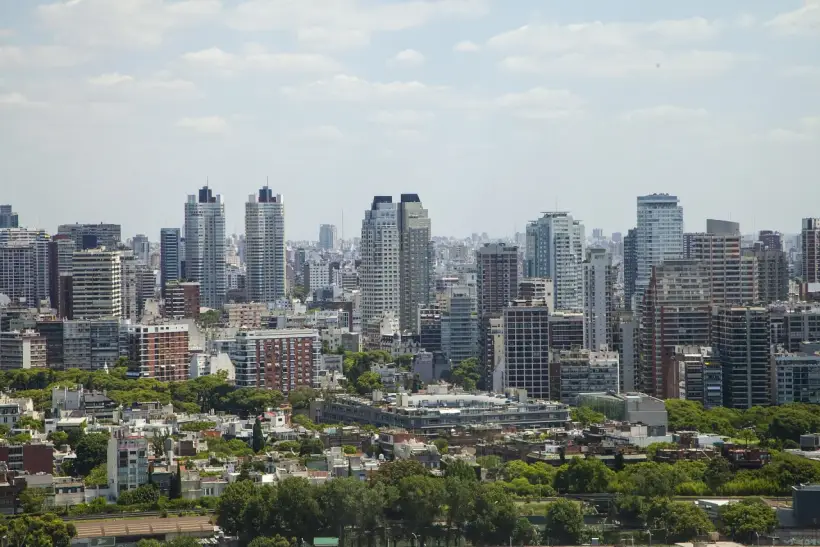
Peter Thiel’s reported $12 million mansion purchase in one of Buenos Aires’ most exclusive districts is more than a billionaire’s celebrity real estate deal. It shows that Argentina’s luxury property market is again drawing global capital: dollar prices remain below previous peaks, liquidity is recovering, and Javier Milei’s reforms have created, for some investors, the sense of a new window of opportunity.
A $12 Million Mansion Sends a Market Signal
Peter Thiel, co-founder of PayPal, chairman of Palantir and one of Silicon Valley’s most influential investors, has reportedly bought a historic mansion in Buenos Aires for about $12 million. The property is located on Dardo Rocha Street in Barrio Parque, an enclave inside Palermo Chico that is considered one of the most expensive and private residential areas in the Argentine capital.
The house is estimated at about 17,200 square feet, or roughly 1,600 square meters. Reports about the transaction link the mansion to Argentine architect Alejandro Bustillo, one of the country’s major figures in classical and monumental architecture. For Buenos Aires, this is not simply a large home but an asset in a rare category: historic architecture, a large plot, a prestigious address and almost unavailable supply.
The transaction immediately became a benchmark for the luxury market. In a city where even expensive apartments and houses often sell only after long negotiations, a deal at around $12 million shows that unique assets can command a price ceiling far above the average market. This is especially important for Barrio Parque, where liquidity is limited not by demand but by scarcity of supply.
Barrio Parque Remains Argentina’s Address of Power
Barrio Parque is not an ordinary Buenos Aires neighborhood. It occupies a small area near Palermo parks, Avenida del Libertador, embassies, diplomatic residences, museums and private mansions. It has limited high-rise construction, many historic homes, greenery and a private residential atmosphere that differs sharply from denser parts of the city.
Such a district functions as a status market. Buyers pay not only for square meters but also for the address, privacy, surroundings, architectural rarity and access to the social geography of Argentina’s elite. In that sense, Barrio Parque is closer to premium enclaves in Madrid, Paris, London or Miami than to the broader Buenos Aires market.
That is why Thiel’s purchase is viewed as more than a house acquisition. For the local market, it became an external confirmation of the district’s value. When a global investor of this profile buys in a specific location, it creates an anchor-transaction effect: sellers revise expectations, brokers gain a new argument, and other foreign buyers look more closely at the area.
Luxury Property Follows Different Rules
The average Buenos Aires housing market and the mansion market in Barrio Parque are barely comparable. According to Zonaprop, the average apartment price in Buenos Aires City reached about $2,462 per square meter in May 2026. It rose 0.1% for the month, 0.5% since the start of the year and 1.9% over 12 months. The current level remains about 12% below the historical peak of the series.
In the luxury market, the logic is different. Unique mansions are not valued only through a standard price per square meter. Plot size, façade, architectural history, privacy, security, views, interior condition, renovation potential, garages, gardens, ceiling height and the social symbolism of the address all matter. A $12 million price may therefore look detached from the CABA average but make sense within the ultra-narrow top segment.
This is a trophy-asset market. A trophy asset is bought not only for yield, but for rarity, status, capital preservation and personal use. In such transactions, buyers often compare not local prices but global alternatives: a house in Buenos Aires, a villa in Uruguay, an apartment in Miami, a residence in Lisbon or an estate in New Zealand.
The Purchase Coincides With Interest in Milei’s Reforms
Thiel’s deal came amid rising international investor attention toward Argentina under President Javier Milei. The libertarian program of deregulation, state reduction, lower inflation and restoration of market signals has become an important symbol for parts of the technology and financial elite seeking lower-regulation jurisdictions and assets with repricing potential.
Thiel has previously met with Milei and members of Argentina’s political establishment. The Financial Times reported that he temporarily moved his family to Buenos Aires and enrolled his children in a local private school. This does not necessarily mean permanent relocation, but it shows Argentina has become part of his personal and investment geography.
For the property market, the signal itself matters: Argentina is again being viewed not only as a country of risk but as a country of optionality. In investment terms, an option is the chance to benefit if a favorable scenario materializes. Buying a luxury home in Buenos Aires may be less a bet on quick price appreciation and more a strategy of presence in a country where assets have not yet fully repriced.
Argentina Is Again Interesting for Dollar Buyers
The main attraction for foreigners is the dollar discount. After years of crisis, currency controls, high inflation and weak credit, Buenos Aires property remains cheaper than comparable global cities. At the same time, the city retains strong advantages: architecture, culture, education, healthcare, gastronomy, international schools and a high urban quality of life in premium districts.
For a buyer with dollars, Argentina looks different than it does for a local family earning in pesos. For local buyers, housing often remains expensive because of weak purchasing power and limited credit. For foreign buyers or Argentines with hard-currency savings, the market offers a discount to previous dollar peaks and to other world capitals.
This creates an asymmetry. Domestic demand recovers gradually through mortgages and wage growth. External demand can move faster if it believes political and currency risk are already partly priced in. That is why luxury deals often begin the recovery earlier than the mass market.
City Transactions Are Recovering
According to Colegio de Escribanos de la Ciudad de Buenos Aires, 5,590 property purchase deeds were signed in the city in April 2026. For a market that suffered years of weak liquidity, this is an important indicator. Notary statistics show completed transactions, not listings or seller expectations.
A recovery in transaction volume is often more important than moderate price growth. First the market regains movement: buyers return, sellers become more realistic, discounts narrow, and banks cautiously re-enter lending. Only later do average prices begin to rise steadily.
In Buenos Aires, this process is already visible but does not look overheated. Prices are rising slowly, supply remains uneven, and the best assets are being taken faster. This phase benefits those who can select assets, check documents and negotiate.
Inflation Is Falling but Still a Constraint
The macroeconomic background is better than during the years of extreme price increases. In May 2026, Argentina’s monthly inflation slowed to 2.1%, the lowest in eight months, while the annual rate stood at 33.2%. This is major progress after triple-digit inflation, but it remains too high for a normal mortgage market.
Inflation matters for real estate because it determines trust in long-term calculations. If prices, income and the exchange rate are unstable, banks are reluctant to make long-term loans, buyers fear taking on obligations, and sellers hesitate over whether to sell an asset. Lower inflation restores planning capacity, but it does not remove risk completely.
For the luxury market, inflation has a dual effect. Wealthy buyers depend less on mortgages. At the same time, they closely watch the political durability of reforms, the tax environment, currency rules and the ability to freely manage capital. Even a cash-dollar purchase remains a bet on the country’s institutional direction.
The Mansion Is Part of a Global Wealth Strategy
Thiel’s story fits a wider trend: ultra-wealthy people are diversifying not only portfolios but also the geography of their lives. They buy homes, obtain residency, secure second passports, choose schools for children and create backup jurisdictions against political, tax or technological risks.
Business Insider described this trend as the search for a “Plan B” abroad. For some, it is tax optimization; for others, protection from political instability; for others, a bet on countries that could benefit from a new economic cycle. Argentina, despite its crisis history, has become interesting precisely as a country with high turnaround potential.
In this context, buying a Buenos Aires mansion does not necessarily mean classic emigration. It may be a point of presence, a family base, a political gesture, an investment option and an element of personal security. For the property market, what matters is that these motives are less sensitive to short-term price fluctuations.
Palermo Chico Gains International Branding
Palermo Chico has long been one of Buenos Aires’ most expensive districts, but Thiel’s deal strengthens its international recognition. For foreign buyers, the neighborhood becomes not just a local elite zone but an address appearing in global media. This may support demand for rare houses, residences and large apartments.
However, that effect does not automatically extend to the entire city. A trophy-property purchase does not mean all Buenos Aires apartments will suddenly rise. It mainly affects the perception of the top segment: sellers of unique houses receive a new benchmark, and buyers understand that competition for the best addresses may increase.
The biggest beneficiaries will be assets combining several factors: rare location, architectural value, large size, security, parking, a garden, clean legal history and the possibility of adapting the property to a modern lifestyle. Ordinary apartments without these characteristics will follow the broader logic of demand and income.
Liquidity Remains Concentrated in the Best Assets
The main investor mistake is assuming a high-profile purchase automatically lifts the whole market. Liquidity in Argentina is highly uneven. A good asset in the right neighborhood can attract several interested buyers, while a weak apartment, outdated house or legally complicated property can remain on the market for years.
Liquidity is the ability to sell an asset quickly at a market price without a large discount. In real estate, it depends on location, condition, price, documents, tenant demand and financing availability. In Buenos Aires, liquidity is concentrated in areas with steady demand: Palermo, Recoleta, Belgrano, Núñez, Colegiales, Villa Crespo and select premium enclaves.
Barrio Parque is a special case. Supply is so limited that classical liquidity gives way to rarity. A house may take a long time to sell because the buyer pool is small, but if the right buyer appears, the price can be very high. That is why deals like Thiel’s become market markers.
Foreigners Enter an Open but Complex Market
Foreign buyers can acquire urban real estate in Argentina, but transactions require professional due diligence. Title history, ownership records, liens, tax obligations, technical condition, registration, fund transfers and ownership structure all need review.
The Argentine market differs from more standardized markets in Europe or the United States. The notary, lawyer, broker, negotiations and the seller’s actual readiness to close all matter. Asking prices do not always match real sale prices, and closing timelines may depend on documents and currency procedures.
For luxury assets, additional issues include security, privacy, staff, historic-building maintenance, renovation, protection, utilities and taxes. A mansion can be a status symbol, but it also requires constant management.
Political Risk Remains in the Price
The main risk in Argentina’s market is not architectural, but political and economic. Milei’s reforms have improved expectations among some investors, but the country remains volatile. Inflation has fallen but has not disappeared. The currency history is difficult. Political conflict over state cuts, budgets, social spending and reforms may intensify again.
For foreign capital, this means the discount exists for a reason. Argentina is cheaper not because the market has failed to notice its beauty, but because investors demand a risk premium. If reforms become entrenched, that premium may decline and prices may rise. If reforms fail, the discount may remain or widen.
Thiel’s deal does not eliminate those risks. It shows that some investors are willing to accept them for strategic presence and potential repricing. But for an ordinary buyer, it is not a reason to copy a billionaire without personal due diligence and a long horizon.
A Symbolic Deal Is Not a Mass Boom
The $12 million purchase is symbolic, but it is not proof of an immediate boom. The mass housing market depends on wages, mortgages, inflation, employment, taxes and local buyer confidence. The luxury market depends on capital, rarity, security, privacy and the global mobility of wealthy families.
These two markets can move at different speeds. Mansions in Palermo Chico may attract international demand while ordinary apartments in less liquid districts remain slow. Luxury transaction data therefore cannot be applied directly to all of CABA.
But such deals matter as signals. They show that Buenos Aires is again being discussed in a global context. For a market that for years was viewed through crisis, inflation and currency controls, that is already a change in sentiment.
Argentina Becomes a Turnaround Bet
Thiel’s purchase coincides with a moment when Argentine real estate is no longer only a story of decline. Capital-city prices remain below peaks, transactions are recovering, mortgages are gradually reviving and inflation is slowing. Against that backdrop, a trophy mansion in Barrio Parque is not an isolated luxury but part of a broader theme: global capital is testing Argentine risk again.
For Buenos Aires, this may mean increased interest in the best addresses. For Argentina, it strengthens the country’s reputation as a place where undervalued assets can again be explored after a long crisis. For investors, it is a reminder that the market is no longer as cheap and lifeless as it was a few years ago, but has not yet fully repriced.
Peter Thiel’s purchase does not make Argentine real estate safe, but it does make it more visible. As experts at International Investment report, the critical conclusion is that the $12 million deal is less a price benchmark for all of Buenos Aires than a signal for the top segment: the best addresses, under macroeconomic stabilization, can move quickly out of discount territory, while the mass market will recover more slowly and remain far more dependent on mortgage credit, household income and the durability of reforms.
FAQ
What did Peter Thiel buy in Buenos Aires?
Media reports say Peter Thiel bought a historic mansion in Barrio Parque, inside Palermo Chico, for about $12 million. The property is estimated at around 17,200 square feet, or roughly 1,600 square meters.
Why is the deal important for Argentina’s property market?
It is one of the most visible luxury transactions in Buenos Aires and shows that international capital is again looking at Argentine real estate as a potentially undervalued asset.
What is Barrio Parque?
Barrio Parque is one of Buenos Aires’ most prestigious residential enclaves, close to Palermo, parks, embassies and historic residences. It is known for rare mansions, greenery and privacy.
Does Thiel’s purchase mean the whole market will rise?
No. The deal mainly affects the top segment and the perception of Palermo Chico and Barrio Parque. The broader market depends on mortgages, household income, inflation and overall economic stability.
Why has Argentina become interesting to foreign buyers?
Buenos Aires property remains below previous dollar peaks, transactions are recovering, inflation is slowing, and Javier Milei’s reforms have increased some investors’ interest in the country.
What risks remain for buyers?
The main risks are macroeconomic volatility, political change, inflation, currency rules, tax uncertainty, weak liquidity in some assets and the need for careful legal due diligence.