











Sterling Becomes Most Overvalued G10 Currency
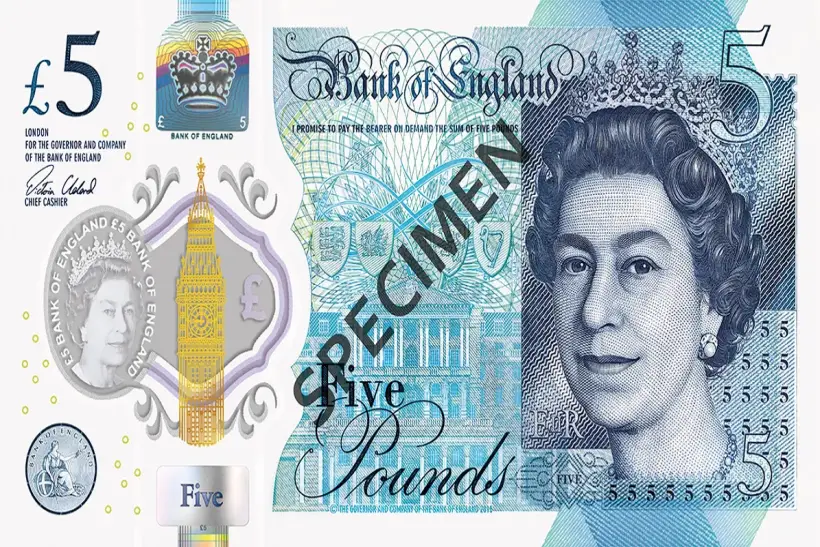
The British pound is back at the center of a currency debate: Goldman Sachs says its recovery from the post-Brexit selloff has gone further than the UK economy’s fundamentals justify. For Britain, this is not just a technical exchange-rate call, but a warning about the growing gap between a strong currency, weak productivity, persistent inflation and a cautious Bank of England.
Goldman Sachs Flags Sterling Overvaluation
Goldman Sachs has described sterling as the most overvalued currency among the Group of Ten. The Group of Ten refers to a set of major developed-market currencies, including the US dollar, euro, Japanese yen, Swiss franc, Canadian dollar, Australian dollar, New Zealand dollar, Norwegian krone, Swedish krona and the pound.
The bank’s view is that sterling has risen above the level justified by long-term fundamentals: productivity, inflation, the trade balance, real interest rates and investment appeal. Goldman strategist Stuart Jenkins told clients that Brexit had probably reduced sterling’s fair value by about 6%, but the market has partly looked through that structural discount.
A currency’s fair value is an estimated exchange-rate level consistent with macroeconomic fundamentals. It does not have to match the market price every day. A currency can remain above or below fair value for extended periods if investors expect high interest rates, buy domestic assets or use it as a defensive position.
Brexit Still Shapes the Pound a Decade Later
The UK’s departure from the European Union continues to influence sterling valuation even though the political phase of Brexit has long passed. The main channel is not the exit itself, but its effects on trade, investment, labor supply and productivity. The higher the trade barriers and administrative costs, the weaker the economy’s long-term potential and the lower the theoretical equilibrium value of its currency.
After the 2016 referendum, sterling fell sharply and later recovered part of the loss. Goldman Sachs argues that the current exchange rate underestimates the lasting damage to potential growth. Potential growth is the pace at which an economy can expand without generating higher inflation. If it is lower, a strong currency becomes less sustainable because exporters face tougher competition and the economy receives less support from external demand.
This is especially important for the UK. The country runs a chronic current-account deficit, meaning it regularly buys more goods, services and income from abroad than it sells. Such an economy needs continuous capital inflows. If investors begin to doubt the returns on UK assets, sterling can quickly lose support.
The Pound Is Supported by Rates, Not Growth
The pound’s current level around $1.32 reflects less a sharp improvement in the UK economy than differences in interest-rate expectations. High rates make a currency more attractive because assets denominated in that currency can offer higher yields. But that support lasts only as long as markets believe the central bank can keep rates above peers without damaging growth.
The Bank of England kept Bank Rate at 3.75% on June 18, 2026. The decision passed by a 7-2 majority. Two members of the Monetary Policy Committee voted for an increase to 4%, showing that inflation concerns remain alive inside the central bank.
Bank Rate is the policy rate through which the central bank influences loans, deposits, bonds and consumer behavior. A high rate supports the currency, but also raises the cost of mortgages, corporate debt and government borrowing. A strong pound may therefore be a byproduct of tight policy rather than evidence of economic strength.
Inflation Remains Above the Bank of England’s Target
The UK Office for National Statistics said consumer price inflation held at 2.8% in May 2026 from a year earlier. That was better than some economists expected, but still above the Bank of England’s 2% target. Core inflation, which excludes the most volatile components, also remains important for rate decisions.
Inflation is the broad rise in prices that erodes the purchasing power of money. For currencies, it matters in two ways. On one hand, high inflation may force a central bank to keep rates high for longer, supporting the exchange rate. On the other, inflation undermines the real value of the currency and weakens competitiveness if prices and wages rise faster than those of trading partners.
This is sterling’s contradiction. The currency is supported by high rates, but the reason rates remain high is not economic strength; it is unfinished disinflation. If inflation eases and markets begin to price rate cuts, that currency support could diminish quickly.
A Strong Pound Pressures Exporters
An overvalued currency rarely becomes an immediate crisis. For consumers, it can even look beneficial: imported goods, foreign travel and some raw materials become cheaper. But for producers and exporters, a strong pound weakens competitiveness because British goods and services become more expensive for foreign buyers.
That matters for manufacturing, pharmaceuticals, education, tourism, professional services and technology exports. The UK is already dealing with slow productivity growth, and a strong currency can increase pressure on companies competing in overseas markets.
The effect on equities is mixed. Companies with large dollar and euro revenues may suffer when foreign earnings are translated back into pounds. Importers, retailers and firms with foreign-currency costs can get temporary relief. But if overvaluation ends in a sharp depreciation, the benefit can quickly turn into higher import prices.
The Budget Adds to Currency Vulnerability
Sterling depends not only on rates and inflation, but also on confidence in public finances. The UK still has high debt and faces expensive borrowing costs. The higher government bond yields are, the more the budget spends on interest rather than investment, infrastructure or public services.
Government bonds are debt securities issued by the state to borrow from investors. If markets view the fiscal path as risky, they demand higher yields. For a currency, that can send a mixed signal: high yields may attract capital, but a rising risk premium also reflects weaker confidence.
The UK already experienced this stress in 2022, when the fiscal plans of Liz Truss’s government triggered a sharp selloff in sterling and gilts. Since then, investors have watched closely for signs of fiscal loosening. If sterling is supported by rates while fiscal risk rises, the currency’s resilience becomes less secure.
Model Overvaluation Does Not Mean an Immediate Fall
Goldman Sachs’s assessment is not a forecast of an instant sterling slump. A currency can remain overvalued for months or years if it is supported by interest rates, capital inflows, demand for domestic assets and weakness among rivals. Foreign-exchange markets move not only on fundamental models, but also on investor positioning, central-bank expectations and global risk appetite.
Still, model overvaluation matters as a warning. It shows that the exchange rate is becoming more dependent on short-term supports. If the Bank of England cuts rates sooner than markets expect, if inflation falls, if GDP growth remains weak or if investors again demand a premium for UK fiscal risk, sterling could lose part of its support.
For companies and investors, that means greater caution around foreign revenues, import contracts, dividends and debt obligations across currencies. Currency overvaluation is not only a trader’s issue; it affects corporate budgets.
Bank of England Policy Is the Key
The Bank of England is caught between two risks. If it cuts rates too early, sterling may weaken and imported inflation could return. If it keeps rates high for too long, the economy may slow further, the labor market may weaken and political pressure on the central bank may increase.
Imported inflation means domestic price increases caused by more expensive foreign goods, raw materials and components. For the UK, this channel is especially important because the country imports a large share of consumer goods, energy and production inputs. A weaker pound can quickly feed through to fuel, food, electronics, clothing and industrial components.
That is why the central bank needs not only to bring inflation back to 2%, but also to avoid a currency shock. A sharp policy reversal could reveal that sterling was being held up not by fundamental strength, but by expectations of high yield.
Sterling Is a Post-Brexit Economic Barometer
Goldman Sachs’s valuation call shows that currency markets are again treating sterling as a measure of Britain’s unfinished post-Brexit adjustment. The issue is no longer whether the pound recovered from the 2016 shock. The issue is whether the exchange rate fits the new structure of the economy: higher trade costs, weak productivity and limited growth.
A strong pound can look like a vote of confidence. In current conditions, it may also be a sign of inflated expectations. If the economy cannot validate the exchange rate through stronger productivity, investment and exports, overvaluation will become a source of pressure.
As experts at International Investment report, the critical risk for the UK is that sterling may be strong for the wrong reason: not because of durable economic growth, but because of high interest rates and expectations that the Bank of England will keep fighting inflation for longer. In that setting, any policy easing, fiscal deterioration or weak growth data could quickly turn overvaluation from an analytical conclusion into a market problem.
FAQ
Why does Goldman Sachs see sterling as overvalued?
Goldman Sachs argues that sterling has risen above the level justified by UK fundamentals, including Brexit effects, weak productivity, inflation and external imbalances.
What does an overvalued currency mean?
An overvalued currency trades above its estimated fair value. It does not imply an immediate fall, but it points to a risk of correction.
How does Brexit affect sterling?
Brexit increased trade and administrative costs, reduced some investment appeal and, according to Goldman Sachs, may have lowered sterling’s fair value by about 6%.
Why do high interest rates support the pound?
High interest rates make sterling assets more attractive to investors by offering higher yields. That support can weaken if markets begin to expect rate cuts.
What is UK inflation now?
UK consumer price inflation was 2.8% in May 2026, above the Bank of England’s 2% target.
Why can a strong pound be risky?
A strong pound lowers import costs but hurts exporters, reduces the translated profits of companies with foreign revenues and can become vulnerable if it is not backed by productivity growth.