







 Australia’s Spring Auctions Rise but Remain Well Below 2025
 Number of Foreigners Holding Turkish Residence Permits Exceeds 1.27 Million
 Demand from Russian Tourists for Holidays in Georgia Rises by 20–25%
 Montenegro Property Buying Costs in 2026
 Four in Ten Companies Would Not Choose Slovakia
 Gulf Countries Prepare Unified Tourist Visa
EU demands Serbia cut issuance of residence permits for Russians by 50%
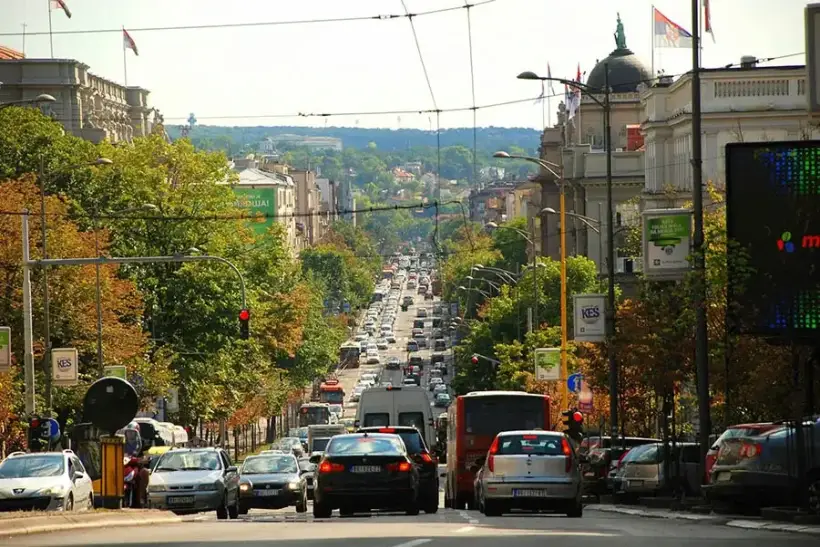
The European Union has demanded that Serbia reduce the issuance of residence permits and passports to Russians by at least 50%, according to Izvestia citing data from the country’s parliament. If Serbia disagrees with this position, the cancellation of the European visa-free regime for Serbs may be considered. However, the republic’s authorities have already stated their disagreement with the deputies’ position.
Russians in Serbia
The head of the Serbian parliamentary committee on diaspora and Serbs in the region, Dragan Stanojevic, said that Brussels is seeking to reduce the issuance of citizenship, residence permits and other documents for Russian citizens. He noted that the EU criticizes Serbia for the large number of passports and residence permits issued to Russians, considering this a risk factor.
Serbia has become one of the key destinations for Russian relocation. In 2022–2024, 67,200 Russians received residence permits, and about 1,700 obtained citizenship, according to the Ministry of Interior. The main grounds for residence permits were employment in Serbian companies, starting a business, and family reunification. In 2023, 532 Russians received Serbian citizenship, and in 2024 — 188, reflecting a slowdown in naturalization.
Expert positions
Aliisa Kazelko, member of the Russian Association of Export Control and Valdai Club expert, said Serbia may formally demonstrate readiness for concessions without changing the substance of its policy. She noted that the tightening is linked to economic costs, including capital inflows, real estate growth, and skilled labor in IT.
Milan Lazovic, program coordinator at the Russian International Affairs Council, said Serbia is trying to preserve room for independent decision-making and is not ready to take steps that contradict national interests, even under external pressure.
Political scientist Oleg Bondarenko noted that further developments depend on internal political dynamics and the government’s ability to maintain stable coalitions amid growing protests.
President of Serbia: no visas
President Aleksandar Vucic said reports about possible visa restrictions for Russian citizens are false and constitute disinformation, according to Kurir Web. He said he first saw such reports in a TV program and immediately checked with Prime Minister Ana Brnabic, who confirmed there are no such decisions or initiatives.
Vucic stressed that such claims are unfounded and spread as false information. Serbia is not considering abolishing the visa-free regime with Russia. Even hypothetical decisions of this kind, he said, would not be adopted or remain in force.
EU policy and prospects
Analysts at International Investment note that EU policy toward Russian citizens continues to tighten. The requirements also apply to those who left Russia due to the military actions in Ukraine. These measures affect all countries seeking closer ties with the EU. Montenegro previously announced plans to introduce visas for Russians around 2027, but the timeline remains uncertain due to risks for tourism and investment.
The Serbian authorities take a firmer stance and do not confirm readiness to change the current regime. At the same time, Belgrade continues cooperation with the EU, maintaining a balancing approach between foreign policy directions.
The situation in the country remains tense. In May, Serbia saw mass anti-government protests, clashes with police, arrests, and injuries. Possible changes in the governance system are being discussed. Such scenarios are no longer seen as exceptional after major political changes in Hungary.