







read also
 Australia’s Spring Auctions Rise but Remain Well Below 2025
 Number of Foreigners Holding Turkish Residence Permits Exceeds 1.27 Million
 Demand from Russian Tourists for Holidays in Georgia Rises by 20–25%
 Montenegro Property Buying Costs in 2026
 Four in Ten Companies Would Not Choose Slovakia
 Gulf Countries Prepare Unified Tourist Visa
Catastrophe in Asia: floods in Indonesia, Thailand and Sri Lanka claim hundreds of lives
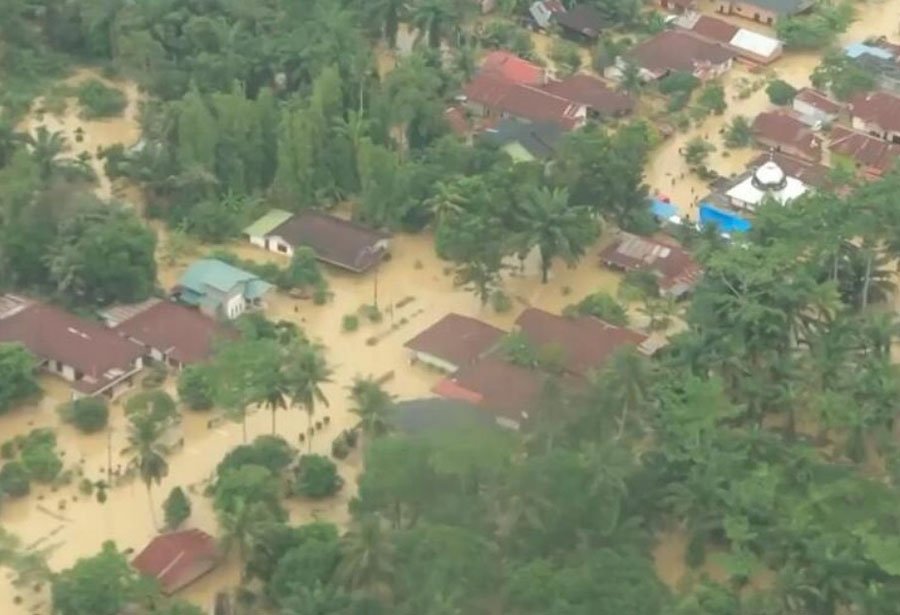
Photo: AP
Floods and landslides in Indonesia have left 604 people dead and another 464 missing, Reuters reports, citing data from the National Disaster Management Agency. Search operations continue in affected areas, and the death toll may rise.
The prolonged rainfall is linked to the movement of a powerful cyclone that shifted across the Indian Ocean over the past week. This has led to severe weather conditions simultaneously in several South and Southeast Asian countries.
Consequences of the rains in Indonesia
In Indonesia, the heaviest rainfall occurred in North Sumatra, Aceh and West Sumatra provinces. As of December 1, 2025, 604 people have died, 2,600 were injured and 464 remain missing. According to Associated Press, the number of displaced residents has reached approximately 290,700 across the three provinces. Around 3,500 buildings have been damaged, and more than 580,000 residents were forced to leave their homes — figures that may continue to grow.
Several areas face ongoing power outages. In West Sumatra, restoration work continues around the clock, but some remote settlements remain without electricity due to damaged power lines. The Guardian reports cases of looting in affected districts, where shops and storage facilities were broken into. Local officials attribute this to shortages of food supplies and delays in delivering humanitarian aid, as landslides blocked roads and restricted access to isolated communities.
Indonesia’s President Prabowo Subianto stated that efforts are focused on delivering aid to areas cut off by landslides and road destruction. Authorities are preparing measures to rebuild infrastructure and support families whose homes were washed away or severely damaged.
Sri Lanka and Thailand
In Sri Lanka, the most severe situation has developed in the central highlands. Rescuers continue searching for 367 missing people, and more than 218,000 residents have been placed in temporary shelters. Roads and agricultural land are flooded, complicating the delivery of aid to remote districts.
Thailand has also faced extensive destruction, with large areas in the south remaining underwater. Flooding has affected more than 1.5 million households and around 3.9 million people. Government spokesperson Siripong Angkasakulkiat said that cleanup operations and restoration of water and electricity supply are underway in the southern provinces. Public kitchens will be opened for affected residents, and support measures will include funding for home repairs, assistance to small businesses and municipal relief packages.
Authorities are urging residents of affected areas to register for compensation. The government plans to provide payments of 9,000 baht ($282) per household and interest-free loans of up to 100,000 baht ($3,131) for rebuilding damaged homes. This week, Thailand is set to distribute the first tranche of compensation — 239 million baht ($7.4 million) for 26,000 people.
Air traffic disruption in Asia
Severe weather conditions have also disrupted air traffic across the region. Eight major airlines — Shenzhen Airlines, China Eastern, Hainan Airlines, China Southern, Shanghai Airlines, Malaysia Airlines, Tibet Airlines and Mandarin Airlines — cancelled dozens of flights, triggering a chain reaction of delays from Beijing and Shanghai to Hanoi, Lhasa and Amsterdam. Passengers were stranded in airports, missed connecting flights and spent hours waiting at overloaded service counters.
The most significant disruptions were recorded in key aviation hubs — Shanghai, Shenzhen, Guangzhou, Chengdu, Xi’an and Taipei — as well as in major international airports in Doha and Amsterdam. According to operational data, 77 flights were cancelled and more than 611 delayed, affecting both domestic and international routes.