













Luxury Retail Refocuses on Europe
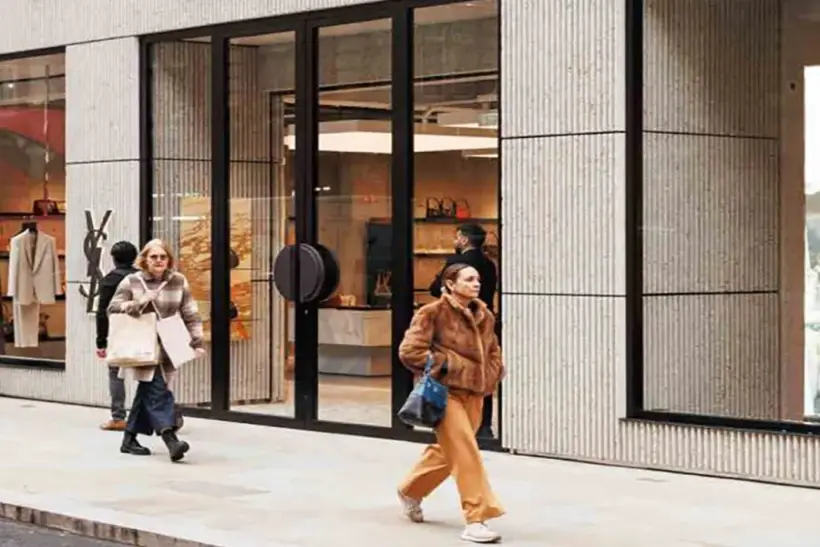
Europe remains the reference market for luxury retail
Europe is again leading luxury retail expansion, but growth is becoming more selective and concentrated in the strongest cities and streets. CRE Media Europe, citing the Savills Global Luxury Retail Outlook 2026, reported that luxury brands are adjusting expansion strategies toward Europe’s most sought-after locations as prime retail opportunities become scarcer.
Brands are opening fewer stores in better locations
The defining trend for 2026 is not broad store rollout, but sharper competition for the best addresses. CBRE expects Western European retail sales volumes to grow by just under 2% this year and says retailers remain focused on prime sites, showing willingness to compromise on unit size but not on location.
For luxury brands, that means prioritising streets with international tourism, wealthy local customers and limited vacancy. Physical stores are increasingly used not only as sales channels, but also as brand stages.
London, Paris and Milan retain pricing power
Demand remains concentrated in Europe’s leading luxury hubs, including London, Paris, Milan and Madrid. The Times, citing Savills, reported that London’s Bond Street regained its position as Europe’s most expensive shopping street after prime headline rents rose 20% to £13,162 per sq. m.
The figures show that luxury houses are still willing to pay a premium for addresses that cannot be easily replicated. Unlike mass-market retailers, luxury brands rarely trade down to weaker streets simply to reduce rent.
Limited space keeps rents under pressure
Cushman & Wakefield says retailer activity remains high and focused on key European luxury streets, while vacancy in those destinations remains constrained, especially for larger stores. That imbalance continues to support rental growth.
For landlords, the trend strengthens negotiating power in the best retail corridors. For investors, it increases the appeal of prime high-street assets, even as acquisition prices remain high.
Luxury growth is becoming more cautious
Europe’s retail momentum is unfolding in a more cautious global luxury cycle. Bain & Company says the luxury market has entered a period of normalisation after strong growth in 2022 and 2023, while spending on experiences, travel and hospitality has continued to outperform many goods categories.
That changes the role of the store. Luxury boutiques are becoming venues for private appointments, client events, personal services and links with tourism, hotels and restaurants.
Investors are returning selectively
JLL expects Europe’s retail real estate market to remain resilient in 2026, with tight supply of high-quality space supporting rent levels. The firm also sees gradual growth in retail investment volumes, with investors focusing on prime assets and higher-yielding opportunities.
The recovery is therefore uneven. The strongest demand is directed at prime streets, dominant shopping centres and assets capable of attracting global occupiers.
Smaller gateway markets move onto the map
Savills says smaller gateway markets outside Paris and London are also becoming more relevant, supported by stronger international visitor flows, improving domestic demand and lower barriers to entry.
That widens Europe’s luxury retail map. Alongside traditional capitals, brands are assessing resort destinations, affluent regional cities and locations where premium consumption is linked to tourism and real estate wealth.
As experts at International Investment report, European luxury retail in 2026 is expanding through concentration rather than aggressive rollout. For landlords, that raises the value of scarce prime retail space. For brands, it makes the cost of choosing the wrong location greater than the cost of higher rent.