












Pärnu Hotels Expect Solid Summer
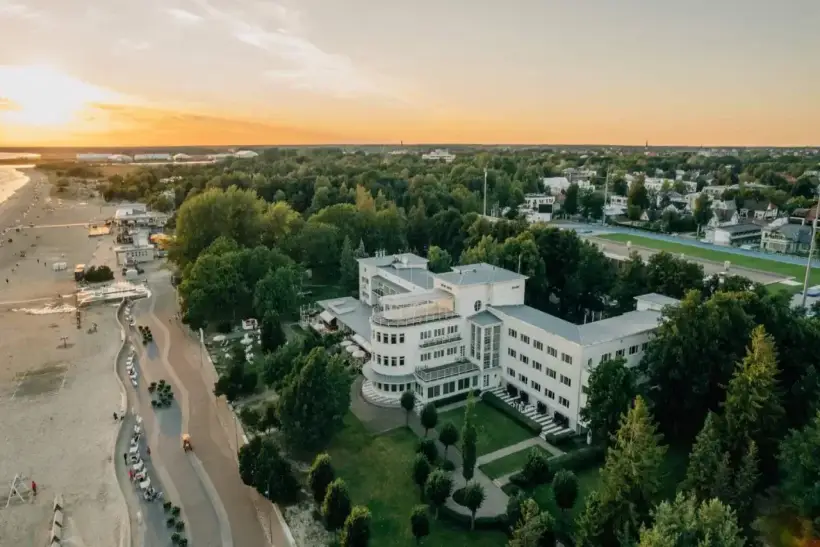
Hotels in Pärnu are expecting a solid summer 2026 season despite fewer Finnish visitors and a stronger tendency toward last-minute bookings. For Estonia’s main seaside resort, the shift points to a changing model: the city can no longer rely only on Finnish guests and a beach-resort image, and needs to sell spas, wellness, events and short breaks throughout the year.
Pärnu holds the season despite weaker Finnish demand
ERR reported that Pärnu hotels remain cautiously upbeat about the summer 2026 season. Reservations are broadly keeping pace with last year, even though the number of Finnish visitors has declined and customers are increasingly booking at the last minute. That makes occupancy harder to forecast, but so far it does not suggest a failed season.
Pärnu has long been known as Estonia’s summer capital. Its tourism economy is built on the beach, spa hotels, short holidays, family trips and visitors from neighbouring countries. The most important external markets are Finland and Latvia, while domestic Estonian demand remains the base when foreign traffic weakens.
The fall in Finnish visitors is not random. Finland’s weaker consumer environment is making trips to Estonia a less automatic expense for some households. Pärnu is more exposed to that than many other Estonian destinations because Finnish visitors typically travel by ferry to Tallinn and then continue by road to the resort.
Finnish tourists remain a core market
Tourism data for Pärnu show the scale of the dependency on nearby markets. In 2025, the city recorded 405,687 accommodated visitors, 752,800 overnight stays, an average length of stay of 1.86 nights and 4,506 average bed places. Estonia accounted for 42.4% of overnight stays, Finland for 27.1%, Latvia for 17.1% and other countries for 13.4%.
That means Finland is not just important for Pärnu; it is structurally important. Losing even part of that demand affects occupancy, room revenue, spa services, restaurants, medical treatments and wellness packages. At the same time, the demand mix gives the city some protection: it is not dependent on one market alone, because domestic Estonian travel and Latvian short breaks remain large sources of demand.
In 2026, that balance becomes the main test. If Finnish guests travel less, hotels need to close the gap with Estonian, Latvian and other international visitors. Replacing Finnish demand is difficult, however: Finnish guests know the product well, often return and buy spa and wellness services, not only beach holidays.
Last-minute booking has become the new norm
One of the main problems this season is the rise of last-minute bookings. For travellers, waiting allows them to judge weather, prices and personal budgets. For hotels, it creates risk: staffing, procurement, pricing, marketing and spa capacity become harder to plan.
Pärnu is especially sensitive to this behaviour because its summer appeal is highly weather-dependent. If July is warm and sunny, the city can fill quickly. If the forecast is poor, some guests delay travel or choose another destination. That makes revenue more volatile even if the final season is acceptable.
For hoteliers, this requires more flexible revenue management. July can no longer be treated as guaranteed simply because the city had strong Finnish demand in previous years. Hotels need to work harder with packages, direct sales, repeat guests and offers that are not tied only to the beach.
The beach image is no longer enough
Pärnu has historically marketed itself as a beach resort, but market participants now see that as a limitation. In ERR’s report, Hestia CEO Kaisa Mailend said Pärnu has largely marketed itself as a beach destination and that moving beyond that image in other markets would be key to success.
That is important for positioning. The beach sells Pärnu well in July and August, but it is less useful in spring, autumn and winter. Spas, medical wellness, saunas, conferences, gastronomy, family travel and cultural events give the city a better chance of distributing demand across the year.
For hotels, diversification is directly linked to profitability. A room sold only during peak summer does not solve the problem of annual occupancy. A spa resort becomes stronger when it can attract guests for weekends, wellness programmes, corporate events and short off-season breaks.
Estonian tourism is growing, but unevenly
National data show that Estonia’s tourism market is recovering. In April 2026, accommodation establishments recorded 264,204 accommodated tourists, up 5.1% year on year. Overnight stays reached 484,520, up 4.1%, while the number of accommodation establishments rose 3.2% and bed places increased 2.7%.
These figures support optimism, but they do not erase regional differences. Tallinn benefits from business travel, events, air access and city breaks. Tartu receives cultural and university-related demand. Pärnu depends more heavily on seasonality, beaches, spa packages and neighbouring markets.
That is why nationwide tourism growth does not guarantee an easy summer for a specific resort. If Finnish demand weakens and domestic travellers are price-sensitive, Pärnu has to compensate with product, marketing and pricing. A general industry recovery is no longer enough by itself.
Latvia and the domestic market matter more
Latvian tourists are becoming increasingly valuable for Pärnu. The city is geographically convenient for short trips from Riga and northern Latvia, and the weekend format suits spa hotels and family travel. If Finnish demand declines, Latvia can partly fill seasonal gaps, especially for short stays.
The domestic Estonian market remains essential. Estonian residents form the largest share of Pärnu overnight stays and can support occupancy when foreign guests are more cautious. But domestic demand is price-sensitive: if hotels raise peak-season rates too aggressively, some guests will choose apartments, summer houses, campsites or foreign trips.
For the resort, this creates a delicate pricing balance. Rates must be high enough to preserve profitability in a short season, but not so high that they push away nearby markets that can be attracted more frequently and outside the peak period.
Accessibility remains a constraint
Pärnu is still mainly a road and ferry-road destination. Finnish tourists depend on ferry links to Tallinn and then road travel to the resort. Latvian visitors mostly arrive by land. Limited direct international air connectivity constrains faster growth from new foreign markets.
In the longer term, Rail Baltica could change the picture. The rail project is expected to improve Pärnu’s links with Tallinn, Riga and the wider Baltic and European transport network. For tourism, that matters not only as infrastructure but also as a way to make the city more convenient for short breaks, business events and off-season travel.
For now, hotels must work within existing constraints. They need to attract guests from markets that can realistically reach Pärnu today: Estonia, Finland, Latvia and parts of the wider Baltic and Nordic region.
Spa hotels remain the city’s main asset
Pärnu’s strength is not only the beach. The city has long developed a spa, wellness and medical tourism market. That matters because these products are less dependent on air temperature and can be sold outside the high season.
A market snapshot describes Pärnu as Estonia’s leading seaside resort and spa destination outside Tallinn, while identifying the city’s long-term opportunity as a move from a highly seasonal summer resort into a stronger year-round wellness, spa and leisure destination. Wellness here means health-focused travel: spas, saunas, medical treatments, recovery programmes, relaxation and preventive services.
That segment can help offset weaker Finnish beach demand. Finnish guests remain important, but Pärnu needs to broaden its audience by selling not only the sea, but also recovery, health, quiet, short breaks without long flights and events.
Seasonality is the core risk
Pärnu remains an attractive market, but its risks are clear. The city’s tourism snapshot highlights high seasonality, short average stays of 1.86 nights, moderate annual bed-place occupancy of 45.8%, dependence on nearby markets, price sensitivity in domestic and Baltic segments, limited direct international access and the need for stronger year-round destination development.
These risks explain why hotel optimism should not be read as guaranteed growth. A good July can support the season, but it does not solve the annual business model. The resort needs guests in March, October and November, not only during warm weeks.
For investors and hotel owners, Pärnu’s future depends on product quality. A basic summer hotel will remain more exposed to weather and Finnish demand. A spa complex, medical centre, wellness hotel or property with conference facilities can spread revenue across more months.
As International Investment experts report, Pärnu’s situation shows maturity rather than weakness in the resort market. Hotels are not losing the season, but the old model based on Finnish visitors and the beach is no longer enough. The critical risk is not one weak summer, but dependence on a short peak of demand. If Pärnu can sell itself as a year-round spa, wellness and events destination, weaker Finnish traffic will be manageable. If the city remains only Estonia’s “summer capital,” every pause in Finland’s economy and every cold July will become a problem for the entire hotel economy.