









Armenia May Introduce Visas with Russia
Unsplash
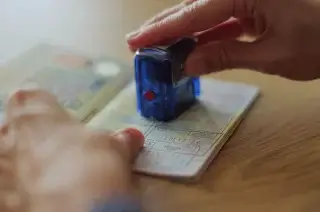
To join the European Union, Armenia would have to adopt the bloc’s foreign policy rules, including the possible introduction of a visa regime with Russia and accession to sanctions, the European Parliament told Izvestia. At the same time, Yerevan has not yet submitted an official EU membership application, but it has already been developing cooperation with Brussels, which is calling for a reduction in ties with Moscow.
Brussels expects policy changes from Yerevan
The European Union will put pressure on Armenia to join sanctions against Russia and introduce a visa regime for Russian citizens, said European Parliament member Fernand Kartheiser, who previously served on the parliamentary cooperation committee with Armenia.
The European Commission did not publicly respond to Izvestia’s request. Earlier, Russia’s Foreign Intelligence Service reported that Brussels was linking visa liberalization for Armenia with demands to restrict Russian economic presence, humanitarian contacts and cooperation with Moscow.
In May 2026, the leaders of the Eurasian Economic Union proposed that Armenia hold a referendum to determine the country’s future foreign policy direction — whether to remain in the Eurasian Union or move toward the EU. Armenian Prime Minister Nikol Pashinyan said that such a vote could only take place after an official EU membership application is submitted. Armenian MP Taguhi Tovmasyan confirmed that preparations for the referendum have not yet begun.
On July 13, the European Union announced the launch of an advisory mission in Armenia focused on security and countering “hybrid threats.” Similar missions had previously been deployed to Ukraine and Moldova.
Consequences for Armenia’s tourism sector
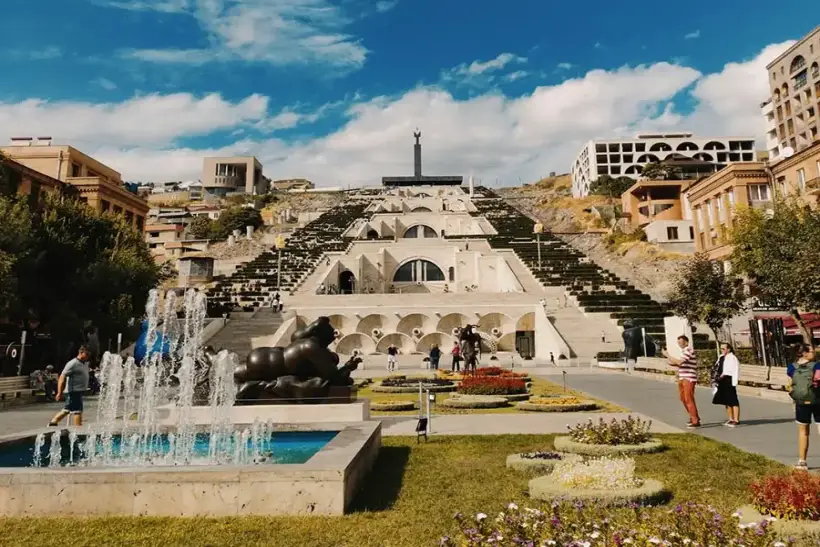
Introducing visas with Russia could seriously affect Armenia’s tourism industry. In 2025, Russian citizens accounted for around 40% of tourist arrivals to the country, with more than 900,000 visits. Remittances from Russia reached $3.87 billion, equal to around one-eighth of Armenia’s GDP.
Russian Tourism Industry Union expert Mikhail Abasov noted that Armenia’s Strategic Tourism Development Program for 2026–2030 aims to increase the number of foreign visitors to 3 million and raise annual tourism revenues to $3.8 billion. However, achieving these targets may become more difficult if conditions for the country’s largest tourism market deteriorate.
Abasov said that many Russians travel to Armenia independently due to the absence of visa requirements and the availability of direct flights. If visas are introduced, travel costs could rise, document processing times could increase, and the risk of refusals could become an additional barrier.
“Experience from other destinations shows that visa barriers for a key market lead to a 30–50% decline in tourist flows within the first one or two years, with independent travelers being affected the most,” the expert said.
He added that Russia and Iran together account for about half of Armenia’s inbound tourism market. A possible decline in Russian arrivals cannot be quickly compensated for by other destinations: markets such as Georgia, EU countries, the United States and China are growing but remain significantly smaller in volume. Diversifying the tourism market will require time, investment in promotion, infrastructure development and expansion of direct air connections.
The expert emphasized that tourism remains one of Armenia’s key economic sectors, providing income and jobs. In his view, a possible EU demand to introduce visas with Russia shifts the issue from the political sphere to the economic one, although major changes in relations between Yerevan and Moscow should not be expected in the near future.
Economic risks for Armenia
A breakdown of economic ties with Russia and withdrawal from the Eurasian Economic Union could lead to the loss of export markets for a significant share of Armenian goods. A transition to market-based prices could result in a threefold increase in gas costs. Dmitry Sidorov, head of the Department of Foreign Regional Studies at Moscow State Linguistic University, believes that reducing Russian investment would create additional economic risks for Armenia, while European investments would not be able to quickly compensate for possible budget losses.
In May, Russian President Vladimir Putin said that Armenia’s withdrawal from the EAEU and a break in relations with Moscow could reduce the country’s GDP by up to 14%, while some estimates suggest the economy could lose up to one-third of its size.
Economic relations between the two countries have already faced difficulties. Restrictions on imports of several Armenian goods have affected producers dependent on the Russian market. Armenian MP Taguhi Tovmasyan noted that some companies are facing serious challenges, and continued restrictions could lead to the closure of certain businesses.
Russia has previously introduced bans on imports of flowers, Jermuk mineral water and products from several Armenian brandy producers. According to Armenia’s Statistical Committee, trade turnover between the two countries decreased by 21.5% in January–May 2026 compared with the same period of the previous year.
At the same time, Armenian authorities continue efforts to resolve disagreements. Prime Minister Nikol Pashinyan and Russian Prime Minister Mikhail Mishustin discussed bilateral issues at a meeting in Yekaterinburg in July. Armenia’s Ministry of Economy said it continues working with Russian counterparts on current economic cooperation issues.
Armenia faces a difficult geopolitical choice
Ayk Khalatyan, head of the Analytical Center for Strategic Studies and Initiatives, believes that Armenian authorities are seeking to maintain the current balance and avoid a sharp break with Russia. According to him, a rapid withdrawal from cooperation with Moscow could lead to a serious socio-economic and political crisis.
Supporters of maintaining ties with Russia point out that the advantages of the EAEU remain significant for Armenia’s economy, while the path toward EU membership can take decades. Currently, Albania, Bosnia and Herzegovina, North Macedonia, Serbia and Montenegro are still waiting for progress toward EU accession.
Analysts at International Investment note that Montenegro is already planning to introduce a visa regime with Russia from October 1, 2026, despite the country’s significant dependence on Russian tourism. Armenia remains at the stage of political discussions and, judging by statements from officials, is not ready for rapid steps in this direction.
At the same time, Armenia may gradually adjust its foreign economic ties and expand cooperation with European countries. If the geopolitical situation remains unchanged, further rapprochement between Yerevan and Brussels remains a possible scenario in the future. However, the pace of this process will depend on Armenia’s ability to maintain economic stability and balance relations with both Russia and the European Union.