







 Covivio Hotels Revenue Grows 4.7% as European Markets Split
 Lithuanian Apartment Prices Accelerate Across Major Cities
 Georgia's Tourism Revenue Hits Record High
 Norway's Sovereign Fund Commits €1.5bn to European Warehouses
 Market Rout of October 2026: Can Branded Hotels Protect Capital?
 Residential Property Prices in Tbilisi Rise by 5.9% Year-on-Year
Bathla Crisis Adds Risk to Australia’s Housing Supply
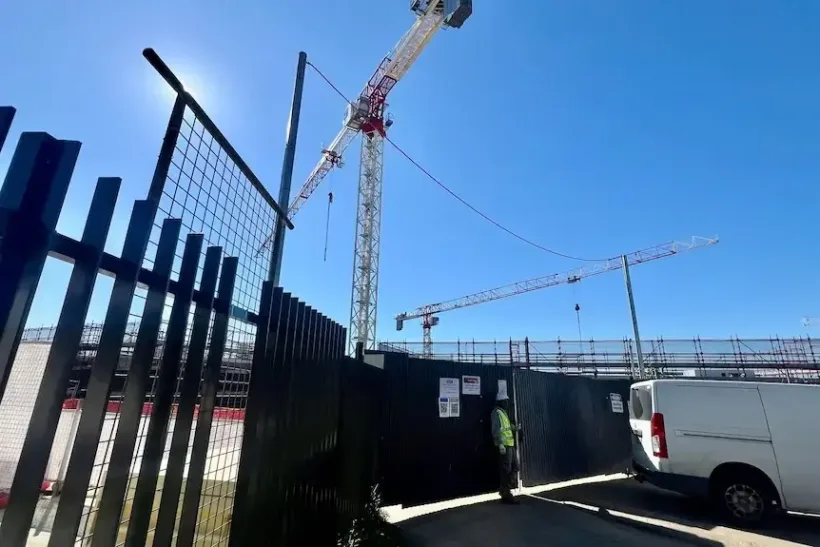
Major Western Sydney developer Bathla Group remains in voluntary administration after Teneo took control of hundreds of related companies on August 25. About 14 of the group's 45 active construction projects have secured temporary funding, more than 200 employees have been stood down and secured lenders are taking control of individual sites. The Bathla crisis has become a test for Australia's rapidly expanded private-credit market at a time when the country is already falling behind its target to build 1.2 million homes by mid-2029.
Bathla is keeping about 14 construction sites operating
Voluntary administrators from Teneo were appointed on August 25, 2026 to Universal Property Group, Raj & Jai Construction and hundreds of associated entities.
Voluntary administration does not automatically mean liquidation. Administrators take control of financially distressed companies while assessing restructuring, asset sales and other options that may provide creditors with a better outcome.
Five lenders agreed in early September to provide between A$3 million and A$5 million of short-term funding. The arrangement was enough to preserve a much smaller central operation for around two weeks and keep approximately 14 construction projects moving.
Teneo had initially estimated that around A$20 million would be needed to support construction for five weeks.
Bathla suspended construction on projects whose lenders did not participate in the funding package. A total of 213 of roughly 350 employees were stood down. Only five of about 40 lenders agreed to fund continuing group operations, while Bathla had 45 active construction sites before the retrenchment, according to ABC News.
Bathla therefore continues to exist under administration, but the fate of an increasing share of its assets is being decided project by project.
Known creditor claims have reached about A$3.4 billion
Preliminary known creditor claims against Bathla total about A$3.4 billion. Roughly A$3.08 billion is owed to secured lenders. The group also owes approximately A$145 million to the Australian Taxation Office, A$42 million in land tax, A$130 million to other unsecured creditors and around A$4 million in employee wages and superannuation.
Administrators placed a preliminary stated value of about A$4.9 billion on 219 Bathla sites. That figure should not be treated as the amount creditors will ultimately recover. Realised values will depend on individual projects, security arrangements, construction status and market conditions.
Universal Property Group, the core Bathla entity, had already reported approximately A$3.2 billion of liabilities as of June 30, 2025. Preliminary figures presented after the administration began subsequently put known creditor claims at around A$3.4 billion.
Thousands of homes have been caught in the administration
Bathla was a major developer in Western and north-western Sydney, producing apartments, townhouses and detached homes in rapidly growing suburbs.
Around 2,000 dwellings already under construction have been directly caught up in the administration, while estimates of the additional development pipeline range from about 13,000 to 14,000 homes.
Researchers at Queensland University of Technology have highlighted the significance for relatively lower-cost housing supply in Sydney's growth corridors, where Bathla had a substantial presence. Queensland University of Technology
Administration does not mean all those projects will disappear. Secured lenders can continue construction themselves, transfer projects to replacement developers or sell sites. Outcomes for buyers depend on the particular Bathla entity, contract, stage of construction and financing structure involved.
Lenders are already breaking up the portfolio
That process has started. 360 Capital Mortgage REIT moved to recover A$31.7 million across four Bathla-linked loans, with receivers appointed over several assets. Other lenders have also taken control of individual developments.
The pattern reflects the way property development is commonly financed. Loans are often secured against individual land parcels or projects, allowing a creditor to enforce against a particular asset rather than waiting for a single outcome for the entire group.
An attempt to preserve a larger collection of Bathla assets in one structure has already failed. Renown Wealth had been coordinating a proposal involving about 25 land-only sites valued at roughly A$1 billion and a structure involving Buildwell Australia.
Renown withdrew after the parties failed to agree on conditions including fresh valuations, the corporate structure and the proposed continuing involvement of Bathla founder Bhart Bhushan.
As lenders enforce security over individual projects, restoring the former Bathla structure becomes increasingly difficult. Viable developments are more likely to continue under different owners and financing arrangements.
Bathla has put private credit under closer scrutiny
Bathla relied heavily on private credit rather than conventional bank financing.
Private credit generally refers to loans supplied directly by non-bank funds and other private investors instead of through public debt markets or traditional bank lending. It has grown rapidly in Australian property development as banks have become more selective about higher-risk construction finance.
The Australian Securities and Investments Commission estimates the Australian private-credit market at around A$200 billion in assets under management, with approximately half focused on real-estate-related finance.
ASIC has identified concerns in parts of the sector including opaque fee structures, related-party transactions, governance, valuations and inconsistent disclosure by ASIC.
Measures of the market vary considerably because comprehensive data remain limited. The Reserve Bank of Australia estimated private credit outstanding at around A$50 billion at the end of 2025, while broader estimates of assets under management exceed A$200 billion. The figures measure different concepts and should not be read as directly comparable estimates of the same stock of debt.
ASIC has called Bathla a troubling development
Regulatory scrutiny intensified after the administration began.
In a September 4 statement to a parliamentary committee, ASIC described Bathla's collapse as the most notable of several troubling developments in private credit.
The regulator said Australia has significantly less information about wholesale private-credit funds than regulators in comparable markets such as the US and UK. It has called for better data, stronger governance, effective oversight, accurate valuations and clearer disclosure.
ASIC has not argued that Australia's entire private-credit sector is in crisis. The regulator continues to describe private credit as an important source of finance when it is managed well. Its concern is whether investors, lenders and regulators have enough information to understand risk, particularly in property development and construction by ASIC parliamentary statement.
Construction remains Australia's biggest insolvency sector
Bathla is the largest recent case, but financial distress extends well beyond one developer.
In the 2025-26 financial year, 3,472 companies in the construction division entered external administration or had a controller appointed for the first time. That represented 24.5% of all Australian corporate insolvency events measured on that basis.
The total was slightly lower than the previous financial year after several years of rapid increases, but construction remained by far the largest industry category.
The figure covers the entire construction division, including contractors and specialised trades. It should therefore not be described as 3,472 residential developers going bankrupt. The figures come from ASIC's corporate insolvency series.
A national housing shortage does not guarantee profitable construction. Developers still have to absorb land, material, labour, infrastructure and financing costs, while higher mortgage rates reduce the amount buyers can borrow.
Housing commencements fell sharply in the March quarter
The latest complete commencement data also show an uneven construction pipeline.
Australia started 48,012 dwellings in the March quarter of 2026 in seasonally adjusted terms, down 11.2% from the previous quarter but 0.2% higher than a year earlier.
New private-sector house commencements fell 3.5% to 27,658. Private-sector apartments, townhouses and other residential commencements dropped 20.7% to 19,116 after a sharp increase in the previous quarter.
The Australian Bureau of Statistics data therefore point to a significant quarterly reversal rather than an established year-on-year collapse in national commencements by data Australian Bureau of Statistics.
For a market that needs a sustained increase in new housing, however, volatility in project starts remains a material risk.
Australia is falling behind its 1.2 million-home target
The National Housing Accord sets a target of 1.2 million well-located new homes over the five years from July 1, 2024 to June 2029. The original target implies an average of 240,000 completions a year.
The latest National Housing Supply and Affordability Council report shows mixed progress. By August 2026, quarterly approvals were 26% above the quarter immediately preceding the Accord, while quarterly commencements were 15% higher.
Around 308,000 dwellings had been completed during the first seven quarters of the Accord period.
The pace is still insufficient to meet the deadline. The Council's latest modelling puts the expected national completion date for the 1.2 million target at around December 2030, roughly 18 months after the formal June 2029 deadline by National Housing Supply and Affordability Council.
The federal government is supporting supply measures including the A$3 billion New Home Bonus, which provides performance-based funding to states and territories that deliver additional housing
Western Sydney faces the most immediate disruption
A significant share of Bathla's projects is concentrated in Western and north-western Sydney, major growth corridors for Australia's largest city.
The immediate issue for housing supply is delay rather than the automatic disappearance of every proposed dwelling. Even viable sites transferred to new lenders or developers may require new financing arrangements, contractor agreements, valuations and revised construction timetables.
The New South Wales government has ruled out using taxpayer money to bail out private-credit lenders. It has said its focus will be on protecting homebuyers and keeping viable construction projects moving where possible.
Bloomberg has placed Bathla's difficulties within the broader combination of Australia's housing slowdown and risks in non-bank property finance. The developer accumulated billions of dollars of debt before facing weaker sales, higher construction costs and tighter financing conditions by Bloomberg Australia Briefing.
As International Investment experts note, the main risk is not that every home in Bathla's pipeline disappears. Valuable land and viable projects are likely to attract secured lenders or replacement developers. The more important questions are how long those transfers take and how lenders respond to the largest recent stress event in Australian private credit. Tighter underwriting could improve lending discipline, but it could also leave fewer housing projects able to secure development finance. For a country already on course to miss its national housing deadline, that financing constraint could matter more than the fate of any single developer.
FAQ
What happened to Bathla Group?
Universal Property Group, Raj & Jai Construction and hundreds of associated Bathla entities entered voluntary administration on August 25, 2026. Teneo is assessing restructuring, asset sales and other possible outcomes.
How much does Bathla owe?
Preliminary known creditor claims total around A$3.4 billion, including approximately A$3.08 billion owed to secured lenders.
How many Bathla projects are still operating?
Temporary funding has allowed construction to continue at about 14 of Bathla's 45 active sites. Other projects have been suspended by the group or are being dealt with separately by lenders.
How many Bathla employees have been stood down?
A total of 213 of roughly 350 employees have been stood down.
How many homes are affected?
About 2,000 dwellings were already under construction, while estimates put the additional development pipeline at roughly 13,000 to 14,000 homes.
What is private credit?
Private credit is non-bank lending supplied by investment funds and other private investors. ASIC estimates the Australian market at about A$200 billion in assets under management, with roughly half focused on real estate.
How many Australian construction companies entered external administration?
In 2025-26, 3,472 construction-sector companies entered external administration or had a controller appointed for the first time, accounting for 24.5% of the national total.
Will Australia meet its 1.2 million-home target by 2029?
On current projections, no. The National Housing Supply and Affordability Council expects the cumulative target to be reached around December 2030 rather than June 2029.