







 Inner London House Prices Fall 7.2%, Sharpest Since 2009
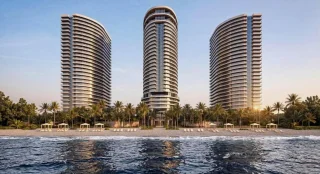 Swissôtel Kobuleti Beach Resort: $300M Investment in Kobuleti
 Georgia Plans to Build 600 km of Highways in 5–7 Years: Is Local Business Ready for Large-Scale Projects?
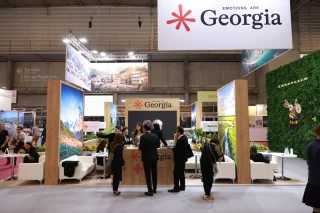 IBTM World Barcelona 2026: Georgia at the International Business Tourism Exhibition
 Spanish Home Sales Drop 13.4% in September
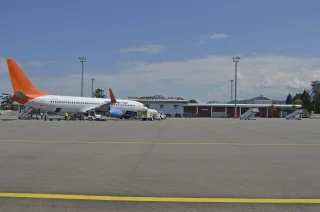 Passenger Traffic at Georgian Airports Rose by 6.1%: Key Trends in Q3 Statistics
Batumi New Boulevard Beach Nourishment: New 2.5 Million GEL Tender and the Coastal Protection Challenge
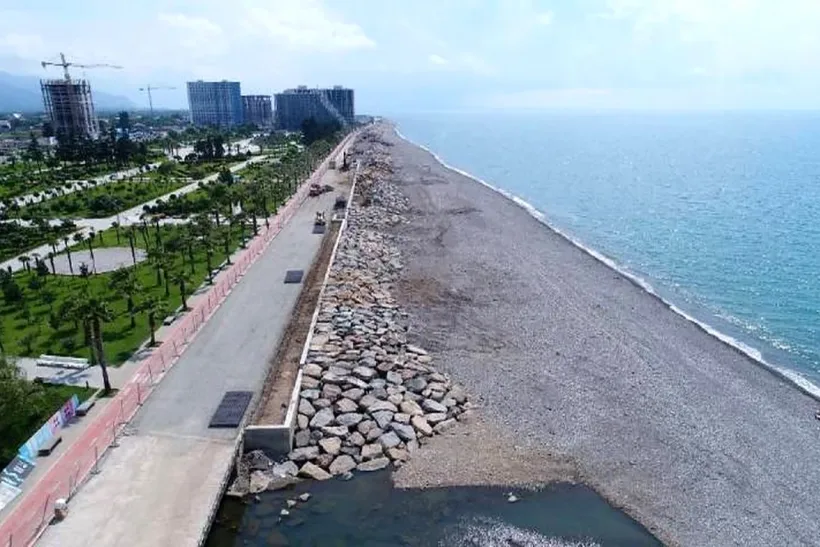
A total of 2.53 million GEL is planned to be allocated from the state budget for the artificial nourishment of the beach along Batumi's New Boulevard. The project entails transporting 110,000 cubic metres of beach-forming material from the Chorokhi River bed and constructing eroding berms along two coastal sections. The recurrent need for these works highlights the ongoing urgency of safeguarding Batumi's shoreline against erosion and storm surges.
New Tender — 110,000 Cubic Metres of Material and 615 Metres of Coastline
The Roads Department of Georgia has announced an electronic tender for the execution of artificial nourishment works on the Black Sea coast in Batumi, in the New Boulevard area.
According to the tender notice published in the State Procurement Agency's electronic system, the estimated value of the works stands at 2,533,086 GEL, with the funding sourced from the state budget of Georgia.
The project provides for hauling 110,000 cubic metres of beach-forming material from an allocated quarry section in the floodplain and bed of the Chorokhi River to the seashore. The operations will cover two coastal sectors: the first section features an eroding berm 325 metres long, while the second spans 290 metres. In total, the project covers a 615-metre stretch of shoreline.
The tender documents specify a 120-day project execution period. Bid submissions will begin on 11 December 2026 and conclude on 16 December.
The estimated procurement cost does not constitute the final contract price. The exact figure will be finalized once the bidding concludes and the winning contractor is identified.
What Does the Coastal Artificial Nourishment Project Entail?
The objective of the project is to preserve beach parameters along Batumi's shoreline and replenish eroded sections with appropriate material.
The scope of work is not confined solely to hauling inert material to the coast. The tender conditions also require the restoration and maintenance of the access road to the quarry, the installation of a temporary dam, material extraction and haulage, spreading the material along the shore, constructing eroding berms, and dismantling temporary structures upon project completion.
Beach-forming material must be mined from a designated quarry site within the Chorokhi River bed. The tender documentation specifies a transport distance of roughly 13 kilometres.
Constructing eroding berms represents an established coastal engineering method. Its function is to reshape the beach profile and enhance the coast's protective buffering capacity against wave action.
The scale of the project and its technical specifications indicate that this is a targeted intervention aimed at rehabilitating and preserving a specific coastal section, rather than a comprehensive overhaul of the entire Batumi seafront.
Previous Interventions — Coastal Nourishment Has Been Undertaken Before
According to official information released by Batumi City Hall on 21 January 2025, coastal nourishment works along New Boulevard had already been carried out by that date.
According to municipal authorities, 110,000 cubic metres of beach-forming sand and gravel aggregate were moved from a pre-selected quarry on the Chorokhi River, and sacrificial eroding berms were raised across designated sections.
The stated goal was preserving Batumi's coastal perimeter. In that same briefing, City Hall noted that coastal protection and shoreline restoration near New Boulevard had incurred an aggregate expenditure of 15,658,966.10 GEL. The works carried out under that budget encompassed the rehabilitation of coastal protection and seaside infrastructure across a broader coastal belt; consequently, directly comparing that amount with the 2026 tender budget is not methodologically accurate.
According to the department, works during that period were concurrently underway to restore a pedestrian promenade damaged in a storm and to erect protective retaining walls for storm runoff outfalls discharging into the sea.
This description clearly illustrates that coastal protection involves far more than simply replacing lost beach aggregate. It also entails safeguarding promenade infrastructure, pedestrian boulevards, and interconnected coastal engineering facilities.
Erosion and Storms — Why Must the Interventions Be Repeated?
The necessity for recurrent artificial nourishment along Batumi's coast is backed by both environmental and engineering assessments.
In 2022, commissioned by the Department of Environmental Protection and Natural Resources under the Ministry of Agriculture of the Autonomous Republic of Adjara, a screening report was prepared for the artificial nourishment and stabilization of Batumi's shoreline.
According to the document, the project zone is exposed to aggressive marine action driven by severe winter storm surges. The New Boulevard infrastructure suffers recurrent damage, and major storms drastically reduce beach width.
As part of that investigation, a survey along a 4,615-metre coastal strip was performed alongside a bathymetric survey of the underwater coastal slope down to the 5-metre isobath.
The survey established that following violent storms, the beach width along several sectors shrank to 10–15 metres. This dynamic necessitated replenishing beach profile loss and depositing beach-forming material along the shoreline.
Notably, the screening report also lays out environmental stipulations for the works. These include scheduling activities during low-water seasonal periods, monitoring water pollution hazards, and enforcing proper waste and heavy equipment management.
Collectively, these findings demonstrate that Batumi's coastal challenges extend beyond the visual appeal of its beaches. Shoreline erosion undermines both the natural beach profile and adjacent urban municipal infrastructure.
The Issue of Natural Coastal Sediment Influx
When assessing long-term demand for artificial replenishment in Batumi, an essential parameter is the dynamics of natural beach-forming material and its delivery to the shoreline.
The 2022 screening study details the environmental baseline and erosion dynamics of the coastal zone. Simultaneously, the latest tender documents mandate aggregate extraction from a quarry within the Chorokhi River bed.
This setup once again underscores the integral link between riverine and coastal sediment systems. Nonetheless, determining the precise scale and underlying drivers of the reduction in natural sediment discharge from the Chorokhi River requires specialized hydrological research and comprehensive littoral drift analysis. Launching another tender on its own does not provide a quantitative measurement of these dynamics.
Nine Priority Locations — A Broader Black Sea Protection Plan
The Batumi New Boulevard initiative should also be viewed within the framework of Georgia's broader Black Sea coastal defense policy.
On 4 September 2026, the Roads Department published an international tender for the development of a detailed engineering design for coastal protection and restoration works along the Black Sea.
According to the agency, this scheme will be implemented with financial backing from the Asian Development Bank under the "Green and Inclusive Regional Gateways Development Program".
The detailed engineering design is required to cover at least nine high-priority locations across Georgia's Black Sea coast, including the Kobuleti coastal zone. The resulting document must outline the engineering solutions needed for climate-resilient coastal protection and restoration.
The selected consulting firm is granted a nine-month window to finalize the comprehensive engineering documentation.
This initiative is of paramount importance because effective shoreline management cannot rely solely on sporadic replenishment of isolated stretches. Long-term efficacy demands a thorough study of nearshore dynamics, an evaluation of erosion drivers, and the engineering of climate-adapted solutions.
From this perspective, the planned 2.53 million GEL contract near Batumi's New Boulevard constitutes an immediate civil works response, whereas the engineering effort supported by the Asian Development Bank is designed to establish a comprehensive strategic framework for coastal protection.
Coastal Protection — An Economic Pillar of Tourism Infrastructure
Batumi's coastline serves as a cornerstone of the city's tourism economy. The New Boulevard and its adjacent beach are not merely leisure grounds; they form an indispensable asset supporting the city's appeal to hospitality venues, restaurants, and ancillary commercial services.
Consequently, shoreline erosion and beach degradation can hardly be dismissed as purely environmental or engineering hurdles. This issue carries direct economic repercussions: the condition of coastal amenities directly dictates the caliber of tourism assets and the overall utility of the city's waterfront space.
At the same time, recurrent artificial nourishment raises a valid question: how sustainable is this prevailing coastal defense approach over the long haul, and what level of public expenditure will it require in the years ahead?
The 2026 tender confirms that nourishing the beach at Batumi's New Boulevard remains an urgent imperative. However, evaluating its long-term viability will require continuous monitoring not just of material tonnage and project expenditure, but also of post-project beach retention, erosion rates, and the lasting efficacy of these engineering designs.
Preparing a wider engineering master plan for the Black Sea coast of Georgia represents an important milestone. The final outcome will ultimately depend on how effectively the government can integrate localized repair works into a unified, long-term, and climate-resilient coastal management framework.