







 Covivio Hotels Revenue Grows 4.7% as European Markets Split
 Lithuanian Apartment Prices Accelerate Across Major Cities
 Georgia's Tourism Revenue Hits Record High
 Norway's Sovereign Fund Commits €1.5bn to European Warehouses
 Market Rout of October 2026: Can Branded Hotels Protect Capital?
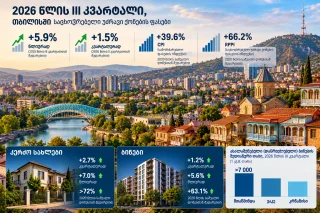 Residential Property Prices in Tbilisi Rise by 5.9% Year-on-Year
Austria’s Commercial Student Housing Market Remains Small
Austria has almost 402,000 higher-education students and Vienna accounts for roughly half of that figure, yet the country’s transparent commercial student-housing sector remains relatively small. International enrolment and a shortage of conventional rental housing support demand, but private operators compete with an established non-profit dormitory system while high accommodation costs limit students’ ability to absorb rent increases.
Austria’s commercial student housing sector remains small
Austria differs from markets such as the UK and the Netherlands, where purpose-built student accommodation has developed into a major institutional real-estate sector. A significant part of Austrian demand is still served by non-profit residences, conventional rental apartments and rooms in shared flats.
RAYSolute Consultants, in a report updated on September 10, 2026, identifies four named student-housing properties for which rental rates could be quantified. All four are in Vienna and together provide capacity equivalent to 0.52% of the report’s base of 400,340 students, or approximately 2,100 places. The figure should not be interpreted as Austria’s overall student-housing provision rate: the publicly available section covers four rate-quantified commercial properties, while the rest of the research is restricted to clients.
Austria has almost 402,000 students
Official statistics put the student population slightly higher. Austria recorded 401,934 higher-education students in the 2024/25 winter semester, an increase of 0.4% from the previous year. Of these, 129,364 came from foreign countries, and about 85% of international students were citizens of European countries. The data cover public and private universities, universities of applied sciences and university colleges of teacher education.
International students are particularly relevant to commercial accommodation because they are more likely to need furnished housing that can be secured before arrival and offers predictable monthly costs. The entire international student population, however, cannot be treated as potential demand for private residences because many students use non-profit dormitories or the conventional rental market.
Vienna concentrates the country’s student demand
Vienna is Austria’s largest higher-education market. City statistics recorded 197,874 students at Vienna higher-education institutions in the 2024/25 winter semester, including 70,082 foreign citizens. The University of Vienna accounted for 81,115 students, TU Wien for 25,854 and Vienna University of Economics and Business for 22,072. The city’s statistical publications note that students enrolled in multiple programmes may be counted more than once.
Even with that methodological qualification, Vienna’s concentration of universities makes it the main target for private student-housing operators in Austria.
Accommodation can cost €900 a month
Housing already represents a major share of student expenditure. Vienna University of Economics and Business estimates average monthly living costs for students in Austria at €1,200 to €1,600 in 2026. Accommodation accounts for approximately €450 to €900, while food and personal expenses are estimated at about €380, health insurance at around €80 and communications at about €40 per month.
Current Vienna offers show an equally broad range. Housing Austria advertised available rooms from €425 a month in summer 2026. Individual properties were listed at approximately €485 to €575, €745 or €850 depending on location and room type, while rooms on Nordbahnstrasse were priced at roughly €900 to €950 per month. Deposits and administration fees vary between properties.
The price structure creates a natural ceiling for private operators. A premium furnished studio competes not only with another commercial residence but also with shared apartments, non-profit student halls and smaller units on the conventional rental market.
Residence rules increase the impact of high rents
Accommodation costs also affect some international students before they arrive in Austria. In 2026, applicants under 24 seeking a student residence permit must demonstrate financial resources of €722.58 per month. For applicants aged 24 or older, the requirement is €1,308.39 per month. The necessary funds generally have to be demonstrated for up to 12 months in advance.
The standard calculation includes accommodation expenses only up to €386.43 per month. When actual housing costs exceed that figure, applicants must demonstrate additional funds to cover the difference, as well as sufficient resources for health insurance. These rules apply to students who require the relevant residence permit rather than to every foreign student in Austria.
With many Vienna accommodation options already above €400 a month, this mechanism directly affects the affordability of higher-priced private residences.
Austria’s rental shortage supports student housing
The sector also benefits from conditions in the broader residential market. Austrian residential investment transactions reached about €1.2 billion in 2025, up 91% from the previous year. Investor interest increasingly shifted towards Vienna and existing income-producing residential assets, while prime residential yields in the capital declined to around 4%.
Across the wider European living sector, student housing accounted for more than 25% of transactions in 2025. That percentage is a European market figure and should not be read as the share of Austrian deals involving student accommodation.
For Austria, the more important trend is the combination of recovering investment activity and constrained residential construction.
Vienna rents remain under upward pressure
Austria’s total real-estate investment market reached approximately €4.1 billion in 2025, around 40% above the previous year. International and institutional investors accounted for 41% of the volume, while residential property was the largest asset class.
CBRE expects structural undersupply in the rental market to persist in 2026. Prime rents in high-quality new Vienna residential projects are forecast to reach about €20.30 per square metre per month. A decline in building permits also suggests that a rapid increase in new supply is unlikely.
Students therefore compete for smaller conventional apartments with a much broader group of tenants. For specialist residences, predictable monthly costs and furnished units that can be booked before arrival remain important advantages.
Institutional capital is entering the market
Individual transactions provide evidence of growing institutional interest. In April 2026, Primevest Capital Partners acquired a student residence in Vienna on behalf of an international real-estate fund. The deal was structured as the acquisition of the company owning the property. Neither the name of the residence nor the transaction price was disclosed.
In a market where the commercial segment is still relatively small, transactions of this type indicate that student accommodation is beginning to attract capital as a distinct investment category.
Vienna is adding new student beds
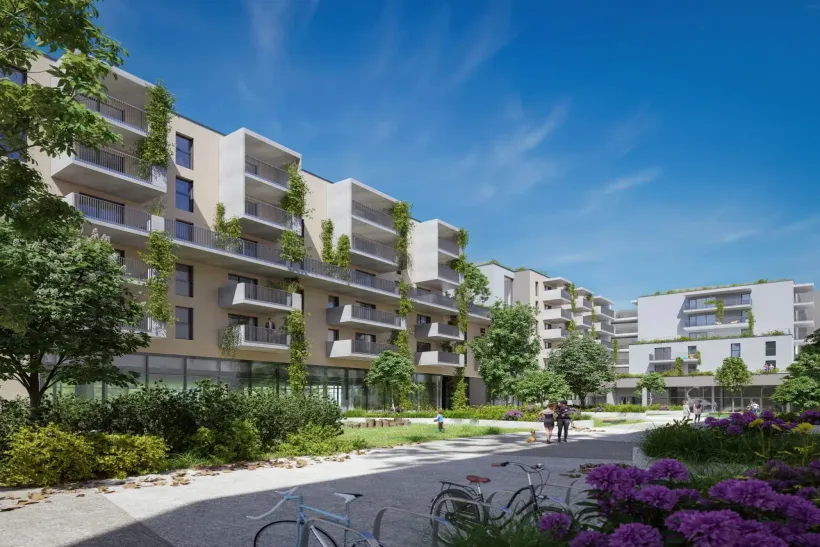
New supply is gradually entering the market. In February 2026, the Lebensraum Muthgasse 50 development in Vienna’s 19th district reached structural completion. The project includes 235 subsidised rental apartments, 75 privately financed apartments, a six-group kindergarten, about 3,700 square metres of commercial space and a student residence with more than 300 places. Completion is scheduled for 2027.
Several hundred additional places remain modest compared with the size of Vienna’s higher-education sector. Muthgasse 50 also illustrates a characteristic feature of the Austrian model: student accommodation can be delivered as part of a mixed urban development combining subsidised housing, conventional apartments and commercial uses rather than as a stand-alone private residence.
As International Investment experts report, the main analytical risk is treating the 0.52% figure as Austria’s overall student-housing provision rate. The publicly available RAYSolute data support a much narrower conclusion: four commercial properties with identifiable rates represent a very small share of the student population. The more robust investment case rests on Vienna’s large university population, its international student base and persistent pressure in the conventional rental market. Those factors do not guarantee attractive returns, however. High land and construction costs, competition from non-profit residences and limited student budgets mean that development cost per bed and achievable rent are more important than the supply shortage alone.
FAQ: Student Housing in Austria
How many students study in Austria?
The latest official figures for the 2024/25 winter semester put Austria’s higher-education student population at around 402,000.
How many international students study in Austria?
Austria has roughly 129,000 foreign higher-education students, equivalent to about one-third of the total student population.
How many students study in Vienna?
Vienna statistics record approximately 198,000 students, although students enrolled in more than one programme may be counted more than once.
What does the 0.52% figure in the RAYSolute report mean?
It refers to four named commercial student-housing properties for which rental rates were identified. It is not an estimate of Austria’s entire student accommodation stock.
How much does student housing cost in Vienna?
A practical accommodation budget is approximately €450 to €900 a month, with individual prices depending on location, room type, contract length and included services.
Why are investors interested in Austrian student housing?
Demand is supported by Vienna’s large university population, international enrolment and constrained conventional rental supply. Development costs, regulation and student affordability remain important limitations.