











Bulgaria’s Housing Market Matures
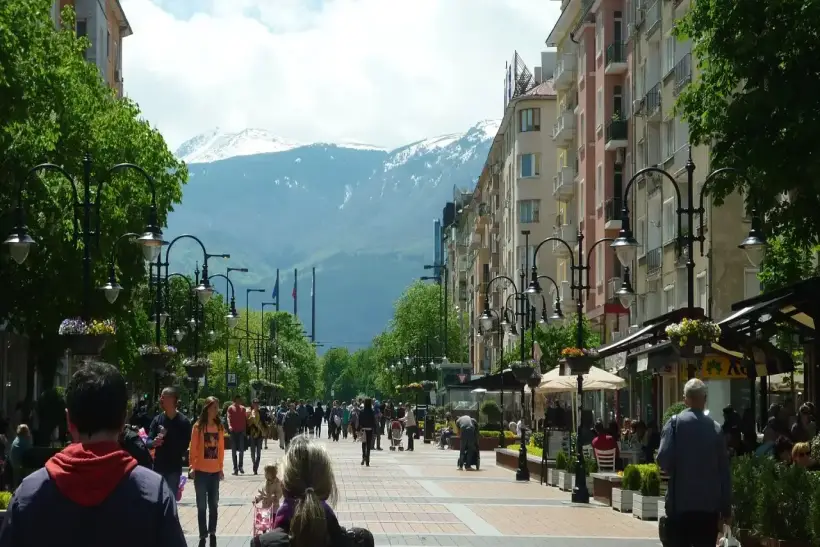
Bulgaria’s property market is again going through a phase of “limited return,” but in a very different economic setting. After the 2010–2011 crisis, recovery was driven by distressed assets, auctions and weak demand. In 2026, the market is cooling after overheating: prices remain high, transactions take longer, buyers are more rational and euro adoption has made housing values more transparent, but not more affordable.
Mirela’s old signal sounds relevant again
Mirela’s archived article about a “limited return” of Bulgaria’s property market was based on Business Monitor International’s Bulgaria Real Estate Report for the third quarter of 2011. At that time, Bulgaria was emerging from a severe downturn after the global financial crisis: property values had fallen sharply, demand was weak and recovery looked limited and uneven.
The key figure from that period was the rise in property auctions. In January and February 2011, the report cited an average of about 1,550 auctions per month in Bulgaria, compared with 750 in 2010. The increase was linked to non-performing mortgage loans, old tenders without buyers and the appearance of lower-priced properties.
Today, the Bulgarian market is at a different point in the cycle. It is not recovering from a collapse, but normalizing after rapid growth. Still, the formula of a “limited return” fits again: activity has not disappeared, prices have not crashed, but euphoria has faded and market participants are acting more cautiously.
The 2025 boom gives way to slower growth
In 2025, Bulgarian real estate was lifted by expectations of euro adoption, low returns on alternative savings and buyers’ desire to protect capital. Housing was seen as an asset to buy before further price increases and before the final currency change.
In 2026, that stimulus has weakened. Bulgaria has already adopted the euro, prices are now expressed in the common European currency and buyers can compare properties, districts and ownership costs more calmly. The euro removed currency uncertainty, but it did not reduce the price per square meter.
BTA’s analysis shows that Bulgaria’s residential market is shifting from euphoria to normalization. Supply is increasing, transactions are taking longer, negotiations are becoming more detailed and buyers are increasingly focused not on fear of missing out, but on real value, construction quality, infrastructure and long-term liquidity.
Prices remain high, but momentum is weaker
Official statistics do not point to a collapse. Bulgaria’s National Statistical Institute reported that housing prices rose 12.6% year-on-year in the fourth quarter of 2025. On a quarterly basis, however, growth was much more modest at 0.3%, already indicating a slowdown after a strong market phase.
In Sofia, the country’s largest and most liquid market, the slowdown became especially visible. According to Bulgarian Properties, the average price of completed transactions in the first quarter of 2026 was €2,680 per square meter. That was below the €2,790 level recorded at the end of 2025, but still about 29% higher than at the start of 2025.
The average final price of a purchased apartment in Sofia reached €217,500, compared with €150,000 at the beginning of 2025. That is an important signal: buyers are looking not only at the price per square meter, but also at the total transaction size, down payment, mortgage, renovation and maintenance costs.
Fewer deals, but demand remains
The main change in 2026 is lower activity. In the first quarter, 7,529 transactions were registered in Sofia, down 12.3% from a year earlier. This was the first clear decline after the period of recovery and euro-related buying pressure.
That decline does not mean a crisis. It suggests the market is returning to a normal speed after a peak year. Buyers are taking longer to decide, more often arrive with mortgage pre-approval, compare several districts and verify documents before making a deposit.
For sellers, this is a new reality. An overpriced property no longer sells automatically. Apartments needing renovation, with poor layouts, weak locations or unclear maintenance costs may remain on the market longer. Stronger demand remains for quality homes with good transport access, energy efficiency and clean documentation.
Euro adoption changed buyer calculations
Bulgaria joined the euro area on January 1, 2026. The conversion rate was fixed at 1.95583 Bulgarian levs per euro. The euro area is the group of European Union countries that use the euro as their common currency.
For real estate, this is a structural change. Prices are now easier to compare with Romania, Greece, Croatia, Slovenia and other regional markets. Foreign buyers from the euro area face fewer currency barriers, while banks have less uncertainty around the conversion of assets and income.
For local households, however, the key question remains the relationship between home prices and income. If wages grow more slowly than apartment prices, transparency does not make purchases affordable. Euro adoption has become a factor of confidence, but not a solution to housing affordability.
Mortgages support the market but limit risk
A mortgage is a long-term bank loan used to buy property, usually secured by the home itself. In Bulgaria, mortgage lending remains a key source of demand, especially in Sofia, Varna, Plovdiv and Burgas.
Stable lending conditions help the market avoid a sharp fall. But banks are paying closer attention to borrowers’ income, down payments and property quality. This is particularly important for investment purchases, where risk is higher and yield calculations have become less obvious.
In previous years, some buyers purchased apartments at an early construction stage, expecting to resell quickly after completion. That strategy no longer looks guaranteed. The gap between off-plan prices and completed homes has narrowed, while buyers have become more demanding about developer reputation.
Investors give way to owner-occupiers
One of the main shifts in 2026 is the decline in purely investment-driven purchases. More buyers are looking for homes for themselves, their families or long-term rental use rather than quick resale.
This makes the market healthier but less speculative. An owner-occupier assesses schools, transport, heating, parking, entrance quality, future costs and surrounding infrastructure. An investor evaluates rental yield, liquidity and exit options. In 2026, both groups have become more cautious.
For developers, this means a change in product strategy. High-density mass projects with weak infrastructure will face tougher competition. Projects with a clear concept, resilient demand, good building management and realistic pricing look stronger.
The market is returning to discipline, not crisis
The comparison with 2011 matters not because Bulgaria is facing the same crisis again. Back then, recovery was limited by bad loans, weak demand and the aftermath of falling prices. Today, the market is returning to balance after overheating, not after a collapse.
In 2011, cheaper assets emerged through auctions and distressed sales. In 2026, the main factors are quality, mortgage access, household income and buyers’ ability to absorb the full cost of ownership. This is a more mature, but also more demanding market phase.
For foreign buyers, Bulgaria remains attractive because of EU membership, the euro, relatively low prices by euro-area standards and improving infrastructure. But the simple logic of buying before prices rise has given way to calculation: where the property is located, what rental demand looks like, who the developer is, how much maintenance costs and how easily the asset can be resold in several years.
What comes next for Bulgaria’s property market
The base-case scenario is not a sharp fall, but moderate growth with fewer transactions and longer negotiations. Prices may continue rising in quality segments, while weaker properties will increasingly face bargaining and expectation adjustments.
Sofia will retain its leadership in price and liquidity. Varna and Burgas will be supported by tourism, internal migration and interest in coastal property. Plovdiv will remain an industrial and logistics center. Regional markets will become more uneven: where incomes are lower and prices have already risen, buyers will be especially sensitive to affordability.
As reported by International Investment experts, Bulgaria’s current market is not repeating the 2011 crisis, but it is again showing the limits of recovery: demand exists, banks are lending and the euro improves confidence, yet purchasing power is not unlimited. The main risk in 2026 is not a price collapse, but a widening gap between seller expectations and buyer capacity. The longer prices rise faster than incomes, the more the market will split between liquid quality assets and overpriced homes that sell only after concessions.
FAQ: Bulgaria’s property market in 2026
What does a “limited return” of Bulgaria’s property market mean?
It means a recovery without a sudden boom. In 2011, it described a weak rebound after falling prices. In 2026, it can describe normalization after overheating: the market remains active, but transactions are slower and buyers are more cautious.
Why did Bulgaria’s property market slow after 2025?
In 2025, demand was lifted by euro adoption expectations, fear of further price growth and efforts to protect savings through property. After Bulgaria joined the euro area, part of that demand was exhausted and buyers began focusing more on price and costs.
Are Bulgarian housing prices falling?
There is no broad price collapse. Official data at the end of 2025 still showed annual price growth, but quarterly growth had weakened. In 2026, the market is slowing and becoming more selective rather than crashing.
What is happening in Sofia’s housing market?
In Sofia, the average completed transaction price in the first quarter of 2026 was about €2,680 per square meter, while transactions fell 12.3% year-on-year. That points to cooler activity after the 2025 peak.
How did the euro affect Bulgarian real estate?
The euro made the market more transparent, reduced currency risk and simplified price comparisons with other euro-area countries. It did not, however, make housing cheaper or solve affordability problems for local buyers.