







 Australia’s Spring Auctions Rise but Remain Well Below 2025
 Number of Foreigners Holding Turkish Residence Permits Exceeds 1.27 Million
 Demand from Russian Tourists for Holidays in Georgia Rises by 20–25%
 Montenegro Property Buying Costs in 2026
 Four in Ten Companies Would Not Choose Slovakia
 Gulf Countries Prepare Unified Tourist Visa
Batumi Housing Market: Prices Rose by 17% in 2025 — TBC Capital Report
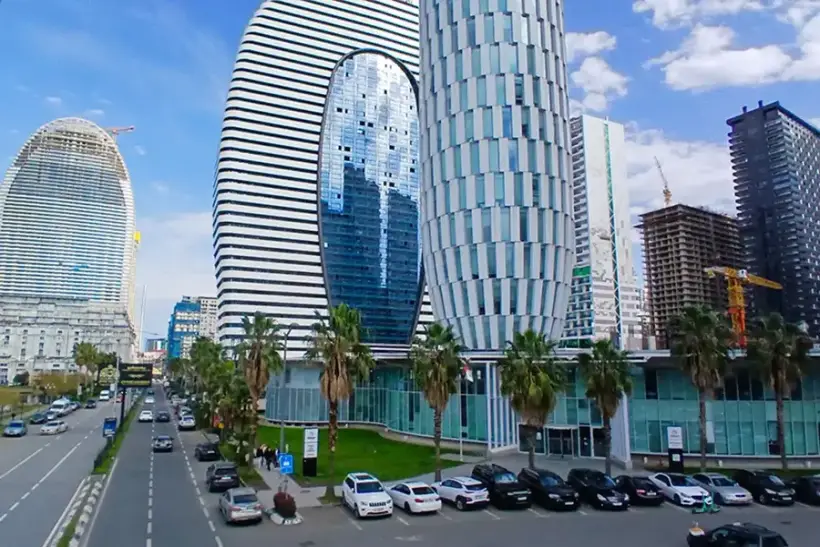
Risks and Benefits of Investing in Real Estate in Georgia
Batumi’s residential real estate market continued to grow in 2025, maintaining strong investment activity. The average apartment price increased to $1,395 per sq. m, up 17% year-on-year, while rental yields are estimated at 7.2%, according to TBC Capital. At the same time, demand remains predominantly investment-driven, intensifying competition in the short-term rental segment and raising questions about the actual profitability of projects amid rising supply.
How Much Does Housing Cost in Batumi
Batumi’s residential property market has shown steady positive momentum in recent years. In 2019, the average price stood at $838 per sq. m. In 2020 and 2021, it remained largely unchanged at $839 and $844, respectively. More noticeable growth began in 2022, when the average price reached $897 per sq. m.
Growth accelerated in subsequent years. In 2023, the average price rose to $1,125 per sq. m, in 2024 to $1,197, and in 2025 reached $1,395 per sq. m, marking a 17% annual increase and the highest level recorded during the period under review. The compound annual growth rate from 2019 to 2025 was approximately 9%.
This dynamic is largely driven by the investment-oriented structure of demand. A significant share of transactions is aimed at rental income or resale, increasing the market’s dependence on tourist flows and occupancy rates. At the same time, the supply of higher-end modern developments continues to expand, supporting average price levels.
Housing Prices and Yields in Other Resort Cities
As of January 2026, the average price of a one-bedroom apartment in central Batumi stood at $1,493 per sq. m. This remains lower than in other popular resort destinations in the region: $2,554 in Antalya, $2,653 in Constanța, $3,230 in Varna, and $6,992 in Split. The lower entry price makes Batumi competitive among tourist-oriented cities.
At the same time, the city offers relatively high nominal rental yields of around 7.2%. This exceeds Constanța (5.2%), Antalya (4.6%), Varna (3.9%), and Split (3.5%). The combination of moderate purchase prices and comparatively high yields continues to support investment activity.
However, high nominal yields do not necessarily translate into comparable net profitability. Amid active construction and increasing supply, payback indicators are becoming more dependent on occupancy levels and operating expenses. A more detailed assessment is provided by investment company Galt & Taggart.
Apartment Yields in Batumi Are Declining
According to Galt & Taggart, Batumi’s resort real estate market is entering a phase of structural imbalance. As the housing stock continues to expand, yields on investment apartments are gradually decreasing.
Sales in the new-build segment have declined: while 3,000–3,400 apartments were sold annually in 2022–2023, around 2,000 were sold in 2024, and only 1,500 units were sold in the first eight months of 2025, against supply of approximately 6,000 apartments. Around 30% of new units enter the secondary market within the first two years after completion, where transaction volumes are nearly half the 2022 level.
The housing stock continues to grow, from 86,000 apartments in 2020 to 119,000 in 2024. Between 2025 and 2029, approximately 58,000 additional units are planned, of which 46,300, or 80%, are intended for short-term rentals. In certain districts, the share of investment-oriented apartments reaches 96%, further intensifying competition within the segment.
Gross yields declined from 10% in 2023 to 7.4% in 2025 and, according to forecasts, could fall to 5.1% or even 3.4%. Analysts at International Investment note that after deducting management fees, cleaning, platform commissions, utilities, and vacancy periods, net yields typically amount to 3–4%. With further expansion of the apartment stock, net yields could decrease to 1.5–2%.
A sample calculation for a 35 sq. m studio priced at $59,500 shows that long-term rental generates around $1,870 in net annual income, equivalent to roughly 3% per year with a payback period of about 32 years. A short-term rental model with an average occupancy rate of 43.13% delivers approximately 2.8% net yield.
With an average nightly rate of $34 and 31% occupancy, gross annual income is limited to $3,847. Without professional management, profitability may fall to zero or even turn negative. As a result, investors are increasingly considering alternative formats within resort real estate.
Hotel Investment Yields in Batumi
Unlike apartments, the hotel segment demonstrates a more stable operating model. With average nightly rates of $310 in the low season and $520 in the high season, and 274 occupied nights per year, gross income reaches $57,714. After deducting management company expenses, net annual profit totals $34,629.
Average occupancy in branded hotels in Batumi has increased for three consecutive years: 68.6% in 2022, 70% in 2023, and 71% in 2024. The average nightly rate stands at $286. By comparison, apartments average $34 per night with around 31% occupancy. Annual gross income for apartments is estimated at $3,847 versus $72,112 in the hotel format.
The price per square meter in hotels is approximately $8,300 compared to $1,890 in apartments; however, hotel real estate generates roughly 4.8 times higher yield per square meter. Net returns on hotel rooms reach 10–17% annually.
Hotel economics are based on a centralized operating model in which marketing, reservations, staffing, and maintenance are distributed across the entire property, helping maintain stable occupancy and rates. New internationally branded projects, including Wyndham Grand Batumi Gonio, target the luxury and all-inclusive segments and strengthen the branded hotel market. With a limited number of high-quality properties available, such complexes offer a more sustainable yield model compared to investment apartments.