







 Vietnam Mortgage Surge Pushes Homes Out of Reach
 Lithuanian Apartment Prices Accelerate Across Major Cities
 London Flats Lose Value Ahead of Leasehold Reform
 Construction of the Batumi–Sarpi Highway Begins in Georgia
 Baltic Property Investment Accelerates in 2026
 Hong Kong and Singapore Renew Their Expat Rivalry
How Georgia Supports Its Economy and Investments in Times of Crisis
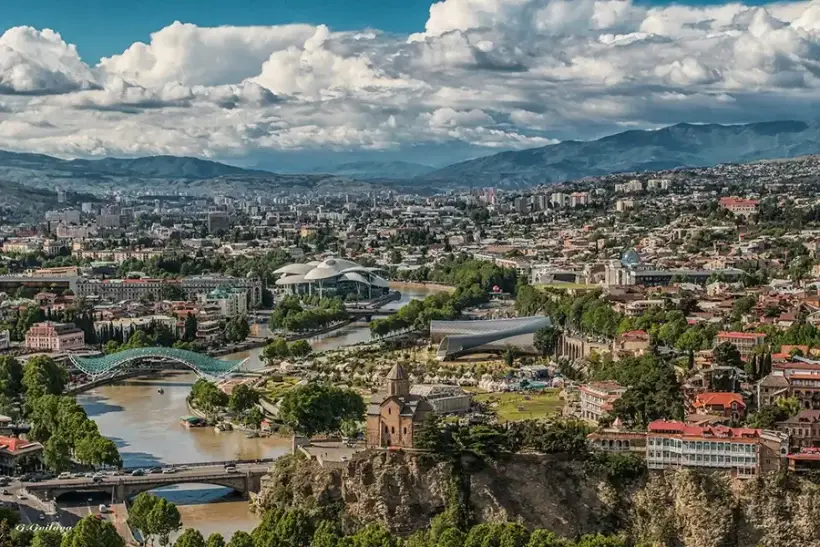
During a period of global turbulence, military conflicts, and escalation in the Middle East, Georgia maintains its status as an oasis of stability and security. The government consistently strengthens the economic, investment, and social sectors, creating conditions for steady growth and protection of national interests despite external challenges.
Situation in the Middle East
The escalation of the military conflict in the Middle East since the end of February 2026 has seriously disrupted the regional economy and affected European countries as well. Since the beginning of the attacks on February 28, approximately 21,000 flights have been canceled at seven major airports, including Dubai, Doha, and Abu Dhabi. The airspace of Qatar, Bahrain, and Kuwait remains closed, and airlines operate only a limited number of flights, while the United States and other countries assist in organizing evacuation charter flights.
In Dubai and Abu Dhabi, missile and drone debris struck hotels, shopping centers, and airport terminals, causing fires, infrastructure damage, and threats to life and health. On March 3, an Iranian drone hit the parking area at the US consulate in the UAE, while in Qatar a ballistic missile struck the American base Al-Udeid. The UK base in Cyprus was also attacked. In Israel, airstrikes continue along with the expansion of ground operations, maintaining a high level of danger to civilian areas and transport networks.
Thousands of tourists are seeking alternative routes due to the suspension of regular flights and closed airspace. These events have already caused serious disruptions in the hospitality industry and slowed the flow of foreign capital; major investment projects have been paused, and new initiatives delayed due to high uncertainty and security threats.
The Government of Georgia has expressed deep concern over the ongoing military actions in the Middle East, voicing hope for a swift restoration of peace and the replacement of military operations with diplomacy and political dialogue. Authorities have also pledged to take all necessary measures to ensure the safety of Georgian citizens in the region and to protect their interests.
Domestic and Foreign Policy of Georgia
President Mikheil Kavelashvili noted that the global political situation is changing, with countries increasingly using force alongside diplomacy to achieve strategic goals. In this context, Georgia aims to become a key country for international projects, strengthening economic integration between Asia, Europe, and the Middle East, and reinforcing its status as a regional hub in the South Caucasus. Important steps include visits to Armenia, Azerbaijan, Turkey, and Serbia, as well as a meeting with the President of Croatia, all aimed at promoting peace and cooperation with neighboring countries.
The President emphasized that, despite the global crisis, the country has managed to ensure growth in the budget, salaries, and pensions. According to international organizations, Georgia is among the world leaders in economic growth and ranks high in safety. The government intends to continue strengthening the economy and social sectors.
Economy and Investment Climate in Georgia
Prime Minister Irakli Kobakhidze highlighted the country’s high investment potential, liberal economic policies, low taxes, and minimal levels of corruption, all of which create incentives for business activity.
Over the past five years, Georgia has demonstrated the highest economic growth rates in Europe and the region. The average GDP growth from 2021 to 2025 reached 9.3 percent, a leading figure on the continent. According to the International Monetary Fund, the country is expected to maintain its leading position in the medium term.
Georgia is recognized as one of the least corrupt countries in the region, outperforming about ten EU states. In the World Bank Business Ready (B-READY) ranking, the country ranks fourth among 101 countries worldwide, reflecting investor confidence and stability in the business environment.
The Prime Minister also emphasized the government’s strategic plans to develop the country’s transit potential and infrastructure, which will contribute to further accelerating economic growth and strengthening Georgia’s economic resilience.
Real Estate as a Driver of Economic Growth
Irakli Kobakhidze noted that the real estate sector remains one of the key drivers of the country’s economic development. Last year, the sector experienced real growth of over 10 percent, while revenues from international tourism reached record levels. Real estate creates new jobs, supports infrastructure development, and attracts direct foreign investment, enhancing the overall economic potential of Georgia.
The Prime Minister highlighted the largest project by Eagle Hills, valued at 6.6 billion dollars, which will further enrich the economy by approximately 11 billion lari. The project includes large-scale development initiatives in Tbilisi and Gonio, a prestigious resort area near Batumi.
In Gonio, one of the largest luxury hotel complexes, Wyndham Grand Batumi Gonio, is under construction, catering to international tourism and the conference segment. Analysts note that hotel real estate is the most attractive for investors in Georgia due to stable revenues and the dynamic development of the tourism sector.
Conclusion
International Investment analysts note that Georgia maintains economic and social resilience amid global turbulence and military conflicts in the Middle East. Domestic government measures, coordination between institutions, and strategic foreign policy enable the country to preserve stability and strengthen its position as a regional hub in the South Caucasus.
High economic growth rates, leadership in attracting investments, and the development of real estate and tourism sectors, including major projects by Eagle Hills and Wyndham Grand Batumi Gonio, provide a foundation for further strengthening infrastructure, employment, and investment appeal.
Overall, these factors demonstrate Georgia’s ability to combine economic growth, social stability, and foreign policy activity, minimizing the impact of external threats and ensuring long-term prospects for sustainable development.