







 Canada Fast-Tracks Tax Rulings for C$1 Billion Investments
 China Nears a Decision on Fresh Stimulus
 Fines for Illegal Rentals in Spain Reach €800,000
 Australia’s Spring Auctions Rise but Remain Well Below 2025
 Number of Foreigners Holding Turkish Residence Permits Exceeds 1.27 Million
 Demand from Russian Tourists for Holidays in Georgia Rises by 20–25%
In Czechia, new construction rules raise questions over permits
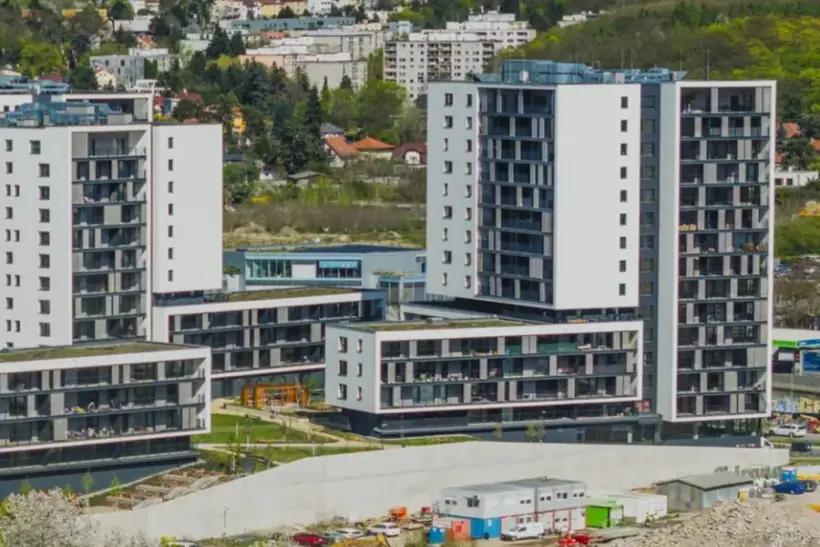
In the Czech Republic, upcoming changes to construction regulation have intensified the debate between homeowners, municipalities, and investors: authorities expect to speed up building permits, but market participants warn that simplifying procedures should not weaken the role of cities, neighbors’ rights, or control over where and what can be built.
In the Czech Republic, construction reform is set to accelerate permitting
The main goal of the reform is to reduce bureaucracy in construction and make the permitting process more predictable. Legal reviews of the draft amendments to the law indicate that the proposed model is based on the principle of “one authority, one procedure, one permit.” As a result, developers would go through fewer separate approvals and receive a final decision within a more unified administrative framework.
This is a sensitive issue for the Czech Republic. Slow permitting procedures have for many years been seen as one of the factors limiting new construction and worsening housing affordability. The Ministry for Regional Development is responsible for public administration in spatial planning, permitting procedures, and construction rules, including preparation of the core legal framework in this area.
In the Czech Republic, homeowners expect simplification but fear uncertainty
For private homeowners and landowners, the reform is important not only in the context of large development projects. The changes also affect house construction, extensions, renovations, land subdivision, and more complex repairs. If procedures become shorter, this could reduce costs for families that currently face additional expenses due to permit waiting times, rental housing, rising material prices, and changing credit conditions.
However, the key question remains the final wording of the law and how it is applied in practice. Faster procedures do not automatically mean the right to build anywhere. The new system does not remove zoning plans, technical standards, environmental requirements, or other rules protecting public interests. This is where much of the dispute has emerged: the market expects speed, while municipalities and residents expect guarantees that acceleration will not weaken control.
In the Czech Republic, municipalities remain central
One of the main issues under discussion is the influence of cities and municipalities on territorial development. It is through zoning plans that it is determined where housing, public buildings, roads, industrial zones, and infrastructure can be built. Legal analyses of zoning plan changes in the Czech Republic highlight that this process remains one of the most conflict-prone for local authorities, as municipal mistakes can lead to legal disputes and annulled decisions.
Faster approvals for projects that already comply with approved plans do not remove municipal responsibility for overall territorial strategy. For landowners, this means they must monitor not only building permits, but also public consultations, plan changes, and decisions by local authorities that shape future development in advance.
In the Czech Republic, faster does not mean without rules
One common misconception around the reform is the idea that accelerated procedures would allow construction with almost no restrictions. This is incorrect. Since 2024, the new construction regime already provides a more unified procedure in which location and building approval are assessed together, with interaction gradually shifting into digital form through the construction portal and other information systems.
Even with a simplified administrative process, a project must comply with the applicable territorial plan, construction and technical standards, sanitary, environmental, and transport restrictions. For investors, this increases the importance of high-quality project preparation: faster procedures will primarily benefit projects that are already legally and technically well structured without conflicts.
In the Czech Republic, construction digitalisation remains a separate risk
The reform is linked not only to legislation but also to digital systems. Market reviews indicate that in 2026 it is particularly important for developers and corporate investors to take into account the transition period of construction digitalisation procedures, which is expected to continue until the end of 2027. This creates a dual effect: well-prepared projects may benefit from simplification, while poorly prepared ones may face more noticeable delays.
For the housing market, this has direct implications. If the reform accelerates approvals, it could support construction and ease pressure from housing shortages. If digital and administrative implementation slows down, the new system risks becoming another source of uncertainty for investors, municipalities, and households planning construction.
As experts at International Investment report, the Czech construction reform could become an important step for the housing market, but its effect will depend not on political statements, but on practice: how quickly unified procedures start working, whether municipalities retain real involvement, and whether property owners can clearly understand the rules in advance. For investors and households, the key takeaway is that faster permitting does not remove the need to closely follow zoning plans, public hearings, and the final wording of the law.
FAQ: New construction rules in the Czech Republic
What is changing in Czech construction rules?
The reform aims to speed up and simplify permitting procedures, including a more unified approach based on “one authority, one procedure, one permit.”
Will it be possible to build without zoning plans?
No. Faster procedures do not remove zoning plans, technical standards, environmental requirements, or other legal restrictions.
Will municipalities keep influence over development?
Yes, municipalities retain a key role through zoning plan preparation and approval, although details depend on the final law and its implementation.
Who benefits most from the reform?
Owners and investors whose projects already comply with approved plans and are legally and technically well prepared.
When will the real impact be visible?
After the final legislation is adopted and administrative practice develops, especially considering the digital transition period until the end of 2027.