










Spain increases flights amid global fuel crisis
Rüdiger Wölk/IMAGO
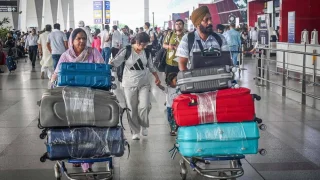
A global fuel shortage will not prevent Spain from increasing the number of flights between May and October 2026, DW reports, citing the country’s Airlines Association. Authorities expect stable supplies of aviation kerosene and rising tourism demand driven by a shift in travel flows.
How the war has affected aviation in Europe
The consequences of restricted oil and gas supplies through the Strait of Hormuz are deepening the crisis in the market. The EU produces 60–70% of its aviation fuel domestically and imports 30–40%. Around half of these imports pass through the Middle East region. The closure of the strait amid the war with Iran has led to rising jet fuel prices and disruptions in logistics.
Germany’s largest carrier Lufthansa has announced the cancellation of around 20,000 flights between May and October 2026. The reduction of short-haul routes is expected to save approximately 40,000 tonnes of aviation kerosene, the price of which has doubled since the beginning of the conflict, according to the company.
Dutch airline KLM has also reported the cancellation of around 160 flights in the short term. Overall, European and Asia-Pacific carriers are seeing rising prices and the risk of further cancellations ahead of the summer season. Analysts note that many of the affected routes are those that can be relatively easily replaced with alternative flights.
Fuel shortage risks and possible EU measures
Estimates of aviation fuel stocks in Europe vary significantly. The Executive Director of the International Energy Agency, Fatih Birol, warns that reserves may last only around six weeks. At the same time, the Dutch government believes supplies are sufficient for at least five months of aviation and other sector needs.
EU Energy Commissioner Dan Jørgensen says the situation could shift from rising prices to a supply crisis. The EU is discussing mechanisms for joint fuel stock management between member states. A package of measures presented by the European Commission on 22 April also includes possible redistribution of existing volumes across the bloc. Production oversight is expected to be tightened, and, if necessary, aviation kerosene imports from the United States may be expanded.
Where does Spain get its kerosene?
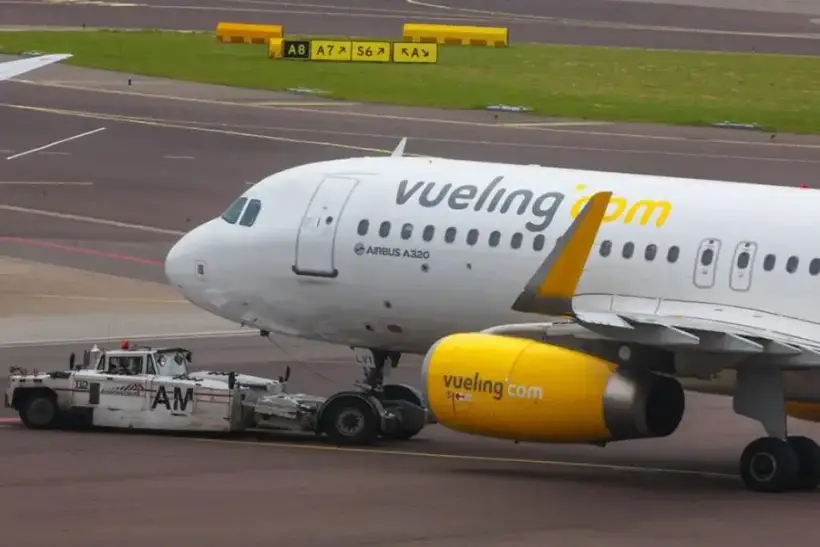
The Spanish Airlines Association says the situation in the country is different. Major Spanish carriers Iberia, Vueling, Air Europa, and Air Nostrum aim to keep ticket prices at current or reasonable levels despite fluctuations in oil and fuel prices.
Economics professor David Jiménez of the University of Madrid highlights the importance of long-term diversification of oil supply sources. Spain has no domestic oil fields but imports crude from countries including Nigeria, the United States, Mexico, Brazil, Libya, Angola, and Kazakhstan. Some supplies still come indirectly from Russia despite EU sanctions. Around 85% of aviation fuel is produced domestically from imported crude oil, reducing dependence on external refined fuel supplies.
An additional factor is the modernisation of the fleet, with more fuel-efficient aircraft and route structures. About 85.7% of Spanish carriers’ traffic is concentrated on European routes. In this segment, International Airports Council Director General Olivier Jankovec notes that no kerosene shortages are currently observed.
Tourism as a key pillar of the economy
Tourism remains one of the main drivers of Spain’s economy, accounting for more than 13% of GDP. In 2025, the country welcomed 96.8 million foreign tourists, generating €134.7 billion in spending. The main source markets are the United Kingdom, France, and Germany. Before 2022, Russia was also a significant market, with around one million visitors annually. In 2024, 271,462 Russian citizens visited Spain.
Spain plans to increase passenger numbers by around 6% during the summer season, to 258 million. The additional demand is linked to shifting European travel preferences, with some tourists expected to choose Spain instead of Turkey, Cyprus, or Egypt. In this context, expanding air transport is seen not only as an economic calculation but also as an effort to strengthen Spain’s position as one of Europe’s leading tourist destinations amid changing global logistics.
Conclusion
Analysts at International Investment note that the war in the Middle East continues to negatively affect all areas of the global economy. The situation in the fuel market is deepening divisions within the global aviation industry. Some carriers are forced to cut routes and restructure networks, while others maintain or expand operations thanks to more resilient supply chains and domestic fuel processing.
The European market remains vulnerable due to its high dependence on imports and external logistics. Measures being discussed within the EU on fuel coordination and redistribution indicate a gradual shift toward risk management rather than purely market-based regulation.
Under these conditions, aviation is becoming part of broader economic dynamics, where access to energy resources directly influences mobility, transport costs, and the structure of international tourism.