







 Egypt Prepares New Law for Property Developers
 Young Japanese Buyers Turn to 50-Year Mortgages
 Argentina Narrows Tourism Gap as Arrivals Rise
 Seattle Luxury Housing Loses Its Former Momentum
 The World’s Strongest Passports for Travel, Living and Investment
 Russian Developers’ Debt Nearly Doubled in a Year
Austria launches first project to redevelop stalled developments into housing
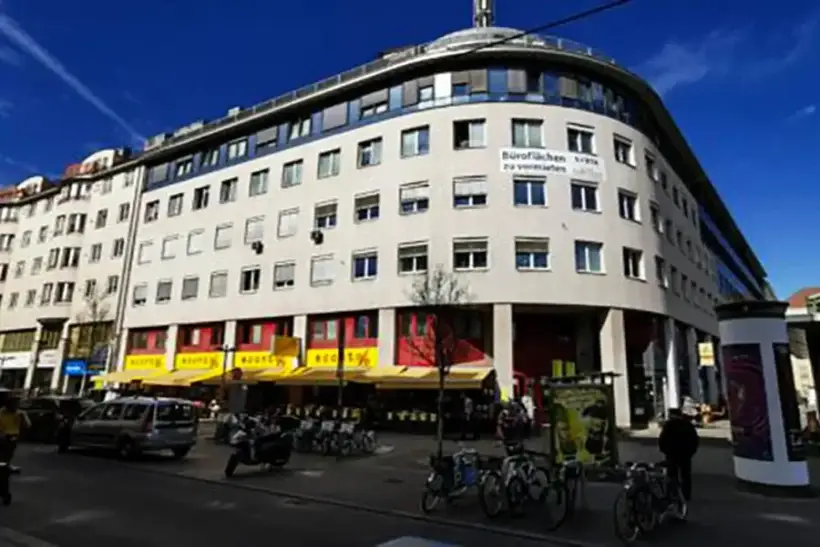
Investment company Revetas Capital has launched the Pearl residential investment platform to operate across Germany, Austria, and Switzerland. The platform will focus on restarting stalled development projects and converting them into housing. Its first asset is a property in Vienna, where an office building is planned to be transformed into a residential complex, according to CIJ.World.
How the Pearl platform will operate
Pearl is a new investment platform created by Revetas Capital to work with development projects that have been frozen or slowed due to changing financing conditions in Europe. These are primarily schemes launched during the low-interest-rate period that have lost financial viability following higher borrowing costs.
The platform will focus on acquiring and relaunching such assets, as well as converting them into residential real estate. The strategy targets projects requiring financial restructuring, design revision, and active management during execution.
Revetas Capital plans to work alongside existing developers and lenders, structuring deals in a way that returns projects to the construction phase. The approach combines investment, development expertise, and operational management.
A key focus is adapting partially completed assets to new market conditions, including functional changes and efficiency improvements, without fully redesigning existing structural frameworks.
Vienna project: office-to-residential conversion
The first transaction involved Reschgasse 20 in Vienna’s Meidling district. The former office building, with a total area of around 6,400 sq. m, will be converted into a residential complex. It will include approximately 90 apartments, mainly one- and two-bedroom units ranging from 40 to 60 sq. m. Ground-floor commercial space is planned for retail and food and beverage use.
The concrete structural frame will be preserved, reducing demolition work. The concept includes energy-efficient solutions such as heat pumps, the installation of solar panels where technically feasible, EV charging infrastructure, and bicycle parking.
The property is located next to the U6 metro line and within walking distance of Wien Meidling station, one of Vienna’s main transport hubs with regional and urban connections. This is considered one of its key advantages.
The project already has approved conversion permits, allowing development to proceed without additional approvals. Completion is scheduled for 2028.
Austrian housing market: supply shortage
The project launches amid a shortage of new housing supply in Austria. According to Statistik Austria, the number of building permits in 2025 fell to its lowest level since 2010. A total of around 47,600 housing permits were issued, down 3.7% year on year, with new development segments still under pressure from high construction costs and limited financing.
In Vienna, the situation is particularly tight. According to EHL Immobilien, completed housing units fell below 10,000 in 2025, marking the lowest level in almost a decade. The decline mainly affected the private rental segment, where volumes dropped by almost half year on year, while growth in the sales segment reflected a shift in structure rather than a real expansion of supply.
At the same time, the city continues to show population growth and stable migration inflows, supporting sustained housing demand. The combination of reduced construction activity and a limited project pipeline is expected to maintain supply shortages in the coming years.
Outlook for Austria’s real estate market
Analysts at International Investment note that new developments in Austria are progressing more slowly due to high construction costs, tighter lending conditions, and complex approval processes. As a result, developers are increasingly considering the redevelopment of existing assets as a faster way to bring housing to market, particularly in central urban areas.
The Pearl strategy reflects a broader shift in Europe’s real estate market away from new construction toward the repurposing of existing assets. Such models allow stalled projects to be brought back into circulation.
For investors, redevelopment may become an increasingly attractive option as a more flexible and potentially higher-yield investment format, where value creation depends on accelerating transformation and market re-entry rather than greenfield development.