










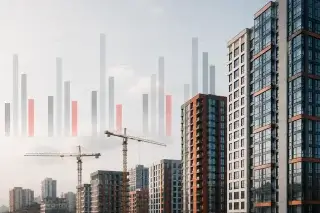
House Prices in Israel Have Fallen 20% Over Four Years
The CEO of the largest construction company Tidhar Uri Levin said that actual housing prices in Israel over the last four years have decreased by 20% although official statistics do not show this. Among the reasons he named the widespread use of discounts benefits and financial programs writes Globes.
Developer incentives in Israel: falling sales
Official statistics do not reflect the real price dynamics, Uri Levin stressed, as developers increasingly use financial programs, incentives and other tools to stimulate sales instead of directly reducing housing prices.
“Over the past four years, housing prices in Israel have actually fallen by 20%,” he noted. “Financial promotions, incentives and other tools have led to this decline not being reflected in the statistics. It is difficult for the Central Bureau of Statistics to capture such dynamics, so the market does not feel the psychological effect of falling prices.”
Developers are forced to use various measures to attract buyers due to declining sales. According to the Central Bureau of Statistics, by the end of April 2026 around 84,000 apartments in the primary market in Israel remained unsold — one of the highest figures in the history of observations. At the current pace of sales, it would take more than 29 months to sell this volume.
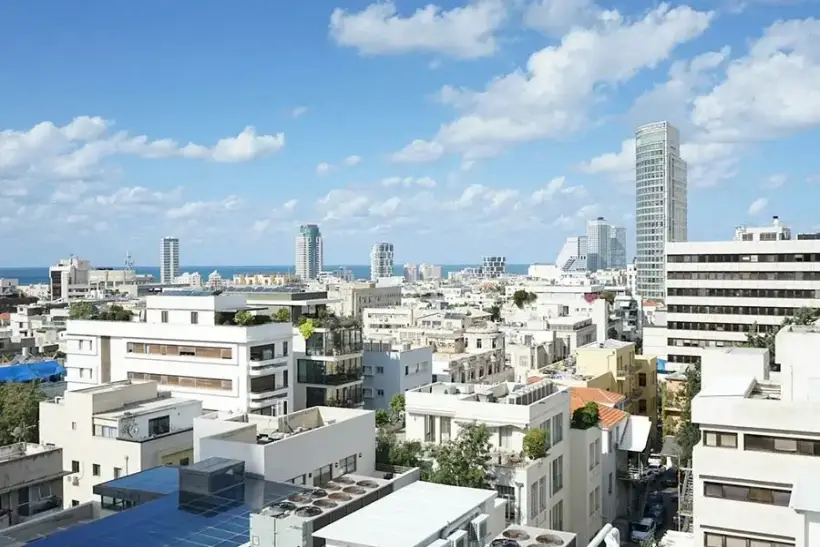
From January to April, 15.4% fewer deals were concluded than in October–December and 11% fewer year-on-year. In the secondary market the situation is even worse — a decline of 17.7% and 13% respectively. In Tel Aviv, sales of both new and existing apartments decreased by 27% over the quarter. In the primary market of the district, buyers were not found for 25,000 units — 30% of the stock, and in the city — nearly 10,000. In Jerusalem, more than 10,000 units were not sold.
Israel’s construction market: a difficult period
The head of Tidhar called the current stage one of the most difficult in the history of Israel’s real estate market. At the same time, the fundamental indicators of the sector remain stable, and the country’s market is “one of the strongest in the world”. Apartments continue to be sold, but the sector has changed.
The construction sector faced its most serious shocks after the October 7 terrorist attack. First, construction work was suspended, then a severe labor shortage emerged due to the ban on entry of Palestinian workers. Currently, the number of workers has stabilized, but there is still a lack of skilled labor.
“The sector is in a difficult situation, but in my view it is the most promising,” Levin noted. “Demand remains high, infrastructure is developing, the metro project is starting, data centers are being built. The market has managed to adapt.”
Causes of changes and prospects
One of the reasons for the change in market dynamics were restrictions introduced by the Bank of Israel in March 2025. The regulator banned widely used financing schemes in which buyers paid only a small part of the apartment price upfront, while the remaining amount was paid later under preferential conditions. After this, developers’ ability to stimulate demand decreased, and sales statistics began to reflect the real situation on the market more accurately.
Uri Levin expects that the difficult situation in the market will continue for a long time. Interest rates will decrease over time, but a return to the era of cheap money should not be expected. “Crises can last a long time, so it is necessary to prepare for a prolonged period of instability,” he said.
The situation may be changed by an agreement with Saudi Arabia or upcoming elections, but companies should focus on the most conservative scenario. Developers, according to the expert, should reduce dependence on bank financing, reduce leverage, increase returns from existing assets and be prepared to go through crisis periods independently.
What this means for investors
Analysts at International Investment note that when evaluating projects in Israel, investors should consider not only listed prices, but also actual transaction conditions, including discounts, subsidized mortgage programs, deferred payment schemes and other incentives offered by developers.
A high volume of unsold apartments, a decline in the number of transactions and persistently high interest rates indicate that the market remains under pressure. Long-term demand factors look stable, and high-quality assets in the most sought-after locations may retain growth potential after market recovery. However, in the short term the situation in the market is likely to remain difficult.
Among additional factors are a high entry threshold and low profitability of residential real estate. As a result, more Israeli citizens are diversifying investments and considering foreign real estate markets. One of the most popular destinations remains Georgia: in Tbilisi, Israelis are already the largest group of foreign property buyers, and in Batumi they are among the most active investors.