











China Adds Liquidity Before Taxes and Debt Sales
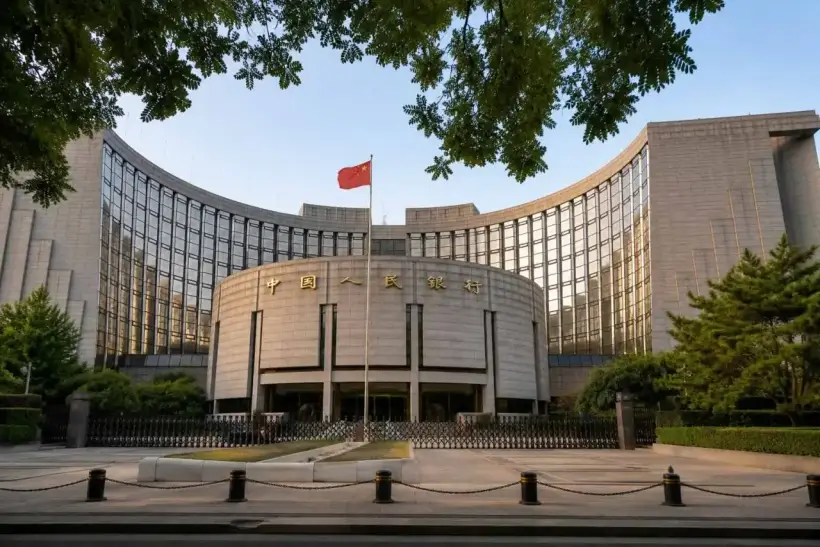
The People’s Bank of China will provide 1.4 trillion yuan of six-month funding to the banking system through outright reverse repurchase agreements. After 900 billion yuan of earlier operations mature, the net liquidity addition will be 500 billion yuan. Combined with a three-month operation conducted earlier in July, the central bank will have supplied a net 700 billion yuan to cushion tax payments and accelerating government debt issuance.
The PBOC launches a record six-month operation
The transaction is scheduled for July 15 and will be the largest since the instrument was introduced. Bloomberg valued the gross amount at about $207 billion. Of the announced 1.4 trillion yuan, 900 billion yuan will replace maturing funding, leaving an effective liquidity increase of 500 billion yuan. It will be the first monthly net addition through six-month outright reverse repos since February 2026. The central bank had already supplied a net 200 billion yuan through the three-month tenor earlier in July.
The difference between the gross operation and the net injection is important. The PBOC is not adding the entire 1.4 trillion yuan on top of funds already in the system. Most of the transaction rolls over financing that is due to expire.
Only the 500 billion-yuan difference represents new liquidity. The structure prevents an abrupt decline in bank reserves while avoiding a much larger permanent expansion in the amount of money available.
Banks receive predictable funding for six months, while the central bank knows when the liquidity will return. That makes the instrument useful during periods of concentrated fiscal payments and debt auctions.
Tax payments temporarily drain banking reserves
July is one of China’s major tax-payment periods. Companies and individuals transfer money from commercial bank accounts to the government treasury, reducing the reserves available within the banking system.
Yicai Global reported that 1.7 trillion yuan of outright reverse repos and 400 billion yuan of medium-term lending facility loans are scheduled to mature during July. It also noted that government bond issuance had been relatively slow in the first half, increasing the likelihood of faster sales during the remainder of the year.
Without offsetting action, the combined effect of taxes, maturities and bond settlements could push interbank funding rates higher. Banks might then restrict corporate lending or demand higher yields when buying government securities.
The six-month operation reduces reliance on daily and weekly borrowing. It gives financial institutions sufficient time to manage several debt auctions and the tax period without repeatedly refinancing short-term positions.
The new tool fills the gap between one week and one year
China introduced outright reverse repos in October 2024. The PBOC generally conducts them with primary dealers once a month for maturities of no more than one year.
The mechanism fills the space between seven-day reverse repos and one-year central-bank lending. Under an outright reverse repo, the central bank purchases securities from a financial institution and agrees in advance to reverse the transaction.
The bank receives cash, while ownership of the securities temporarily transfers to the PBOC. This differs from a conventional collateralised operation in which the borrower retains ownership and pledges the assets as security.
The instrument allows the central bank to change the quantity and maturity of funding without directly adjusting its main policy rate. An increase in six-month liquidity is therefore supportive, but it is not automatically a reduction in borrowing costs for companies or households.
The seven-day rate remains the main policy signal
PBOC Governor Pan Gongsheng said in June that the seven-day reverse repo rate serves as China’s principal monetary-policy rate. The central bank plans to narrow its short-term interest-rate corridor from 70 to 50 basis points and add overnight reverse repo operations to improve the precision of liquidity management.
Under this framework, the seven-day rate communicates the price of money, while three- and six-month transactions manage the amount of funding available for longer periods.
The separation enables the PBOC to respond to tax deadlines or large bond auctions without announcing a separate policy-rate cut. It also reduces the need to change the monetary stance in response to temporary market disruptions.
China prepares a record volume of government borrowing
New government bond issuance is expected to reach a record 11.89 trillion yuan in 2026. Total fiscal expenditure will exceed 30 trillion yuan for the first time, while central-government transfers to local authorities are projected at 10.42 trillion yuan. Banks, insurers and other institutional investors will therefore need to absorb a substantial supply of new securities.
Bond purchases temporarily lock up bank funds. The faster auctions are conducted, the more liquidity primary dealers require to complete settlements.
Central-bank financing allows institutions to participate without sharply reducing business lending or selling existing assets. It also limits the risk that a temporary shortage of cash will push government borrowing costs higher.
Stable liquidity is particularly important when the amount of new debt is at a record level. Even a modest increase in yields can translate into larger future interest expenses for the public sector.
Special bonds will finance projects and bank capital
China’s 2026 budget provides for 1.3 trillion yuan of ultra-long special treasury bonds, 4.4 trillion yuan of special-purpose local-government bonds and 300 billion yuan of special treasury securities to replenish capital at major state-owned commercial banks. The official deficit target is about 4% of gross domestic product, equal to 5.89 trillion yuan.
Local authorities may use special-purpose bonds to finance key projects, exchange hidden debt and settle overdue payments owed by governments. Central-government securities will support strategic programmes and the banking sector.
Issuance of the 2026 ultra-long special treasury bonds began in April with 20- and 30-year tranches. The programme is scheduled to be completed by mid-October and will finance national strategic projects, security capacity, equipment upgrades and consumer trade-in schemes.
An acceleration in the second half will increase demand for cash across several markets. Banks must fund purchases of central-government debt, regional securities and bonds associated with financial-sector recapitalisation.
Liquidity supports auctions but does not guarantee credit growth
The PBOC’s operation gives banks greater capacity to buy securities and issue loans. Access to funding, however, is only one condition for credit expansion.
Companies borrow when they expect sufficient demand and acceptable returns on investment. Households increase mortgage or consumer borrowing when they are confident about employment, income and property values.
When private credit demand is weak, banks may channel more liquidity into government bonds. These securities can appear safer than corporate loans, particularly during periods of uncertainty in property, construction and small business.
The result can support public borrowing while delivering a smaller direct boost to private investment. Bank resources increase, but the share reaching new productive projects may grow more slowly.
Price data show an uneven domestic recovery
China’s consumer prices rose 1% from a year earlier in June but declined 0.3% from May. Core inflation excluding food and energy was also 1%. Producer prices increased 4.1% year on year while falling 0.3% on a monthly basis. The National Bureau of Statistics attributed the divergence to commodity-price movements and uneven demand across industries.
Moderate consumer inflation gives the central bank room to maintain supportive liquidity conditions. At the same time, higher prices for some raw materials and industrial products are increasing costs for manufacturers.
The policy balance is therefore complicated. Insufficient support could weaken domestic demand, while excessive liquidity could place pressure on the currency or flow mainly into bonds rather than the real economy.
What the decision means for bonds and the yuan
The transaction is supportive for government bonds. Six-month funding gives banks additional capacity to participate in auctions and reduces the risk of a sharp rise in yields caused by a temporary cash shortage.
The effect on the yuan is less straightforward. A larger supply of domestic currency can place downward pressure on an exchange rate, but most of the 1.4 trillion-yuan operation replaces maturing funds.
The net increase of 500 billion yuan is significant, although its currency impact will depend on trade flows, capital movements and the interest-rate gap between China and other major economies.
Interbank rates after the tax period will provide the clearest measure of the operation’s effectiveness. Stable rates would indicate that the PBOC correctly estimated the funding shortage. A sharp decline could signal excess liquidity or weak demand for credit.
As International Investment experts report, the PBOC operation primarily removes the technical risk of tax payments, maturities and record debt issuance tightening the banking system at the same time. It supports banks and government auctions but does not solve weak private-sector demand for credit. The critical risk is that a large share of the new money will remain concentrated in government securities. That can finance fiscal expenditure while providing a limited direct boost to consumption, private investment and property. The success of the measure will depend less on the headline 1.4 trillion yuan than on how much of the net injection reaches borrowers in the real economy.