







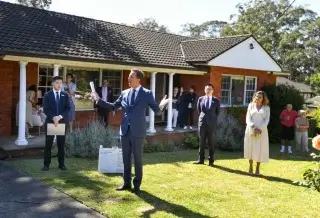
 Australia’s Spring Auctions Rise but Remain Well Below 2025
 Number of Foreigners Holding Turkish Residence Permits Exceeds 1.27 Million
 Demand from Russian Tourists for Holidays in Georgia Rises by 20–25%
 Montenegro Property Buying Costs in 2026
 Four in Ten Companies Would Not Choose Slovakia
 Gulf Countries Prepare Unified Tourist Visa
Denmark Clarifies Gifted Property Valuations

Denmark’s tax system is tightening the practical review of family real estate transfers: new guidance shows that favorable valuation remains possible for gifted property, but owners must account for factual and legal changes that have not yet been reflected in official public assessments.
The tax agency clarifies family transfers
The Danish Tax Agency has clarified how real estate should be valued when gifted property has undergone factual or legal changes. Bloomberg Tax reported on the agency’s position regarding the valuation of gifted real estate after such changes, a point that matters for family transfers, succession planning and transfers between parents and children.
The open database of Danish tax decisions shows the substance of the approach: in gifts of real estate between close relatives, the starting point remains market value at the transfer date, but the valuation circular requires corrections to the latest public assessment if the property’s characteristics have changed. Those changes may include building alterations, subdivision, demolition, area transfers, zoning changes or other legal circumstances not yet reflected in the official assessment. In one decision, Skattestyrelsen accepted the parties’ valuation because the transfer concerned part of a separately assessed property that had undergone factual and legal changes not yet reflected in the cash property value.
Family property remains tax-sensitive
In Denmark, transferring real estate to children or other close relatives is often part of inheritance and wealth planning. The reason is straightforward: property in Copenhagen, Aarhus, Odense and other cities has appreciated over many years, while public assessments have often lagged the market. That created room for intra-family transfers below actual market value.
That room is narrowing. The tax authorities increasingly look not only at formal public assessments but also at concrete indicators of real value, including recent transactions, mortgage documents, accounting values for investment properties, redevelopment, changes in permitted land use and subsequent sales.
The 15% rule is no longer automatic
At the center of Danish practice is the so-called 15% rule. It has allowed certain transfers of real estate between close relatives or through estates at a value within plus or minus 15% of the latest public assessment. Under the new public assessment regime, the range becomes plus or minus 20% for properties with new assessments, but the tax agency can still depart from that valuation where special circumstances exist. Skattestyrelsen’s guidance explains when the authorities are not bound by valuations under the 15% or 20% rules and may require another value.
For taxpayers, this means the formula is no longer a safe button. If a property has materially changed, or if its true market value is clearly supported by other evidence, the tax authorities may recalculate the gift-tax base. Cases are especially sensitive when a property is listed or sold shortly after the family transfer at a much higher price.
Factual and legal changes reshape the tax base
The key phrase in Danish practice is “factual and legal changes.” Factual changes usually mean physical changes to the property, such as construction, renovation, demolition, changes in size or technical characteristics. Legal changes refer to events that alter the legal status of the property, including subdivision, merging of cadastral units, zoning changes, a new local plan or a different permitted use of land.
These changes matter most when the public assessment is still outdated. In one open decision, Skattestyrelsen reiterated that valuations may take account of building changes, subdivision or zoning changes not yet reflected in property values, and that the latest public assessment must be corrected in such circumstances.
New property assessments complicate planning
Denmark has been rebuilding its public property assessment system for several years. Vurderingsportalen explains that owners pay property value tax and land tax based on public assessments, and that those assessments determine taxable values. Final assessments for commercial, agricultural and forest properties are expected from 2025.
That changes the logic of family transfers. Previously, many owners relied on the latest available assessment even if market prices had moved ahead. Now the tax base is gradually moving closer to reality, while the ability to use old assessments without adjustment is narrowing. For expensive homes, land plots and investment properties, the difference can amount to hundreds of thousands or millions of Danish kroner.
Gift tax applies above thresholds
Family gifts in Denmark are not always taxable. The Danish Tax Agency states that in 2026 a person may give up to DKK 80,600 to a close relative tax-free, and up to DKK 28,200 to a son-in-law or daughter-in-law; gifts above the threshold must be reported, and the standard gift tax is generally 15% of the excess amount.
For real estate transfers, these thresholds are quickly exceeded because property values are much higher. The central issue is therefore not whether tax can arise, but how the gifted part is valued. If parents transfer a home to a child at an understated value, the tax saving may be substantial, but so can the risk of a dispute.
The housing market makes disputes more likely
Denmark’s property market remains expensive and institutionally stable. That increases scrutiny of intra-family transfers. If a public assessment lags market value and the property is in a high-demand area, the tax agency has more reasons to review the transfer. If the property is quickly sold, mortgaged at a higher valuation or shown in accounts at another value, the risk of reassessment rises.
The legal logic is simple: close relatives are not independent parties with opposing interests. The contract price does not always prove market value. Tax authorities want to know whether a family transfer is being used to move wealth with minimal tax.
Registration and documentation are critical
A transfer of title to real estate in Denmark must be registered in the Land Register. DLA Piper notes that to perfect the transfer, a conveyance must be registered and include information such as the purchase price or completion date. Registration fees for real estate transactions can also depend on the purchase price or public land assessment in certain cases.
For family transfers, this means the tax position must match the registration documents, contract, property valuation and actual history of the asset. It is risky to use one value for the family arrangement while other documents point to a different economic reality.
Old assessments no longer ensure predictability
The new clarification matters not because it abolishes favorable valuation rules, but because it makes them more conditional. Families may still use public assessments as a reference point, but they need to check whether anything has happened to the property that affects value. This is especially important for development land, renovated properties, rezoned plots, partial transfers and properties intended for later sale.
For advisers, the shift means greater demand for advance tax rulings, independent valuations and more detailed documentation. For owners, it means succession planning must begin earlier, not at the moment when the gift deed is signed.
Family planning becomes costlier but clearer
Denmark is not closing the door on favorable family transfers of real estate. But the system is moving closer to real value. That reduces room for aggressive tax planning while increasing predictability for owners who document transactions and do not ignore obvious changes to the property.
For the property market, the signal is also clear. The more actively the state updates assessments and clarifies practice, the smaller the tax advantage of old cadastral data. Over time, that may lead to earlier inheritance planning, more professional valuations and greater caution when investment properties are transferred to children.
As International Investment experts report, the critical conclusion for Danish property owners is that family transfers should no longer be treated as a mechanical “public assessment minus 15%” exercise. The tax agency still permits favorable valuation, but requires owners to account for the property’s actual condition and legal status. The main risk is not gift tax itself, but reliance on an old assessment where the property has changed, the market has moved or later family actions point to a higher value.
FAQ
What did the Danish Tax Agency clarify?
It clarified that gifted real estate must account for factual and legal changes if those changes occurred after the latest public assessment and have not yet been reflected in it.
What is Denmark’s 15% rule?
It is a practical valuation rule that has allowed certain family and estate transfers of real estate within plus or minus 15% of the latest public assessment, unless special circumstances exist.
When does the 20% rule apply?
The plus-or-minus 20% rule is linked to new public property assessments under Denmark’s updated system. It is also not absolute where special circumstances exist.
Which property changes matter for tax valuation?
Relevant changes include construction, renovation, demolition, subdivision, changes in area, zoning, local planning or permitted land use when they affect value.
Why does this matter for family transfers?
If parents transfer property to children at an understated value, the tax agency may recalculate the gift value and increase the tax base where the valuation does not reflect market reality.