







 Vietnam Mortgage Surge Pushes Homes Out of Reach
 Lithuanian Apartment Prices Accelerate Across Major Cities
 London Flats Lose Value Ahead of Leasehold Reform
 Construction of the Batumi–Sarpi Highway Begins in Georgia
 Baltic Property Investment Accelerates in 2026
 Hong Kong and Singapore Renew Their Expat Rivalry
Copenhagen Apartment Prices Jump 25% in a Year
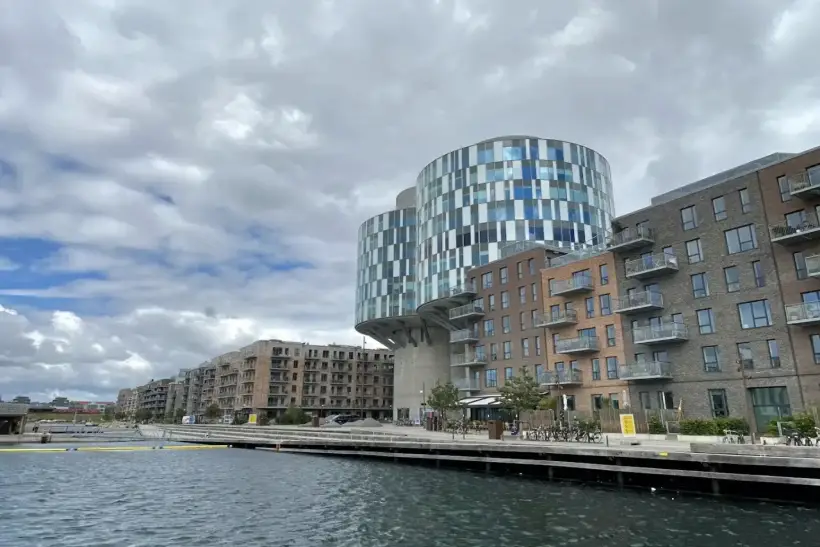
The average transaction price for an owner-occupied apartment in Copenhagen Municipality reached a record DKK75,183 per square metre in April 2026, approximately 25% higher than a year earlier. A standard 80-square-metre unit was valued at more than DKK6 million. Apartment supply has since begun to recover, while transaction numbers across the Capital Region have declined, suggesting that the market may be moving toward a slower phase.
Copenhagen apartments reached a record price
The average transaction price for an owner-occupied apartment in Copenhagen Municipality was DKK75,183 per square metre in April 2026, compared with DKK60,054 in April 2025.
That represents an increase of approximately one quarter. Prices rose by a further 1.9% in April alone.
An 80-square-metre apartment was worth about DKK6.01 million, up from DKK4.8 million a year earlier. The difference was approximately DKK1.2 million.
The figures measure completed transactions rather than original asking prices. They apply specifically to Copenhagen Municipality and should not automatically be extended to neighbouring Frederiksberg or the entire Capital Region.
Official statistics cover a wider market
Boligsiden’s municipal square-metre prices are not directly comparable with Statistics Denmark’s regional price indices.
In the first quarter of 2026, apartment prices across the Capital Region increased by 19.2% from a year earlier, the strongest rise among Denmark’s five regions. Seasonally adjusted apartment prices increased by 4.8% nationwide from the previous quarter.
Apartment transactions in the Capital Region declined by 10.5% year on year. Sales of single-family homes fell by 12%.
Those transaction figures cover the entire Capital Region rather than Copenhagen Municipality alone.
The combination of rising prices and fewer transactions suggests that the market retains momentum, but a smaller group of buyers can accept current valuations.
Apartment supply has started to increase
There were 1,519 owner-occupied apartments listed for sale in Copenhagen Municipality at the beginning of June 2026.
The total was 8.8% higher than one month earlier and 11.9% above the level recorded in June 2025. Supply reached its highest point since December 2024.
More than 500 apartments were added to the market during the first five months of 2026. Boligsiden said the figures indicated that sellers were becoming more willing to list properties while fewer buyers were ready to complete transactions at current prices.
The market is recovering from exceptionally low inventory and cannot yet be described as oversupplied.
A continued rise in listings would probably first produce longer marketing periods, more negotiation and slower price growth rather than an immediate citywide decline.
The central bank sees expectation-driven demand
Danmarks Nationalbank has identified signs that some buyers are purchasing homes in anticipation of further price increases.
Fear of being priced out can accelerate decisions and reinforce the price growth that buyers expect. If this behaviour spreads, the central bank warns that a future economic downturn could produce a sharper correction.
The bank has not formally classified Copenhagen as a housing bubble. Its analysis instead emphasises the accumulation of risk and the need for sound credit assessments.
Home purchases have increasingly been financed with larger down payments in recent years, strengthening borrower resilience. Larger equity buffers reduce loan-to-value ratios but do not eliminate the risk of capital losses when prices fall.
Affordability is becoming more difficult
An average 80-square-metre apartment now costs more than DKK6 million. Entering the market therefore requires a high income, substantial savings or equity from a previous home.
First-time buyers, single-income households and young families face the greatest difficulty. Access to a mortgage does not remove the problem because banks also test whether borrowers can service debt under less favourable interest-rate conditions.
Rising prices widen the gap between existing owners and households outside the market. Owners gain housing wealth, while prospective buyers need more time to build a deposit.
High acquisition costs also reduce rental yields unless landlords can raise rents sufficiently to offset financing and operating expenses.
The city has created capacity for 40,000 homes
Copenhagen’s 2024 Municipal Plan creates planning capacity for 40,000 new homes over 12 years. It is not a guarantee that all of those units will be completed within the period.
Of the total, 10,000 are intended to be public housing and 6,000 are planned as youth housing.
The plan also requires at least 20% of the total residential floor area in new developments to consist of homes measuring at least 110 square metres. This is intended to expand the supply of family-sized housing. It does not mean that half of the public-housing allocation will be reserved for families.
Development areas include Nordhavn, Tingbjerg, Valby Syd, Bådehavnsgade and former railway land.
Delivery will depend on local plans, land preparation, financing and individual construction projects. Additional supply will therefore reach the market gradually.
New construction will not necessarily be affordable
A significant share of development is concentrated in Nordhavn, Sydhavn, Ørestad, Valby and former industrial or harbour areas.
Metro access and public infrastructure support demand, but land, construction, financing and environmental standards make many new homes expensive.
Buyers should not assume that a planned station or waterfront project guarantees further appreciation. Future improvements may already be reflected in the developer’s price, while large numbers of similar new units can later compete on resale.
Owners’ association charges, maintenance plans, energy performance and restrictions on letting can materially alter the cost of ownership.
Foreign buyers may require permission
A buyer who is not domiciled in Denmark within the meaning of the Acquisition of Property Act and has not previously lived in Denmark for at least five years generally needs permission from the Department of Civil Affairs.
EU and EEA nationals and Swiss citizens may, under certain conditions, acquire a permanent home without permission when the purchase is connected with their free-movement rights. They must submit the relevant declaration to the Danish Land Registration Court.
Other foreign buyers who do not satisfy the residence rules normally need approval for a specific property. Denmark does not issue a general permission allowing unrestricted property purchases.
Legal eligibility does not guarantee mortgage approval. Banks separately examine income, debt, tax status, source of funds and the buyer’s connection with Denmark.
Mortgage credit is capped at 80%
A Danish mortgage-credit loan may finance up to 80% of the assessed value of a permanent home.
The 80% ratio is a maximum lending limit, not an entitlement. A lender can offer less after assessing the borrower’s income, liabilities, employment and resilience to higher interest costs.
The remainder must be covered with equity and, where approved, supplementary bank finance.
Foreign buyers without stable Danish income may be required to contribute more capital. Investropa’s suggested deposit range of 20% to 40% for some foreigners is a private market estimate rather than a universal Danish lending rule.
Investropa’s forecasts are private estimates
Investropa estimates an average marketing period of 50 to 65 days and suggests that homes typically sell for about 97% to 99% of the final asking price.
It forecasts apartment-price growth of 4% to 7% over the next 12 months and cumulative nominal growth of 15% to 25% by 2031.
Those figures combine public data with the company’s own observations and models. They are not official statistics or a consensus forecast published by Danish authorities.
The company’s estimate that standard apartments could fall by 8% to 12% in a downturn is a stress scenario rather than the central bank’s baseline projection.
Other figures in the source, including the share of new builds, above-asking transactions and rental-demand growth, should also be treated as company estimates unless independently verified.
The market may be entering a slower phase
Employment, universities, population growth and limited central land continue to support Copenhagen housing demand. The shortage of well-located apartments has not disappeared.
Annual price growth of about 25%, however, is faster than normal changes in household income. Rising supply and lower transaction activity show that buyers’ ability to maintain the previous pace is weakening.
The more likely near-term outcome may be gradual moderation rather than a sudden collapse. Homes could remain on the market for longer, buyers could gain more choice and overpriced properties may require discounts.
As International Investment experts report, a housing shortage supports prices but does not make annual growth of one quarter sustainable. Part of demand is already being driven by expectations of further appreciation, increasing sensitivity to employment and interest rates. Larger down payments reduce banking risks but do not protect buyers from losing equity. Foreign investors also face acquisition rules, individual credit assessment and limited rental yields relative to Copenhagen’s high entry cost.
SEO package for the English version
SEO title: Copenhagen Apartment Prices Rise 25% in a Year
Description: Copenhagen apartment prices reached DKK75,183 per square metre. Supply is increasing, transactions are declining and the central bank is warning of growing risks.
Keywords: Copenhagen real estate, Copenhagen apartment prices, Denmark housing market, buying property in Copenhagen, Copenhagen property investment, Copenhagen housing 2026, Danish mortgage, foreign buyers Denmark, Copenhagen apartments, Denmark house prices
Tags: Denmark, Copenhagen, real estate, apartments, housing prices, investment, mortgages, foreign buyers, construction, housing market
FAQ
What was the average apartment price in Copenhagen?
The average transaction price in Copenhagen Municipality was DKK75,183 per square metre in April 2026.
How much did prices increase in one year?
The average square-metre price rose by approximately 25% from April 2025.
How much did an 80-square-metre apartment cost?
At the April average, it was valued at approximately DKK6.01 million.
Why does official data show a 19.2% increase?
Statistics Denmark uses a different geography, period and methodology. The 19.2% figure covers the entire Capital Region in the first quarter.
Is apartment supply increasing?
Yes. Copenhagen Municipality had 1,519 apartments for sale at the beginning of June, 11.9% more than a year earlier.
Will Copenhagen build 40,000 homes?
The Municipal Plan creates capacity for that amount over 12 years. It does not guarantee that every unit will be completed.
Can a foreigner buy an apartment?
Yes, although some buyers need official permission depending on residence history, citizenship and the intended use of the property.
Can a mortgage finance 80% of the purchase?
Mortgage credit can cover up to 80% of the assessed value of a permanent home, subject to lender approval.
Will apartment prices continue to rise?
Investropa expects further increases, but its figures are private forecasts rather than official projections.
Could the market experience a correction?
Yes. The risk would rise if interest rates increased, employment weakened or buyer expectations changed, but the scale and timing cannot be predicted reliably.