







 Hong Kong and Singapore Renew Their Expat Rivalry
 Poland Poised to Hold Rates at 3.75%
 Ljubljana's Million-Euro Deals Are Increasingly About Land
 Reform UK Reworks Its Offer to Wealthy Foreigners
 US Introduces Visa Bonds of Up to $20,000 for Tourists From 50 Countries
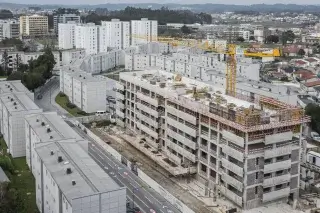 Portugal Secures €1.5 Billion for Social Housing
Baltic Property Investment Accelerates in 2026

Baltic commercial real estate entered the second half of 2026 with stronger transaction activity. Lithuania remains the region’s largest investment market, first-half volume in Latvia rose by about 70%, while Estonia continues to record substantially lower activity. Yet the return of buyers has not translated into higher valuations for prime assets: required yields remain elevated and moved higher in several sectors during the second quarter. Liquidity is recovering, but pricing has not returned to the levels seen during the cheap-financing era.
Baltic Commercial Property Regains Liquidity
Investment activity across Lithuania, Latvia and Estonia improved by the middle of 2026. The August CPB Baltics Market Figures Q2 2026 report examines capital markets, offices, retail, industrial and logistics property and highlights increasingly different conditions across the three countries and asset classes.
The clearest change is the return of transactions after a period of thin liquidity. Investors are again prepared to acquire substantial individual assets and portfolios, but they continue to demand materially higher returns than several years ago.
A property yield broadly compares annual income with an asset’s value. If required yields increase while rental income remains unchanged, the price an investor is prepared to pay generally falls. Recovering transactions alongside elevated yields therefore indicate that the gap between buyers and sellers is narrowing without a return to previous valuation levels.
Lithuania Leads Baltic Investment Activity
Lithuania was the strongest Baltic investment market in the first half of 2026. Colliers estimates that transaction volume exceeded €500 million, compared with approximately €177 million in Latvia and around €120 million in Estonia. Latvia’s total was roughly 70% higher than in the corresponding period of 2025.
On those estimates, aggregate volume across the three countries exceeded €797 million, although capital was distributed very unevenly. Lithuania alone attracted more investment than Latvia and Estonia combined.
One reason is the depth of its domestic capital base. More than 120 real-estate funds operate in Lithuania, while local asset managers and private investors increasingly have the capacity to acquire larger properties that historically depended more heavily on international institutional capital.
For Latvia, the rate of recovery is as important as the absolute total. A roughly 70% increase shows that the market is again capable of closing a broader range of mid-sized and large transactions.
Estonia remained the most subdued market. Around 60% of first-half investment volume there was concentrated in industrial property and about 30% in retail assets.
Lithuanian Investment Estimates Use Different Methodologies
Other market specialists report a lower figure for Lithuania, but the numbers are based on different definitions and should not be treated as contradictory.
Ober-Haus data published by the Lithuanian Real Estate Development Association put first-half investment in modern income-producing commercial property at €423 million. Its dataset covers office, retail, warehouse and manufacturing properties worth at least €1.5 million. That was the largest first-half investment total in the history of the Ober-Haus series.
The difference from Colliers’ figure of more than €500 million primarily reflects the boundaries of each dataset rather than conflicting reporting of the same transactions.
Under the Ober-Haus methodology, 40 properties changed hands during the first six months, roughly the same number recorded during all of 2025. The average transaction value exceeded €10 million.
Investment also became less concentrated in Vilnius. Half of the total was deployed outside the capital region, while ten transactions in the Kaunas region accounted for €123 million, or 29% of the Ober-Haus total.
The €177.5 Million Portfolio Set a New Benchmark
The defining transaction of the first half was the acquisition of a portfolio used by Kesko Senukai.
A company managed by US investment group W. P. Carey acquired 19 properties across Lithuania, Latvia and Estonia for €177.5 million. The portfolio contains approximately 184,000 square metres of leasable space and was more than 99% occupied at the time of the transaction.
Transaction adviser Sorainen described it as the largest investment transaction involving income-producing Baltic real estate since 2024, when the region last recorded deals above €150 million.
For relatively small property markets, a transaction of that size is important beyond the individual portfolio. It provides fresh pricing evidence for owners, lenders, valuers and other investors.
During periods of low liquidity, few completed transactions are available to establish market value. Sellers may continue to reference prices from the previous cycle while investors calculate offers using higher financing costs and risk premiums.
Larger completed transactions help establish where those two expectations now meet.
Retail Captured Most Lithuanian Capital
Retail has been one of the strongest investment sectors in 2026.
Under the Ober-Haus methodology, €274 million was invested in Lithuanian retail property during the first half, equivalent to 65% of the €423 million spent on modern income-producing commercial real estate in its dataset.
The Baltic Kesko Senukai portfolio was the largest component, while shopping properties in Vilnius, Palanga and Klaipėda also changed owners.
Investor interest is supported by relatively predictable income streams. Grocery-led assets, neighbourhood centres and other everyday retail properties are less exposed to decisions by a small number of large corporate occupiers than many office properties.
Low vacancy reinforces the case. Vacancy in professionally managed shopping centres was approximately 1.5% in Vilnius, 1.8% in Riga and 2.2% in Tallinn during the second quarter.
Prime Property Yields Remain Elevated
Stronger transaction activity has not yet led to broad yield compression.
Prime office yields stood at approximately 6.75% in Vilnius and 7% in both Riga and Tallinn during the second quarter.
For prime shopping centres, yields were around 7.5% in Lithuania and 8% in Latvia and Estonia. Grocery-led retail stood at roughly 6.75% in Lithuania and 7% in its two Baltic neighbours.
Prime industrial and logistics yields were approximately 7% in Lithuania, 7.25% in Latvia and 7.5% in Estonia.
Required returns actually moved higher in several markets during the quarter. Latvia recorded an outward shift of about 0.25 percentage point across the major prime asset classes. Prime office and industrial yields in Estonia increased by roughly 0.25 to 0.4 percentage point.
This is one of the clearest features of the new property cycle. Buyers are returning, but they are not returning at valuations associated with exceptionally low interest rates.
Latvia Records a Sharp Recovery
Latvia delivered one of the strongest increases in investment activity during the first half.
Alongside the Latvian properties included in the Kesko Senukai portfolio, transactions involved the Alojas Biroji and Zaļā 1 office buildings, the Grostonas retail property, a logistics facility occupied by Eugesta, Balta’s headquarters and several redevelopment properties.
Development land also remained in demand. River Properties acquired a site beside Skonto Stadium for approximately €4 million, while Realto bought the former Cita Santehnika site for redevelopment.
Domestic capital continues to account for a large share of activity.
That provides the market with a source of demand even when major international institutional investors are relatively cautious. It can, however, restrict the size of deals: assets worth several million or tens of millions of euros are accessible to a larger pool of local investors than portfolios valued in the hundreds of millions.
Baltic Office Markets Are Diverging
The office markets of Tallinn, Riga and Vilnius are increasingly different.
For speculative Class A office space, second-quarter vacancy was approximately 8.5–9% in Tallinn, 10–10.5% in Vilnius and 15–15.5% in Riga.
Class A generally refers to modern, high-quality buildings in desirable business locations with efficient building systems and strong tenant amenities.
Headline rents stood at approximately €16–24 per square metre per month in Tallinn, €16–20 in Riga and €16.5–22 in Vilnius.
Headline rents alone do not show the full cost of occupancy. Landlords increasingly use rent-free periods, fitted premises and other incentives, meaning effective rents can be materially lower than advertised rates.
Riga Is Gradually Absorbing Office Supply
Riga is showing early signs of rebalancing after a period of expanding supply.
Class A vacancy fell from 16.1% to 15% during the second quarter. New projects are also being announced after a prolonged pause, including the next stage of New Hanza, while Preses Nama Kvartāls and Verde C remain under development.
Developers are still cautious about launching large speculative projects without substantial pre-leasing.
That restraint gives existing buildings time to absorb vacant space.
Demand is also changing. Most leasing transactions are concentrated in offices of up to 400 square metres, prompting landlords to divide larger premises and offer more fully fitted, move-in-ready units.
For occupiers, that lowers initial fit-out costs and shortens relocation times. For landlords, it can accelerate absorption of smaller vacant spaces.
Tallinn Has a Large Pipeline and Weak Demand
Estonia faces a different challenge.
Around 105,000 square metres of office space was under construction in Tallinn in the second quarter, equivalent to approximately 8% of existing stock.
Underlying demand remained weak, with landlords reporting limited new enquiries and some companies reducing the amount of space they occupy.
B1 office vacancy stood at roughly 12.5–13%. Owners are responding with rent-free periods, lower asking rents for unfinished premises and conversions of larger spaces into smaller ready-to-use units.
Tallinn nevertheless retains the highest upper-end headline office rents among the three capitals, reaching €24 per square metre per month.
The growing use of incentives means effective rental income can be lower than these headline figures suggest.
Vilnius Benefits From Deeper Liquidity
Vilnius occupies a middle position in Class A office vacancy, while Lithuania’s broader advantage is the depth of its investment market.
Quality space continues to attract occupiers. The Sąvaržėlė business centre was completed during the quarter, with Artea Bank occupying 9,500 square metres, or 46% of the building, while Omnisend leased almost another 3,000 square metres.
Tighter availability of modern premises is creating upward pressure on rents.
For investors, a deeper local capital market, a larger number of completed transactions and a developed domestic fund industry provide greater confidence that an asset can eventually be sold.
That exit liquidity is one of Lithuania’s principal advantages over the neighbouring Baltic markets.
Shopping Centres Maintain Very Low Vacancy
Retail occupancy remains significantly stronger than office occupancy throughout the region.
Vacancy of roughly 1.5% to 2.2% means that professionally managed shopping centres are operating close to full occupancy.
Prime shopping-centre rents ranged from approximately €25 to €55 per square metre per month in Vilnius, €23–40 in Riga and €23–45 in Tallinn.
Latvia is simultaneously seeing renewed retail development. Mols and The Powerhouse at Riga Waterfront received construction permits, the former Cita Santehnika site is being redeveloped as the TC Astra neighbourhood centre and TC Imanta is being expanded.
Unlike the office sector, the new retail pipeline is therefore entering a market without a broad existing surplus of vacant space.
Logistics Markets Become More Tenant-Friendly
The industrial and logistics market is moving gradually in favour of occupiers.
In Riga, additional supply raised vacancy from 4.5% in the first quarter to 5.3% in the second. Vacancy stood at approximately 5.2% in Tallinn and 4.1% in Vilnius.
Headline Riga rents remain at up to about €5.5 per square metre per month, but effective rents are often lower because two to four rent-free months have become a standard part of negotiations.
Greater choice means occupiers are no longer under the same pressure to reserve modern logistics space quickly. Decision-making periods are becoming longer and tenants have more leverage to negotiate concessions.
Around 120,000 square metres of industrial and logistics property was under construction in the Tallinn region at the end of June, which could further intensify competition between landlords.
Domestic Capital Is Becoming the Market’s Anchor
One of the defining differences of the current cycle is the role of Baltic capital.
As interest rates rose, many international institutional investors became more cautious about smaller European markets. The effect was particularly visible in the Baltics, where the number of large assets and completed transactions is already lower than in Europe’s largest economies.
Domestic funds, asset managers, private investors and owner-occupiers have filled part of the gap.
Local capital remains central to market activity in Estonia and Latvia. Lithuania has progressed further, with its larger fund industry increasingly capable of competing for major assets.
This makes the region less dependent on investment decisions made by a small number of foreign institutions.
European Real Estate Investment Is Also Recovering
The Baltic recovery coincides with broader improvement across Europe.
European real-estate investment totalled €59.1 billion in the second quarter, 10% more than a year earlier. On a trailing 12-month basis, volumes were 18% higher, according to CBRE. Living was Europe’s most active sector for a third consecutive quarter, while office investment momentum also improved.
The Baltics are moving in the same broad direction but remain more sensitive to individual transactions. A single €100 million-plus portfolio sale can materially change quarterly or even half-year statistics in the region.
Investment totals therefore need to be assessed together with transaction counts, buyer composition and required yields rather than in isolation.
As International Investment experts report, Baltic commercial real estate has clearly moved beyond the period of minimal liquidity, but stronger transaction volumes should not yet be interpreted as a return to the previous market cycle. The most important second-quarter signal is that deals are returning while required yields remain high or are moving higher. Capital is coming back, but at new prices. Lithuania benefits from a deeper domestic investment market and a large fund sector, Latvia is rebuilding transaction volume rapidly, while Estonia remains the most subdued. For owners, the main risk is increasingly not an absence of buyers, but the need to accept valuations that reflect more expensive financing and higher investor return requirements.
FAQ: Baltic Commercial Real Estate in 2026
Which Baltic country attracted the most investment?
Lithuania. Colliers estimates first-half investment at more than €500 million, compared with approximately €177 million in Latvia and around €120 million in Estonia.
Why does Ober-Haus report €423 million for Lithuania?
The methodologies differ. Ober-Haus measures specified categories of modern income-producing commercial property worth at least €1.5 million, so its total should not be directly compared with the broader Colliers estimate.
How much did Latvia’s investment market grow?
First-half transaction volume reached approximately €177 million, around 70% above the corresponding period of 2025.
What was the largest Baltic property transaction?
A W. P. Carey-managed company acquired 19 Kesko Senukai-leased properties for €177.5 million. The portfolio contains approximately 184,000 square metres of leasable space.
Why is retail property attracting investors?
High-quality retail assets continue to have strong occupancy and relatively stable cash flows. Shopping-centre vacancy in Vilnius, Riga and Tallinn is only around 1.5% to 2.2%.
What does a 7% property yield mean?
In simplified terms, yield compares annual property income with the asset’s value. A higher required yield generally means an investor is prepared to pay a lower price for the same rental income.
Where are prime yields lowest?
Lithuania currently records lower prime yields in several major sectors. Prime Vilnius office yields, for example, are approximately 6.75%, compared with around 7% in Riga and Tallinn.
What is happening in Riga’s office market?
Class A vacancy declined from 16.1% to 15% during the second quarter. Most current leasing transactions involve relatively small offices of up to 400 square metres.
What is happening in Baltic logistics?
New supply is giving occupiers more choice. Modern industrial vacancy is approximately 4.1% in Vilnius, 5.2% in Tallinn and 5.3% in Riga, while landlords are increasingly using rent-free periods and other incentives.