













Foreign Stays Lift Estonia’s Tourism Recovery
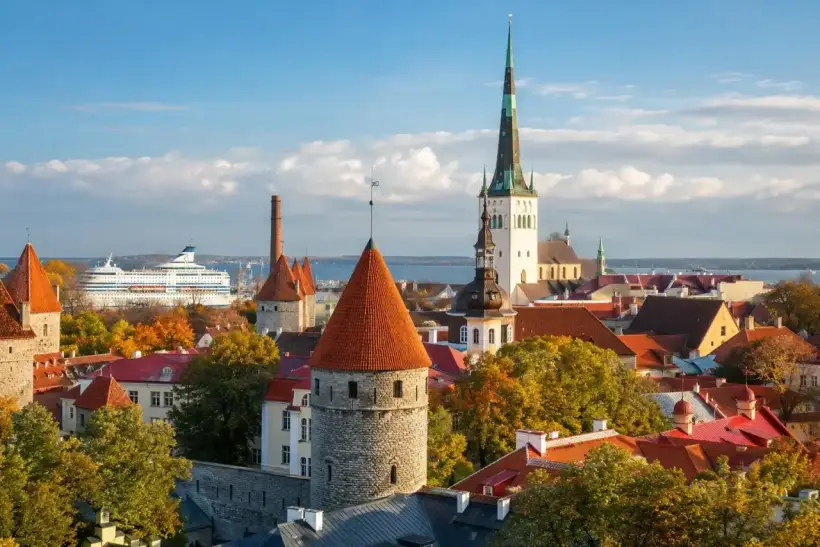
Estonia’s inbound tourism market continued to recover in early 2026. The number of foreign guests staying in registered accommodation establishments increased by about 6% in January through May, while their overnight stays rose 8%. Growth accelerated in May, when foreign arrivals increased 9% and their nights rose 10%. Higher demand has not produced an equivalent improvement for every hotel and restaurant, as operators face rising costs, a weaker major-events calendar and limited revenue from short cruise visits.
Overnight Stays Were Misreported as Visitor Numbers
Invest in Estonia reported that accommodation establishments hosted 2.32 million tourists during the first five months of 2026, including 1.3 million international visitors. These figures do not match the official monthly arrival series and in fact correspond to overnight stays. The number of people staying in hotels, hostels, guest houses and other covered establishments was almost half that level.
Statistics Estonia recorded 615,691 domestic and 653,256 foreign tourists in January through May. The combined total was 1,268,947, compared with 1,207,914 a year earlier. Total accommodated arrivals therefore increased by about 5.1%, with foreign guests up 5.9% and domestic guests up 4.2%.
The distinction between tourists and overnight stays is economically significant. A visitor is counted once on arrival but may generate several guest nights. Overnight stays are more closely connected to occupancy and accommodation revenue, while arrivals primarily measure the size of the accommodated flow.
The monthly data cover establishments with at least five bed places. The series is not equivalent to the total number of people entering Estonia because it excludes day visitors and does not capture the entire private-accommodation market.
May Accelerated Estonia’s Tourism Recovery
Accommodation establishments served 320,292 tourists in May 2026, 5% more than a year earlier. The total included 185,131 foreign and 135,161 domestic guests. International arrivals rose 9%, while domestic demand was broadly unchanged.
Visitors generated around 583,600 overnight stays, an increase of 6%. Foreign travellers accounted for more than 362,100 nights, up 10%, while residents generated nearly 221,500 nights, almost the same as in May 2025.
The average visit lasted about 1.8 nights. Foreign guests stayed for almost two nights on average, compared with roughly 1.6 nights for domestic travellers. A modest increase in trip duration could therefore raise occupancy and revenue without requiring arrivals to grow at the same rate.
There were 1,062 accommodation establishments operating in May, with almost 23,500 rooms and more than 55,000 bed places. The average cost of a guest night was unchanged at €54 per person, indicating that nominal market growth came primarily from higher volume rather than prices.
Foreign Demand Remains Below 2019 Levels
Total accommodated arrivals in January through May 2026 were approximately 1.9% above the corresponding 2019 level. The recovery was driven by domestic travel, which exceeded its pre-pandemic total by about 16.3%. Foreign arrivals remained around 8.7% lower.
The May comparison showed a similar divide. Total arrivals and overnight stays remained 1% below May 2019. Domestic arrivals and nights were 22% higher, while foreign arrivals were 12% lower and international overnight stays remained 11% below the pre-pandemic benchmark.
Estonian accommodation establishments hosted about 3.7 million tourists during the whole of 2025, 2% more than in 2024 but 3% fewer than in the record year of 2019. Foreign arrivals reached almost 1.95 million and domestic arrivals about 1.74 million. International demand rose 5% year on year but remained 13% below 2019.
Visitors generated 6.7 million overnight stays. Foreign travellers accounted for 3.8 million nights, an increase of 4%, while domestic travellers generated 2.9 million, down 2%. The international segment has again become larger than the domestic market but has not returned to its former scale.
Visitors Are Gradually Travelling Beyond Tallinn
Tallinn accounted for 71% of foreign accommodated tourists in May. Pärnu received 10% and Tartu 6%. The capital remains dominant, although stronger regional demand is helping distribute tourism activity more widely.
ERR cited Orvika Reilend, head of tourism at the Estonian Business and Innovation Agency, as reporting stronger visitor numbers from Poland and Latvia. Travellers from the United States and the United Kingdom were more likely to stay longer and travel outside the capital. Latvian visitors frequently chose Pärnu and the islands, while German tourists showed interest in nature, bog trails and sauna culture.
Regional travel spreads expenditure among local accommodation providers, restaurants, museums, transport operators and tour companies. The main constraints remain seasonality, transport access and the limited range of year-round services in some areas.
Demand nevertheless remains heavily concentrated. In 2025, Harju County hosted 73% of foreign tourists and Tallinn alone accounted for 70%. Pärnu County received 11% and Tartu County 7%.
Finland, Latvia and Germany remained the three largest foreign markets. Finnish arrivals declined in almost every month of 2025 except January and April, while Latvian arrivals increased in every month except March. The change reduces dependence on a single source market but also reflects weaker demand from traditionally dominant Finland.
Cruise Traffic Provides Little Hotel Demand
Cruise passengers can create heavy pedestrian traffic in Tallinn’s historic centre, but their economic impact differs from that of overnight visitors. Most remain ashore for several hours before returning to the vessel and do not book local accommodation. Their spending is concentrated on excursions, food, transport and souvenirs.
The Port of Tallinn handled almost 190,000 cruise passengers and 118 ship calls in 2025, 18 more calls than a year earlier. German citizens accounted for 44% of passengers, US travellers for 27% and UK visitors for 14%. US passenger numbers doubled, German traffic increased by about a quarter and UK traffic rose 5%.
Five cruise ships brought 15,588 passengers to Tallinn in November and December. Vessels stayed for two days on 15 occasions during the year. Longer calls create more opportunities for excursions and onshore expenditure but do not necessarily generate hotel demand because passengers continue to sleep on board.
Cruise travellers become more valuable to accommodation businesses when they stay before or after a voyage or return to Estonia on a separate trip. Cruise-passenger numbers should therefore not be added directly to accommodated-tourist totals.
Direct Flights Expanded Access to Estonia
Tallinn Airport handled 354,000 passengers in May, 13% more than a year earlier and the highest monthly total in its history. Available airline seats increased by 10%, while average aircraft load factors also improved.
Wizz Air was the main source of additional capacity. The airline expanded from one Tallinn route to eight, adding Budapest, Gdańsk, Kraków, London, Rome, Warsaw, Venice and Vilnius. Tirana was scheduled to join the network in June.
AirBaltic remained the largest carrier with around 25% of passengers, while Wizz Air moved into second place with a 17% share. Twenty airlines operated scheduled and charter services to more than 40 destinations in May. Frankfurt, Warsaw, Riga and Helsinki were the busiest scheduled routes.
New services to Poland and Central Europe coincide with stronger tourism demand from those markets. Direct flights reduce the total time and cost of a trip, making Estonia more accessible for two- or three-day breaks. For long-haul visitors, convenient connections influence whether Estonia becomes a primary destination or an extension of a journey to Finland and the wider Baltic region.
Higher Arrivals Do Not Guarantee Higher Profit
Hotel and restaurant operators remain more cautious than tourism-promotion bodies. They report higher wages, taxes and input prices. With the average guest-night cost unchanged, stronger volumes may support turnover without fully offsetting rising operating expenses.
The events calendar is another constraint. Several large events generated periods of strong hotel occupancy in 2025. There are fewer comparable events in 2026, or they are taking place on a smaller scale. City hotels that depend on concerts, sporting events and business conferences are particularly exposed.
Cruise traffic creates a similar gap between visible activity and actual revenue. Crowded streets in the Old Town may produce limited commercial returns when passengers spend only a few hours ashore, use few paid services and do not purchase accommodation.
Estonia Plans to Raise Tourism’s Economic Value
The Ministry of Economic Affairs and Communications approved a tourism action plan for 2026–2029. It provides funding for at least 15 international conferences annually from 2026 through 2028. State-supported cultural and sporting events are expected to generate at least 140,000 foreign visitor nights over the four-year period.
By 2029, Estonia aims to have scheduled direct flights to 36 destinations during the low season and 39 during the high season. The 2023 baseline was 32 destinations in both periods. The plan also targets more frequent services and wider real-time online booking of tourism products.
The share of overnight stays outside Tallinn is expected to rise from 52% in 2023 to 53% by 2029. Although the percentage-point change appears modest, achieving it would require a significant number of additional regional stays across the market.
The direct and indirect added value of tourism is targeted to increase from €2.2 billion in 2023 to €3.248 billion by 2029. The long-term target for 2035 is €4.3 billion. The forecast assumes higher business turnover, growth in higher-value segments, greater visitor expenditure, longer stays and some increase in price levels.
As International Investment experts report, the 8% rise in foreign overnight stays confirms improving demand but does not demonstrate a sustainable recovery in sector earnings. Arrivals and nights must be separated: accommodation establishments hosted about 1.27 million people in January through May, not 2.32 million. International arrivals remain below 2019 levels, foreign demand is heavily concentrated in Tallinn and much of the cruise market provides little hotel revenue. Long-term performance will depend on trip duration, year-round occupancy, regional development and operators’ ability to increase revenue faster than costs.