







 Short-Term Rental Rates in Greece Rise to €200 per Night
 Asia-Pacific Property Investment Hits Record $92.5 Billion
 Scandinavian Prefab Housing Market Seen Reaching $7.9 Billion
 Denmark Sets First-Half Tourism Record as Germans Lead
 Drought Dries Bärenschützklamm Waterfalls in Austria
 Thailand Industrial Property Faces Rising Vacancy Risk
Greece’s Second Homes Draw New Capital
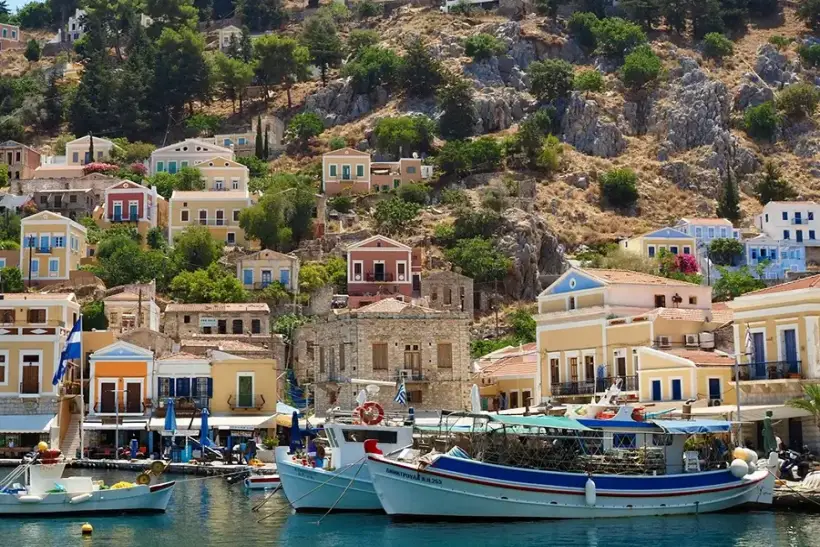
Greece’s second-home market is moving deeper into the mainstream of European real estate investment as record tourism, foreign demand and limited supply support prices, while pressure on local housing, island infrastructure and short-term rental rules raises the cost of entry for buyers.
Greece’s second-home market expands with tourism
Greece is no longer seen only as a holiday destination for seasonal visitors. It has become a real estate market where second homes are increasingly treated as lifestyle assets, rental properties and cross-border wealth holdings. A May 5, 2026, analysis by Cyril Jarnias highlighted climate, tourism demand, relative affordability versus some other Mediterranean destinations and rental income potential as central reasons behind investor interest.
A second home is a property used outside the owner’s main residence, typically for holidays, seasonal stays or rental income. In Greece, that market is closely tied to the tourism cycle. Strong visitor arrivals support short-term rental demand in Athens, the islands, coastal towns and selected mainland resort areas.
Tourism underpins rental income expectations
The demand base is large. According to the Bank of Greece, the country received 40.7 million international visitors in 2024, while tourism receipts reached €21.6 billion, up 4.8% from 2023. For second-home buyers, those figures matter because they influence occupancy, nightly rates and the ability to offset ownership costs through seasonal rentals.
Athens, the Cyclades, the Ionian Islands, Crete, the Peloponnese and the Athenian Riviera remain among the most visible destinations for foreign buyers. Athens offers year-round demand and infrastructure. Santorini, Mykonos and Paros remain premium island markets. Corfu, Zakynthos and Kefalonia are often viewed as more affordable alternatives to the Cyclades. The Peloponnese appeals to buyers looking for beaches, heritage and resort-led development.
Home prices continue to rise
Second-home demand is rising within a broader property upswing. Bank of Greece data for the third quarter of 2025 showed that apartment prices continued to increase, although at a more moderate pace than in earlier periods. The central bank’s residential property indices are based on valuations submitted by credit institutions, making them a key benchmark for tracking market conditions.
That changes the investment equation. The low-price entry point associated with Greece’s post-crisis years is fading. Some locations may still look cheaper than comparable coastal markets in Spain, France or Italy, but prime Greek areas now compete on scarcity, access to the sea, property quality and the legality of rental management rather than price alone.
Golden Visa thresholds reshape demand
The Greek residence-by-investment program, widely known as the Golden Visa, remains a major driver for non-European Union buyers. The program grants renewable residency rights to qualifying investors. Under the revised framework, the real estate threshold reaches €800,000 in prime areas, stands at €400,000 in many other regions, and remains at €250,000 only in limited cases such as renovation or conversion of commercial properties into residential use.
That has created a two-speed market. Buyers who previously targeted the lowest qualifying threshold must either move into less expensive regions or consider more complex conversion projects. In premium areas including Athens, Thessaloniki, Mykonos and Santorini, higher thresholds reduce the program’s mass-market appeal but do not eliminate demand from wealthy buyers seeking Schengen-area mobility and asset diversification.
Short-term rentals face tighter scrutiny
The expansion of second-home ownership has sharpened the conflict between tourism income and housing affordability. Greek authorities have moved to restrict new short-term rental registrations in selected central Athens districts and tighten standards for the quality of rental units. Associated Press reported that violations of the registration freeze in affected Athens areas could carry a €20,000 fine, while unsuitable basement and storage-space conversions were also targeted.
For investors, this means returns are no longer determined only by purchase price, nightly rates and occupancy. Licensing, local restrictions, tax treatment, safety standards, cleaning costs, platform fees, utilities and professional management can materially alter net income.
Islands gain revenue and infrastructure stress
The islands show both sides of the boom. Second-home buyers, construction firms, rental managers, restaurants and service providers benefit from foreign capital and tourism spending. At the same time, popular destinations face pressure on water, waste management, roads, ports and long-term rental supply. Le Monde reported that the Cyclades have benefited financially from mass tourism, but local concerns have grown over overtourism, rising rents, resource shortages and opposition to some infrastructure projects.
That matters because second-home values depend on the quality of the place, not just the property. If an island faces water shortages, traffic congestion, port bottlenecks or political pressure for new restrictions, future rental income and resale liquidity may fall short of optimistic forecasts.
Rental returns depend on management and seasonality
Marketing materials for Greek real estate often cite high gross yields, especially for island villas and central Athens apartments. Gross yield is annual rental income divided by the purchase price before expenses. Net returns are usually lower because owners must pay taxes, maintenance, furnishing, insurance, cleaning, utilities, platform commissions, management fees and absorb vacancy periods.
Athens and island destinations therefore offer different risk profiles. The capital may provide more stable year-round demand from tourists, students, business travelers and domestic movers. Islands may generate higher nightly rates in peak season but depend more heavily on air links, ferry costs, weather, season length and short windows of maximum occupancy. The Peloponnese and Ionian Islands may offer a middle ground, but liquidity and local regulation still require careful due diligence.
Greece’s housing success carries social costs
The same forces that make Greece attractive to foreign buyers are also making parts of the country harder to afford for residents. The Guardian reported in 2025 that strong tourism, rising accommodation costs and weak wage growth had left many Greeks unable to afford holidays in their own country, while popular areas became increasingly expensive for locals.
This raises the risk of further regulation. If purchase and rental prices continue to outpace local incomes, authorities may expand short-term rental limits, adjust taxes, tighten investment visa oversight or incentivize landlords to return properties to long-term rental use. For buyers, legal review of the property and municipality is becoming as important as sea views or renovation quality.
As reported by International Investment experts, Greece’s second-home market remains attractive but no longer looks like a simple low-cost Mediterranean purchase with automatic rental returns. The critical risk is that many investors price the asset using peak-season assumptions rather than full-year ownership costs. The strongest buyers over the next cycle will be those who calculate regulation, taxes, infrastructure limits, resale liquidity and rental restrictions before committing capital.
FAQ: second homes and real estate in Greece
What is a second home in Greece?
A second home in Greece is a property used outside the owner’s main residence, usually for holidays, seasonal living or rental income. It can be an Athens apartment, an island villa, a coastal house or a resort-area property on the mainland.
Why are foreigners buying second homes in Greece?
Foreign buyers are attracted by the climate, tourism demand, relative affordability compared with some other Mediterranean markets, rental income potential and the residence-by-investment program for non-EU investors.
Which Greek regions are most popular for second-home buyers?
Demand is strongest in Athens, the Athenian Riviera, Santorini, Mykonos, Paros, Crete, Corfu, Zakynthos, Kefalonia and the Peloponnese. The best location depends on budget, rental strategy, access and resale expectations.
Can property buyers obtain residency in Greece?
Yes. Greece still offers a residence-by-investment program, but the real estate thresholds have increased. Prime areas can require €800,000, many other regions require €400,000, and €250,000 options are limited to specific cases such as eligible renovation or conversion projects.
How profitable is short-term rental property in Greece?
Profitability varies by location, season, property quality, regulation and management costs. Gross returns can look attractive in tourist areas, but net returns are lower after taxes, maintenance, cleaning, utilities, platform fees and vacancy periods.
What are the main risks for second-home buyers in Greece?
The main risks include rising prices, short-term rental restrictions, tax changes, legal due diligence failures, property condition, seasonal demand, infrastructure pressure on islands and weaker resale liquidity in overheated locations.