







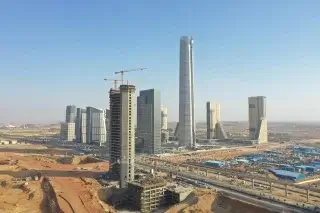
 Egypt Prepares New Law for Property Developers
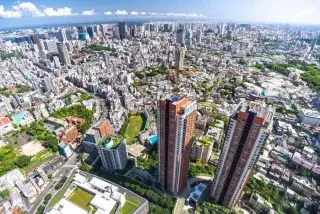 Young Japanese Buyers Turn to 50-Year Mortgages
 Argentina Narrows Tourism Gap as Arrivals Rise
 Seattle Luxury Housing Loses Its Former Momentum
 The World’s Strongest Passports for Travel, Living and Investment
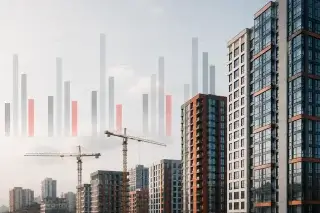 Russian Developers’ Debt Nearly Doubled in a Year
Budapest Nears €5,000 a Square Meter

Hungary’s property market has entered a new political cycle with already overheated prices, limited construction and renewed expectations that capital may return after years of investor caution over Budapest’s clashes with Brussels and unpredictable regulation. The clearest pressure point is the capital, where new residential prices are moving toward €5,000 per square meter and affordability is deteriorating faster than supply can recover.
Political change resets investor expectations
Hungarian real estate has moved back into focus after the April 12, 2026 parliamentary election ended Viktor Orbán’s 16-year rule. According to Associated Press, Péter Magyar took office as prime minister and began removing symbolic barriers around former government sites in Budapest. For investors, the point is less the symbolism than the possibility of better relations with the European Union, stronger institutions and the eventual release of part of the country’s frozen European funding.
The International Institute for Strategic Studies described the Tisza party’s victory as a major institutional break, noting that the vote-counting process remained intact and that the new government received a mandate for reform. For real estate, that does not mean an immediate surge in transactions. It means the country-risk premium may begin to change as investors reassess whether Hungary can become a more predictable market for long-term capital.
Prices rose faster than incomes
The original Logos Press article cited an estimate that Hungarian real estate prices rose 23.7% in 2025, referring to Eurostat, and described the market as one of the fastest-growing in the European Union. That figure should be treated as a broad market estimate rather than a single definitive benchmark, because different datasets measure different periods, property types and price indices.
Cross-checking confirms the underlying overheating. CEIC, using house-price index data, shows Hungarian house prices rising 21.2% year on year in December 2025, after 20.9% in September. That is below the 23.7% figure, but it supports the central conclusion: Hungary entered 2026 with one of Europe’s sharpest housing-price increases.
Budapest became the price center
The Magyar Nemzeti Bank, Hungary’s central bank, said in its May 2025 housing market report that national housing prices rose 15% year on year in the first quarter of 2025, while Budapest prices increased 19.2%. The average price per square meter of new homes in the capital reached HUF 1.68 million by the end of the quarter, while new-home sales in Budapest set a record and exceeded the previous quarter by another 11%.
Global Property Guide later reported that Hungary’s house-price index rose 21.29% year on year in the third quarter of 2025, with Budapest outpacing the country at 26.15%. Its review put the average price of new dwellings in the capital at HUF 1.719 million per square meter in the second quarter of 2025, or about $4,822, explaining why the €5,000-per-square-meter threshold is no longer an outlier for central locations and higher-quality projects.
Weak supply keeps prices elevated
The core support for prices is not demand alone, but the lack of new supply. Hungary’s central bank reported that 13,300 occupancy permits were issued for newly built residential properties in 2024, down 29% from 2023. The annual renewal rate of the housing stock was only 0.29%, the lowest in Europe. That means even a softer demand environment may not cool prices quickly if the market lacks enough new homes.
Construction costs add another constraint. In the fourth quarter of 2024, residential construction costs in Hungary rose 5.1%, while construction labor costs jumped 12.8%. Developers therefore have limited room to cut prices and continue to focus on segments where buyers can absorb higher costs: Budapest, premium districts, energy-efficient buildings and projects with clear rental demand.
Foreign capital is returning cautiously
Before the election, the market was largely sustained by domestic demand. The source article cited an estimate that roughly 80% of property transactions in recent years were made by Hungarian buyers, while Western capital had retreated. After the political change, investors are reassessing Hungary, but their focus is likely to be selective: logistics, industrial property, high-quality offices, hotels and buildings that meet environmental, social and corporate governance standards.
Industrial and logistics property remains the strongest segment. Hungary’s position between Central Europe, the Balkans and eastern manufacturing routes continues to matter for international companies. Budapest’s office market is supported by technology companies, business-service centers and multinational tenants, but it remains sensitive to government decisions and tenant quality. Hotels also look attractive as tourism recovers and Budapest remains under-supplied compared with Vienna and Prague.
Housing is the weak point of the economy
The speed of price growth creates a political problem for the new government. Hungary remains a market where demand-side support can push prices up faster than it improves housing access. If subsidized loans and buyer incentives are not matched by faster construction, they intensify competition for limited supply. That is especially visible in Budapest, where an apartment priced near €275,000 is no longer a niche luxury product and is becoming a broader market reference.
The mortgage channel adds pressure on households. When square-meter prices are high, even a moderate interest rate can create a heavy debt-service burden, especially for buyers who do not qualify for family subsidies. Hungary’s central bank has warned that prices were already above levels justified by fundamentals and that without a rapid supply response, stronger demand would again feed into higher prices.
The market needs transactions, not slogans
The first months after the change of government may deliver more expectations than completed deals. Institutional investors usually return gradually: first through bonds, currency and listed assets, then through commercial real estate, and only later through large development projects. For housing, the key indicator will not be the number of listings at €5,000 per square meter, but the number of completed transactions at that level.
The risks remain substantial. If European funds are released slowly, inflation remains above target and construction fails to accelerate, Budapest could face a market of high nominal prices, weaker liquidity and a widening gap between sellers and buyers. If political normalization lowers the cost of capital and improves confidence, Hungary may shift from a speculative price surge to a more sustainable investment cycle.
As experts at International Investment report, Hungary’s post-election property market looks less undervalued than unevenly overheated: Budapest is already priced close to more mature Central European capitals, while institutional quality, new supply and market depth still lag behind that valuation. The main risk for buyers is mistaking political renewal for an automatic guarantee of further price growth; without more construction and clearer rules, €5,000 per square meter may become not a sign of market strength, but evidence of limited affordability.