







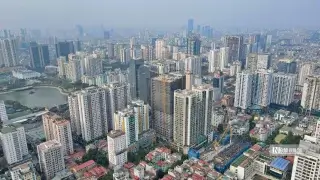
 Vietnam Mortgage Surge Pushes Homes Out of Reach
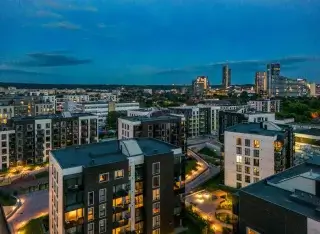 Lithuanian Apartment Prices Accelerate Across Major Cities
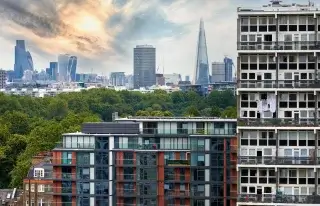 London Flats Lose Value Ahead of Leasehold Reform
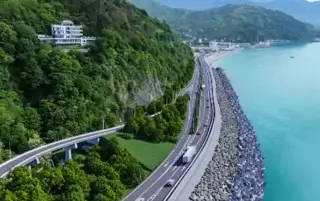 Construction of the Batumi–Sarpi Highway Begins in Georgia
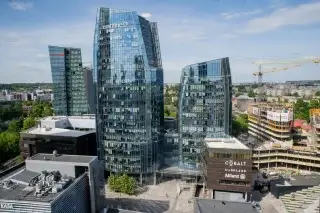 Baltic Property Investment Accelerates in 2026
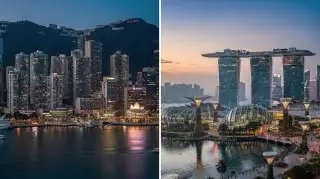 Hong Kong and Singapore Renew Their Expat Rivalry
Iceland Overtakes Switzerland on Prices

Iceland has again become the world’s most expensive country, overtaking Switzerland for the first time in years according to calculations by a local union economist. The shift reflects the structure of a small island economy where tourism, housing, imported goods, high wages and limited supply are simultaneously pressuring consumers, businesses and the country’s growth model.
Iceland returns to the top of the price ranking
Iceland has regained the title of the world’s most expensive country, surpassing Switzerland, long treated as the global benchmark for high living costs. Bloomberg, citing calculations by Viska union economist Vilhjalmur Hilmarsson, reported that Iceland’s overall price level now exceeds Switzerland’s by 3 percentage points. The calculations used data from Eurostat and the Central Bank of Iceland; according to the same European statistical basis, Iceland last ranked above Switzerland in 2018.
The reversal is notable because official European data for 2024 still showed Switzerland more than 7 percentage points ahead of Iceland in purchasing-power-adjusted price levels. That suggests the change is not a long-established structural ranking but a fresh move driven by domestic inflation, currency effects and overheating in specific sectors.
Tourism has intensified price pressure
The main pressure point is tourism, one of Iceland’s key engines of post-pandemic recovery. The country remains a small economy with fewer than half a million residents, but it receives millions of foreign visitors each year. That creates additional demand for housing, restaurants, transport, services, short-term rentals and labour.
Hilmarsson linked the price rise directly to tourism: visitor demand supports services inflation, pushes wages higher and affects the housing market, where short-term rentals compete with local residential needs. For Reykjavik and popular regions, the effect is particularly sensitive. Tourist accommodation generates income for property owners, but it reduces supply for residents and increases the cost of living.
Food prices show the sharpest gap
The clearest divergence is in food. The union calculations cited in the report show Icelandic food prices 44% above those in the other Nordic countries, which are themselves among the world’s most expensive economies. Dairy products and eggs are 75% more expensive, while meat is 71% more expensive.
No single factor explains the gap. Iceland depends on imports, Atlantic logistics, a small domestic market and high labour costs. Even domestic production does not always bring prices down: agriculture operates in difficult climatic conditions, while protection of local producers can limit competition. As a result, the everyday consumer basket is expensive not only for tourists but also for Icelandic households.
Coffee and beer have become overheating indicators
Local media examples underline the point: a pint of lager can cost as much as 1,800 Icelandic kronur, or about $14.6, while a latte in a coffee shop can reach 1,000 kronur. For visitors, such prices may look like part of a premium Nordic destination. For the domestic market, they signal a deeper problem: high service costs are becoming embedded in everyday consumption.
Restaurants, bars and cafés face expensive rent, high wages, imported inputs and seasonal demand. The summer tourism peak allows businesses to sustain elevated prices, but for residents it means the consumer market increasingly reflects the spending power of external demand.
Inflation remains above a comfortable level
Iceland’s official statistics show that the consumer price index in April 2026 was 5.2% higher than a year earlier, while the index excluding housing costs rose 4.8%. Monthly drivers included owner-occupied housing costs, petrol, diesel and international airfares.
For the central bank, this is a difficult mix. Inflation is not confined to imported goods; it is also rooted in domestic services, wages and housing. That limits the effectiveness of monetary tightening alone. Higher rates can cool demand, but they do not solve constrained housing supply, costly logistics or the pressure from tourism.
Switzerland still has an income advantage
The comparison with Switzerland requires caution. High prices do not automatically mean the same burden on residents. Switzerland remains a very high-wage economy with strong purchasing power. In Numbeo’s 2026 user-based index, Switzerland still ranks well above Iceland in local purchasing power, even though both countries are among Europe’s most expensive.
For households, this distinction matters. If prices rise faster than incomes, a country becomes not only expensive but socially exposed. Iceland’s high wages partially offset its cost of living, but import dependence, housing and services can erode incomes quickly, especially for young families, renters, lower-paid workers and migrants.
Different methods produce different rankings
Not all rankings measure expensiveness in the same way. Some compare prices through purchasing power parity, others rely on user-generated data, and still others track cost baskets for expatriates or international staff. Iceland may therefore lead in one measure while Switzerland remains ahead in another.
Switzerland’s Federal Statistical Office said that in 2024, measured by gross-domestic-product price levels, Switzerland had an index of 158.8, followed by Iceland at 151.4 and Luxembourg at 130. This confirms that, on that official comparative basis, the Swiss economy was still the more expensive one until recently.
Housing is the conflict point
Housing is one of the most sensitive parts of the story. Tourism affects the market not only through hotels but also through short-term rentals. In a country with limited construction capacity, even a modest shift of apartments toward visitors can change conditions for residents.
The problem is intensified because housing in Iceland is simultaneously a consumer necessity, an investment asset and part of tourism infrastructure. During periods of strong demand, property owners have an incentive to serve visitors rather than long-term tenants. For young Icelanders, that means higher living costs, delayed entry into home ownership and greater dependence on family support or credit.
Tourists are beginning to notice the price ceiling
High costs are already influencing traveller behaviour. The Icelandic Tourist Board runs surveys of foreign visitors to track travel profiles, spending, experiences and attitudes toward tourism services. Such data are crucial for a country where tourism has become a systemic industry while also increasing pressure on housing, infrastructure and the consumer market.
The pricing risk for Iceland is not that visitors will suddenly stop coming. The destination remains unique: volcanoes, glaciers, geothermal pools, the northern lights and transatlantic access sustain demand. The risk is more subtle: travellers may shorten trips, avoid restaurants, choose cheaper accommodation or switch to alternative northern destinations.
A small market amplifies price shocks
Iceland’s economy has historically been prone to sharp boom-and-bust cycles. A small domestic market, limited labour supply, the role of the exchange rate, import dependence and concentrated growth in a few sectors make the country sensitive to external and internal shocks.
When tourism grows quickly, the economy gains foreign exchange, employment and tax revenue. But services, housing and labour also become more expensive. If growth relies too heavily on labour-intensive industries, productivity may not keep pace with wages. That is the concern raised by the union economist: Iceland needs additional productive pillars, or inflationary pressure will keep reproducing itself.
For investors, high prices are a risk signal
A high price level can look like evidence of wealth, but for investors it is also a sign of overheating. Expensive labour squeezes business margins, housing costs make it harder to attract workers, and costly services weaken tourism competitiveness. If prices continue to rise faster than service quality and visitor income, Iceland’s premium image can become a barrier.
For real estate, the signal is mixed. On the one hand, tourism supports rental income, hotels and commercial space. On the other, political pressure on short-term rentals, tourist taxes and investor restrictions may intensify if residents increasingly see tourism as a driver of everyday price increases.
Iceland’s growth model needs rebalancing
The key question is not whether Iceland is more expensive than Switzerland in every possible consumer basket. The more important issue is that the country faces a situation where the success of the tourism economy has become a source of domestic inflation. The stronger the external demand, the heavier the pressure on housing, services, wages and infrastructure.
For the government, the policy choice is difficult. Restricting tourism would threaten income, but ignoring its impact on prices would endanger social stability. Higher tourist fees can fund infrastructure, but they do not solve housing. Monetary policy can cool demand, but it will not build apartments or make imports cheaper. Iceland therefore needs a package: housing policy, infrastructure investment, short-term rental regulation and broader economic diversification.
As experts at International Investment report, Iceland’s rise to the top of the global cost ranking is not merely a tourism curiosity or a point of national prestige. It is a warning that a small economy can overheat even while growth looks successful. Unless the country broadens its productive base, relieves pressure on housing and reduces dependence on labour-intensive tourism, high living costs will become a constraint on competitiveness rather than proof of prosperity.
FAQ
Why has Iceland become more expensive than Switzerland?
According to the union economist’s calculations, Iceland’s overall price level has surpassed Switzerland’s because of tourism demand, expensive housing, high service costs, imports and wage pressure.
Is Iceland really the world’s most expensive country?
Under the cited methodology, yes. Iceland has overtaken Switzerland. However, rankings differ depending on the basket, data source and method used.
Which goods are especially expensive in Iceland?
Food shows the largest gap. Union data cited in the report put Icelandic food prices 44% above other Nordic countries, dairy and eggs 75% higher, and meat 71% higher.
How does tourism affect prices?
Tourists increase demand for housing, restaurants, transport and services. Short-term rentals compete with local housing, while the tourism sector pushes wages higher.
Why may Switzerland still be easier for residents?
Switzerland combines high prices with very high wages and strong purchasing power. In Iceland, price growth may weigh more heavily on renters and lower-income workers.
What is purchasing power parity?
Purchasing power parity is a way of comparing prices between countries by estimating how much a comparable basket of goods and services costs in each economy.
Could high costs deter tourists?
Yes. Travellers may shorten stays, choose cheaper destinations or reduce spending on restaurants and services. Iceland’s unique natural attractions, however, continue to support demand.
What can the government do?
Policy options include housing development, short-term rental regulation, infrastructure investment, tourist fees and economic diversification beyond tourism.
Why is food so expensive in Iceland?
The main reasons are remoteness, import dependence, costly logistics, a small market, difficult agricultural conditions and high labour costs.
Why does this matter for investors?
High prices signal demand, but also risks: tourism overheating, housing pressure, rising business costs and possible regulatory tightening.