







 Covivio Hotels Revenue Grows 4.7% as European Markets Split
 Lithuanian Apartment Prices Accelerate Across Major Cities
 Georgia's Tourism Revenue Hits Record High
 Norway's Sovereign Fund Commits €1.5bn to European Warehouses
 Market Rout of October 2026: Can Branded Hotels Protect Capital?
 Residential Property Prices in Tbilisi Rise by 5.9% Year-on-Year
India Becomes Skyscanner’s Largest Market

India has become Skyscanner’s largest market by users. Searches from the country increased 22% year on year. Skift reported the change on 12 October.
International destinations gain a larger share
Skyscanner India representative Neel Ghose told Skift about a change in redirects from the platform. Three years ago, international destinations received roughly 20% of redirects from India. Their share has now reached 48%.
Skyscanner displays flight options, after which users choose an airline or agency to book with. A redirect to a seller does not confirm payment. Metasearch data can therefore help assess interest in travel, but cannot establish passenger numbers on its own.
Plans for 2027
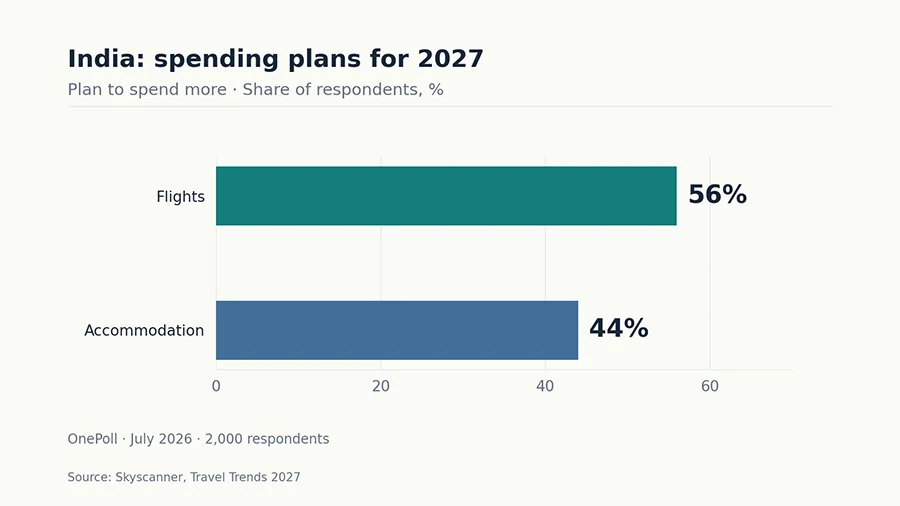
Skyscanner’s Travel Trends 2027 report includes a OnePoll survey of 2,000 respondents in India, conducted in July 2026. Some 58% plan to travel abroad more in 2027. Meanwhile, 56% expect to spend more on flights and 44% on accommodation.
These are answers about future plans, rather than services already purchased. For a hotel, the survey can suggest offers to test through its own sales channels. A decision to raise a trip budget does not establish that a particular property will receive the additional spending.
Official departures are also increasing
According to India’s Ministry of Tourism, Indian nationals made 32.83 million departures in 2025, up 6.3% from 2024. This counts border crossings, including repeat trips. It covers a full calendar year and does not measure the activity of Skyscanner users.
For an overseas resort, the Indian market offers a reason to examine its own bookings and available flight connections more closely. Inbound travel to India is covered separately in our article on its ambition to attract 100 million foreign tourists. These two directions of travel create hotel demand in different countries.
Questions and answers (FAQ)
What does the 48% share measure? International destinations’ share of Skyscanner redirects from India.
Does the 22% increase refer to passengers? No. It measures growth in searches from India on the platform.
What does 58% measure? Respondents planning more travel abroad in 2027.
Does 32.83 million mean unique travellers? No. Departure statistics count repeat border crossings by the same person.