













Travelodge Falls Deeper Into Junk
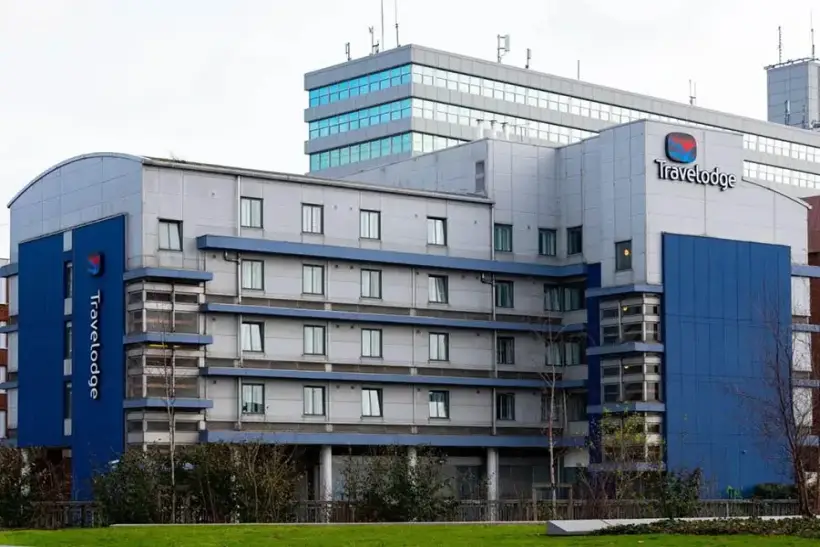
UK budget hotel chain Travelodge faces renewed pressure on its credit profile after Moody’s cut its rating deeper into speculative territory, sharpening investor focus on leverage, rising operating costs and the company’s ability to preserve profitability in a tougher UK business environment.
Travelodge’s downgrade adds pressure to UK hotels
Moody’s lowered Travelodge’s credit assessment, pushing one of the UK’s largest budget hotel chains deeper into the high-risk borrower category. Bloomberg reported that the rating action reflected concerns over the company’s financial resilience amid costs, leverage and a more challenging operating backdrop.
A speculative-grade rating, often called junk in the market, means a company’s debt is viewed as riskier than investment-grade securities. For an issuer, that can increase borrowing costs, reduce the pool of potential investors and make refinancing more difficult, especially when interest rates are elevated or demand for risky corporate debt weakens.
For Travelodge, this is particularly important because its model depends on scale, high occupancy, cost control and access to capital for hotel upgrades. The company operates in a segment that benefits from demand for affordable stays, but it is also exposed to rent, wages, utilities, property taxes and consumer confidence.
Travelodge remains a major budget hotel operator
Travelodge was founded in 1985 and is one of the UK’s largest budget hotel chains. The company operates more than 625 hotels and about 49,000 rooms across the UK, Ireland and Spain. Its model is built around affordable accommodation for business trips, leisure stays, short breaks, family travel and guests looking for a balance of price, location and basic service quality.
Most of Travelodge’s business is concentrated in the UK. The company says its model is mainly leasehold, with the British market accounting for the overwhelming majority of revenue. That makes it sensitive to rent, property-related taxes and labour costs.
Travelodge welcomes more than 22 million guests annually. Its hotels are located in major cities, regional centres, leisure destinations, airports and business hubs. This geography supports a diversified demand base across leisure travellers, business guests, event visitors and workers staying away from home.
Rising costs are the main profit risk
The key pressure on Travelodge is operating-cost inflation. In its own materials, the company warned that gross cost inflation in 2026 could reach 6% to 7.5%, while net cost inflation after efficiency measures could be 5% to 6.5%, excluding new hotels. For a business with a large fixed-cost base, that is a significant challenge.
The most important cost items for Travelodge are rent, payroll, energy and business rates. The company forecast rent costs of £295 million to £305 million in 2026. Additional pressure comes from increases in the National Living Wage, changes to National Insurance thresholds and a revaluation of business rates.
Business rates are one of the most contentious costs for the UK hotel sector. Travelodge said the revaluation from April 2026 could lift this cost from £38 million in 2025 to £50 million in 2026, with further increases expected as transitional relief is phased out.
Budget hotels are not fully protected from inflation
The budget hotel segment is often viewed as more resilient during economic uncertainty. When household incomes are under pressure, some customers trade down from more expensive hotels into lower-cost formats. That can support occupancy for brands such as Travelodge.
But resilience does not eliminate margin pressure. The budget model works through low costs, a standardised product and high operating efficiency. If wages, rent, taxes and debt-service costs rise faster than room rates, profitability weakens even when occupancy is strong.
For Travelodge, this means balancing price increases with brand affordability. Raising rates too aggressively can dilute the value proposition. Raising them too slowly can weaken the company’s ability to absorb higher costs.
Debt markets are less tolerant of weak metrics
Moody’s decision shows that investors and rating agencies have become stricter toward companies with high leverage and limited financial headroom. After the era of cheap money, hotel, travel and leisure groups are facing more expensive refinancing, especially when their bonds are already in speculative-grade territory.
For bondholders, a downgrade signals higher risk. It can affect bond prices, yields, access to new issuance and negotiations with creditors. For the company, it does not necessarily imply an immediate liquidity crisis, but it reduces tolerance for cash-flow mistakes.
Travelodge has said it will maintain a prudent approach to cash management while balancing liquidity with continued investment in its core estate. But a lower rating makes capital spending more sensitive: the company must renew hotels, improve technology and open new sites without further weakening credit metrics.
The company is still investing in its network
Despite cost pressure, Travelodge continues to invest in hotel upgrades. By the end of 2025, more than two-thirds of its room estate had received a refreshed design through refits and new openings. The company is also developing digital services, including room selection and automated guest-service tools.
[11.06.2026 13:46] Darovska Батуми: In 2025, Travelodge opened 21 hotels in the UK across leasehold and freehold models, including rebranded properties. The company also acquired an office building near Liverpool Street in London for conversion into a hotel and has been progressing plans for other central London assets.
Capital expenditure for 2026 was estimated at about £100 million, with just under half allocated to the refit programme. The rest is linked to new hotels, technology and essential maintenance.
Spain remains a growth outlet for Travelodge
Spain has become a separate growth market for Travelodge. The company says its Spanish business is profitable and growing strongly. In 2025, revenue in Spain increased by about 22%, while earnings before interest, taxes, depreciation and amortisation reached £10.3 million, with margins of about 29%.
Travelodge has exchanged contracts for two freehold developments in Spain: one hotel in Bilbao expected to open in 2026 and another in Madrid expected in 2027. It had also previously announced three traditional leasehold new-build deals.
Spain matters for two reasons. First, it gives Travelodge a growth channel beyond the UK. Second, Spain remains one of Europe’s largest tourism markets, where demand for affordable accommodation is supported by both domestic and international travel.
UK policy has become a credit-risk factor
The downgrade comes amid broader pressure on the UK hotel and restaurant sector. Companies face higher labour costs, taxes, regulation and utility expenses at the same time. For businesses with many hourly paid employees, increases in statutory wage rates flow directly into the payroll bill.
Travelodge has also pointed to potential new costs from the Employment Rights Bill and possible visitor levies. These are harder to quantify, but they increase uncertainty around future budgets.
For investors, this matters because government policy is no longer just a background variable. It has become a direct factor in margins. If tax and labour costs rise faster than hotels can raise prices, credit metrics deteriorate even when demand is stable.
Demand remains, but financial headroom is narrowing
Travelodge’s operating data do not suggest a collapse in demand. The company reported a solid start to 2026, with first-quarter revenue about 3% ahead of 2025 and performance ahead of the midscale and economy hotel segment. Travelodge said its occupancy was about 9% higher than the relevant market segment.
That creates a two-sided picture. On one hand, the brand remains in demand, and the budget format benefits from price-sensitive consumers. On the other, resilient demand does not guarantee a strong credit profile if costs and debt rise faster than operating profit.
Investors will therefore focus not only on room occupancy, but also on free cash flow, interest coverage, debt maturities, refinancing costs and the company’s ability to reduce expenses without weakening the product.
Travelodge’s rating is a warning for the sector
Travelodge’s downgrade matters beyond the company itself. It shows that the UK hotel sector is entering a period of tougher selection. Chains with strong brands and high occupancy may preserve revenue, but debt markets want proof of durable margins and capital discipline.
For hotel owners, this means greater attention to lease structures, energy efficiency, automation, direct distribution and off-peak demand. For creditors, it means closer scrutiny of debt covenants and refinancing scenarios. For consumers, it raises the risk that affordable hotel formats gradually lift prices to offset rising costs.
In the short term, Travelodge will try to balance investment, product quality and cost control. In the medium term, the key question will be whether the chain can generate enough cash to fund estate upgrades and service debt without relying too heavily on new borrowing.
As experts at International Investment report, Travelodge’s downgrade should not be read simply as a story of weak demand: the deeper issue is that even a large budget operator with a recognised brand and high occupancy faces simultaneous pressure from rent, wages, taxes and the cost of capital. The critical risk is shrinking financial flexibility. If operating improvements and Spanish growth do not offset UK cost inflation, the company’s debt profile will remain vulnerable even if demand for affordable hotels stays resilient. At the same time, luxury hotels are performing much better, as this segment tends to remain resilient even during periods of economic uncertainty. A clear example is Georgia, where such properties attract investors with high yields and relatively straightforward market entry conditions.
FAQ: Travelodge rating downgrade
What happened to Travelodge’s rating?
Moody’s lowered Travelodge’s credit rating deeper into speculative-grade territory, increasing investor focus on leverage, cost inflation and the company’s ability to protect profitability.
What does a junk rating mean?
A junk rating is an informal term for speculative-grade credit below investment grade. It means debt is considered riskier, and investors usually demand higher yields to hold it.
Why does the downgrade matter for Travelodge?
A lower rating can increase borrowing costs, weaken refinancing terms and reduce access to some investors. For a company with large rent and debt obligations, this is especially important.
Which costs are pressuring Travelodge?
The main pressures are rent, wages, business rates, regulation and capital expenditure on hotel upgrades. The company has also cited the impact of UK budget and labour-policy changes.
Does this mean demand for budget hotels is falling?
Not necessarily. Travelodge’s own data show continued demand and strong occupancy. The issue is less about a lack of guests and more about whether rising costs are eroding margins and credit metrics.
Why is Spain important for Travelodge?
Spain gives Travelodge a growth platform outside the UK. The company’s Spanish business has shown strong revenue and earnings growth, and new hotels are planned in Bilbao and Madrid.
What will investors watch next?
Investors will watch free cash flow, interest coverage, debt maturities, cost trends and Travelodge’s ability to raise room rates without losing its value positioning.