







 China Nears a Decision on Fresh Stimulus
 Fines for Illegal Rentals in Spain Reach €800,000
 Australia’s Spring Auctions Rise but Remain Well Below 2025
 Number of Foreigners Holding Turkish Residence Permits Exceeds 1.27 Million
 Demand from Russian Tourists for Holidays in Georgia Rises by 20–25%
 Montenegro Property Buying Costs in 2026
Iran Extends Strikes Across Gulf Energy Routes
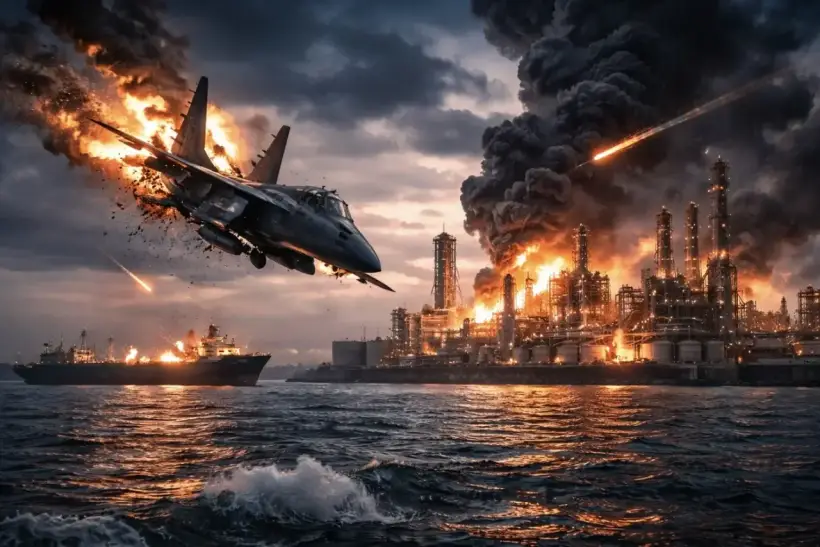
Iran says it downed a U.S. jet and hit Gulf energy-linked targets
Iran and the U.S. moved into a sharper phase of escalation after reports that an American combat aircraft was shot down over Iranian territory while energy facilities and related infrastructure in Gulf states also came under attack. According to the Associated Press and the Washington Post, a U.S. F-15E Strike Eagle was lost on Friday, April 3, over Iran, one crew member was rescued, a second remained missing, and an additional U.S. A-10 was also lost in follow-on operations tied to the conflict zone.
The episode marked the most serious tactical setback for the U.S. in the current war and, by AP’s assessment, the first time in more than two decades that American warplanes had been brought down by enemy fire. At the same time, the conflict spilled further across the Gulf as strikes, fires and damage were reported at energy and transport-linked sites, while oil markets reacted to the increased risk of prolonged disruption around the Strait of Hormuz.
What is known about the downed U.S. aircraft over Iran
According to the Washington Post, the aircraft lost over Iran was an F-15E rather than an F-35, despite earlier Iranian state-media claims. The newspaper reported that one crew member had been rescued while search-and-rescue efforts continued for the second. The Guardian also reported that one American airman had been recovered and another remained missing, while Iranian claims of a capture had not been independently verified at the time.
The Associated Press separately reported that an A-10 was also lost in the same period, with its pilot ejecting and being rescued. AP noted that the incidents undercut earlier claims that Iran’s military capabilities had been largely neutralized and showed that even after weeks of strikes Tehran retained the ability to inflict meaningful damage on U.S. aircraft.
Energy sites in Gulf states added a new layer of market risk
At the same time, the conflict expanded across Gulf energy infrastructure. AP reported earlier Iranian strikes on a power plant in Kuwait and an Israeli oil refinery, and linked Tehran to an attack on a tanker in waters off Dubai. Asharq Al-Awsat, citing official statements from regional authorities, said Iranian attacks on Friday targeted energy facilities in Kuwait and the United Arab Emirates, triggering air-defense responses, casualties and material damage.
Qatar was drawn in through a separate shipping-related incident. Asharq Al-Awsat reported that Doha said a tanker leased to state-owned QatarEnergy had been struck by an Iranian missile in Qatari territorial waters. That raised concerns that the conflict was no longer confined to land-based facilities and had spread into the maritime infrastructure that underpins Gulf oil and gas exports.
The Strait of Hormuz remains the core global risk channel
Markets are reacting not only to confirmed strikes but also to the risk of prolonged disruption to shipping through the Strait of Hormuz. AP and the Guardian noted in live updates that the threat to Hormuz had become the central transmission channel from the conflict to global energy prices. The Wall Street Journal reported that the UAE is prepared to support a forcible reopening of the strait, while Bahrain has pushed for international action to restore navigation, highlighting the scale of concern among Gulf governments.
As the conflict moves into its sixth week, even isolated attacks on tankers, port zones, power plants and oil infrastructure are changing the calculations of traders and governments. AP reported that the war had already destabilized global energy markets, while the Guardian described oil-price gains tied to the effective militarization of transport corridors in the Gulf.
How the U.S., Gulf states and allies are responding
The U.S. and Israel adjusted operations around the crash zone to support the rescue mission, according to the Wall Street Journal and AP. Israel paused strikes in the area where the missing American crew member was believed to be, underscoring how quickly the downing of the jet became not only a symbolic blow but also an operational crisis for Washington.
At the same time, Gulf states have taken a harder line on the security of energy routes. The Wall Street Journal reported that the UAE is prepared to help the U.S. reopen Hormuz by force if diplomacy fails. Against the backdrop of attacks linked to Kuwait, Qatar and the UAE, that now looks less like a distant contingency and more like part of an active regional policy debate.
Why this matters for oil, inflation and global shipping
The combination of a downed U.S. jet and attacks on energy-linked targets raises the risk that the war begins to affect physical supply, not just market sentiment. Reports of fires, missile strikes and threats around Hormuz have already become a driver of higher oil prices and a source of pressure for governments in energy-importing economies. The immediate reaction across regional capitals, transport channels and financial markets shows how quickly the conflict can migrate from a military story into an economic one.
As International Investment experts report, the significance of the latest escalation extends well beyond the military symbolism of a downed American fighter. The more important question is whether Iranian strikes on Gulf sites and the threat to the Strait of Hormuz can turn the conflict from a geopolitical crisis into a full energy shock. If attacks on oil, gas and shipping infrastructure continue, the fallout will spread rapidly into inflation, logistics, maritime insurance and investment decisions across Europe and Asia.
FAQ
Did Iran really shoot down a U.S. warplane?
Yes. U.S. and international outlets reported the loss of an F-15E over Iran. One crew member was rescued and another remained missing in the main April 3–4 reporting cycle.
Which aircraft was shot down?
The Washington Post and the Guardian reported that it was an F-15E Strike Eagle. Earlier Iranian media claims about an F-35 were not independently confirmed.
Which Gulf energy assets were reportedly hit?
Reports described attacks on energy facilities in Kuwait and the UAE, a strike on a tanker linked to QatarEnergy, and earlier damage involving a Kuwaiti power plant and other energy-linked sites.
Why is the oil market reacting so strongly?
Because the conflict directly affects the Strait of Hormuz area, one of the most important routes for global oil and LNG flows. Attacks on Gulf facilities and tankers raise the risk of supply disruptions and higher shipping and insurance costs.
How are Gulf states responding?
The UAE and other regional governments have tightened security and are discussing international measures to protect navigation and critical infrastructure. According to the Wall Street Journal, the UAE is willing to support reopening Hormuz by force.