







 Alta Banka Collapse in Serbia: What Happens to Russian Depositors' Money
 Covivio Hotels Revenue Grows 4.7% as European Markets Split
 Lithuanian Apartment Prices Accelerate Across Major Cities
 Georgia's Tourism Revenue Hits Record High
 Norway's Sovereign Fund Commits €1.5bn to European Warehouses
 Market Rout of October 2026: Can Branded Hotels Protect Capital?
Israel Home Sales Fall 14% in July
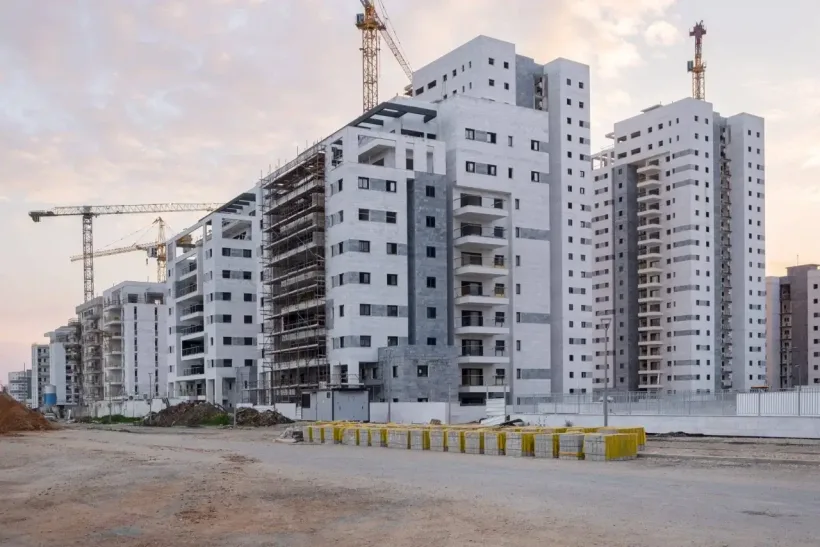
Israeli home sales fell 13.7% in July 2026 from the previous month, declining from about 8,810 transactions to 7,600. The slowdown was sharper in the new-home market: total new-home sales dropped about 20% month on month, while unsubsidised developer sales fell 26%. At the same time, the official stock of new homes remaining for sale reached 84,990, equivalent to 26.9 months of supply at the current sales pace. The figure should not be interpreted as a complete count of finished unsold developer units: Israel’s statistical methodology covers homes at different stages of development and removes properties 15 months after construction is completed.
July Home Sales Fell After a Strong June
Israel’s housing market slowed after stronger activity in May and June. About 7,600 homes were sold in July, compared with 8,810 in June, a decline of 13.7%. June had been the strongest month for transactions since the beginning of 2026.
The roughly 14% decline is a month-on-month comparison, not a year-on-year drop. A separate official series from the Finance Ministry’s Chief Economist counted 7,692 purchases in July, 12% fewer than in June and 4% fewer than in July 2025. Excluding government-subsidised housing, the open market recorded 6,582 transactions, down 9% year on year.
Small differences between the two datasets reflect methodology and transaction-registration timing. Both nevertheless show that the recovery seen in May and June lost momentum in July.
New-Home Sales Recorded the Sharpest Decline
About 2,930 new homes were sold in July, down from roughly 3,670 in June. That represents a month-on-month decline of about 20%.
Government-supported transactions accounted for almost 38% of July’s new-home sales. Once those purchases are excluded, developers sold about 1,820 homes on the open market, down 26% from approximately 2,460 in June.
The existing-home market declined more moderately. Around 4,670 second-hand homes changed hands, compared with about 5,140 a month earlier, a drop of roughly 9%.
The Finance Ministry’s figures tell a similar story, putting total developer sales at 2,968 units and unsubsidised developer transactions at 1,858.
Government programmes therefore make a significant difference to the headline performance of the primary market. Commercial new-home demand is weaker than the total sales figure suggests.
Three-Month Sales Still Show a Recovery
The monthly decline has not erased the improvement recorded over the broader May–July period.
About 25,160 homes were sold during the three months, 20.8% more than in February–April and 14.6% more than in the corresponding period of 2025.
New-home transactions totalled around 10,470, up 30.4% from the preceding three months and 42% year on year. However, 33.7% of new homes sold during the period were part of government-subsidised programmes.
Existing-home sales totalled approximately 14,690, an increase of 14.8% from February–April but only 0.8% from a year earlier.
Almost 85,000 New Homes Remain for Sale
At the end of July, Israel’s official inventory of new dwellings remaining for sale stood at 84,990. The stock had been around 84,300 in June, meaning stronger transactions in the preceding months had not materially reduced the amount of available housing.
At the current pace of sales, the inventory represents 26.9 months of supply, up from 26 months at the end of June.
The Tel Aviv District accounts for 30.8% of the stock, or around 26,170 dwellings, while the Central District holds another 24.7%, approximately 20,990.
Among major cities, Jerusalem has the largest inventory at around 10,100 dwellings, followed by Tel Aviv–Yafo at approximately 9,720.
The 26.9-month figure is not a forecast of when every property will be sold. It measures the relationship between the current inventory and the current sales pace and will change as supply and demand move.
What the 84,990 Figure Actually Measures
The official inventory should not be described simply as 84,990 completed apartments sitting empty in developers’ hands.
Under the Central Bureau of Statistics methodology, the series begins with new dwellings covered by construction permits issued for sale and for which the Tax Authority has not yet received a reported sale. The inventory can therefore include units before construction begins, homes under construction and completed units.
The CBS then makes several adjustments. Permits are removed from the stock if construction has not begun within three years and the permit has not been formally renewed.
A separate rule applies to completed properties. A dwelling that remains unsold 15 months after the building is completed is no longer classified as a new home remaining for sale.
Reports that describe the threshold as one year are therefore inaccurate. The Israeli methodology uses 15 months.
The Actual Inventory Cannot Simply Be Added to 85,000
The methodology does mean that some completed unsold properties are outside the published 84,990 figure. A developer may, for example, still own and market a unit more than 15 months after construction was completed.
That does not establish that the “real” number of unsold homes is necessarily substantially higher.
The CBS says properties left unsold for very long periods after completion often represent exceptional cases. They may face legal issues, carry unusual prices, have been withdrawn from active marketing or have been converted to rental use.
At the same time, the official inventory contains properties that have not yet been completed and, in some cases, projects where construction has not begun.
The 84,990 figure is therefore a statistical measure of new-home supply rather than a physical count of completed vacant apartments.
Inventory Has Stabilised at a High Level
Israel’s new-home inventory expanded rapidly for several years. From April 2022 through December 2025, the number of dwellings remaining for sale increased by an average of 1.4% a month.
Since the beginning of 2026, the trend has largely stabilised. The inventory stood at around 85,310 in March, 84,130 in May, roughly 84,280 in June and 84,990 in July.
The issue is therefore no longer a rapidly accelerating build-up of inventory. Instead, developers have so far been unable to make a significant reduction in an already large stock.
Home Prices Remain Lower Than a Year Ago
The high level of supply coincides with lower home prices on an annual basis.
Prices in June–July 2026 were 1.2% below the corresponding period of 2025. On a shorter comparison, however, prices rose 0.2% from May–June, marking the second consecutive increase.
New-home prices increased 0.5% from the previous period but remained 0.8% lower than a year earlier. The Central District recorded the largest annual fall in the overall home-price index at 3.2%, followed by Haifa at 2.4%. Tel Aviv District prices were 0.9% lower year on year.
The large inventory has therefore not produced a sudden collapse in headline prices. Adjustment has been gradual, and developers can compete for buyers without formally cutting list prices.
Developers Are Competing Through Financing Terms
Builders can support headline prices by offering deferred-payment schedules, mortgage assistance and other financial incentives.
These arrangements can reduce the effective cost of a purchase without appearing in the official price index as a conventional discount.
For buyers, that means comparisons based solely on the advertised price per square metre can be misleading. Payment schedules, financing costs and developer incentives can materially change the economics of a transaction.
Israel’s Policy Rate Has Fallen to 3.25%
Financing conditions are gradually becoming more supportive. On Sept. 1, the Bank of Israel cut its policy rate by 0.25 percentage points to 3.25%. Its next rate decision is scheduled for Oct. 21.
The central bank continues to describe the stock of unsold homes as high. It also noted that transactions rose moderately in May and June, particularly in the new-home market.
Lower interest rates should gradually reduce borrowing costs, but the July figures suggest that easier financing has not yet been enough to absorb the accumulated supply quickly.
Weak Open-Market Demand Remains the Main Risk
The Finance Ministry describes July’s level of open-market transactions as low by historical standards. Calendar effects contributed to the monthly decline, but weakness is visible across several buyer groups.
Investor purchases declined, as did transactions by existing homeowners moving from one property to another. First-home buyers were supported by government programmes, while unsubsidised purchases were weaker.
For that reason, open-market developer sales are a more useful gauge of underlying private demand than the headline new-home total.
As International Investment experts report, July’s main signal is the continued imbalance between a large volume of new-home supply and weak commercial demand. A roughly 14% monthly fall in total transactions may partly reflect comparison with a strong June, but an inventory close to 85,000 dwellings remains a structural source of pressure on developers. The figure should not be treated as a complete count of finished unsold homes: it includes units at different stages of development and excludes completed properties after 15 months. The next important indicators will be the direction of this inventory, developer sales without government subsidies and the extent to which lower borrowing costs bring buyers back to the open market.
FAQ: Israel Home Sales
How much did home sales fall in July 2026?
CBS figures show a decline of about 13.7% from June, from roughly 8,810 transactions to 7,600.
Did sales fall 14% year on year?
No. The roughly 14% decline is month on month. The Finance Ministry puts the year-on-year decline in July at 4%.
How much did new-home sales fall?
Total new-home sales fell about 20% from June. Excluding government-subsidised transactions, open-market developer sales declined around 26%.
How many new homes remain for sale?
The official inventory stood at approximately 84,990 at the end of July.
Are all 85,000 homes already completed?
No. The inventory can contain dwellings at different stages, from permitted projects to units under construction and completed homes.
Does Israel stop counting homes after one year?
No. A completed dwelling is removed from the new-home inventory 15 months after construction is finished if it remains unsold.
Does that mean the actual number of unsold homes is much higher?
Not necessarily. Some older unsold units are excluded, but the official stock also includes homes that are not yet completed. The figures cannot simply be added together.
Where is unsold supply concentrated?
About 30.8% of the inventory is in Tel Aviv District and 24.7% in Central District. Jerusalem and Tel Aviv–Yafo have the largest stocks among major cities.
Are Israeli home prices falling?
Prices in June–July were 1.2% lower than a year earlier, although they rose 0.2% from the preceding two-month period.
What is Israel’s current policy interest rate?
The Bank of Israel’s policy rate is 3.25% as of September 2026.