







 Vietnam Mortgage Surge Pushes Homes Out of Reach
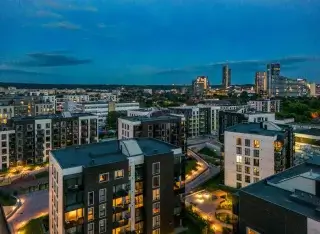 Lithuanian Apartment Prices Accelerate Across Major Cities
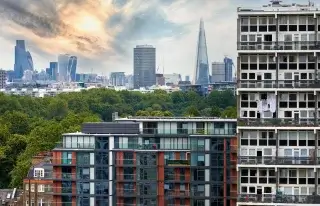 London Flats Lose Value Ahead of Leasehold Reform
 Construction of the Batumi–Sarpi Highway Begins in Georgia
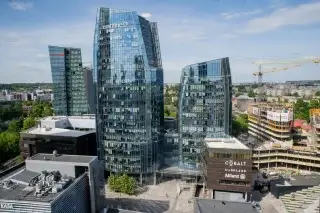 Baltic Property Investment Accelerates in 2026
 Hong Kong and Singapore Renew Their Expat Rivalry
Italy’s Home Prices Keep Rising

Italy’s housing market is entering 2026 with price momentum intact, with forecasts pointing to another 3–4% increase nationally and stronger gains in the largest cities. Demand is being supported by scarce supply, returning mortgage buyers and the role of property as a defensive asset, but affordability remains the market’s main weakness.
Italy enters 2026 with rising housing prices
Italy’s residential market continues to appreciate despite elevated borrowing costs and a slower euro-area economy. The Il Sole 24 Ore article captured the central trend: house prices are still climbing, with estimates for 2026 pointing to gains of around 4%.
Official data confirm that the market carried strong price momentum into the new year. According to Istat, Italy’s national statistics institute, the house price index rose 4.1% year on year in the fourth quarter of 2025 and 0.9% from the previous quarter. For 2025 as a whole, house prices increased by 4.0%.
The strongest pressure came from existing homes. Their prices rose 4.7% in 2025, while new dwellings increased by only 0.6%. That distinction matters: Italy’s market is not being driven by a broad construction boom, but by competition for available homes in areas where demand remains resilient.
Existing homes are driving the market
The gap between new and existing homes shows where the pressure sits. Buyers are competing mainly for ready-to-use properties. New construction in Italy remains constrained by bureaucracy, land costs, energy-efficiency requirements and the lack of projects in central urban areas. Even a moderate recovery in demand can therefore move prices.
In major cities, this reinforces segmentation. Milan, Rome, Bologna, Florence and tourist-driven markets remain above national averages, while smaller towns and peripheral areas are moving more slowly. For buyers, the national average is becoming less useful: Italy is increasingly a collection of local shortages rather than a single housing cycle.
Scenari Immobiliari’s 2026 outlook is more optimistic than some cautious forecasts, pointing to average residential price growth of around 4.2%. Reports on the forecast cited stronger expected gains in the largest cities, including about 7.3% in Milan and 6.8% in Rome, reflecting concentrated demand in Italy’s strongest economic and tourism hubs.
Transactions are recovering after the slowdown
Price growth is being accompanied by a recovery in sales volumes. Market estimates suggest that 2025 ended with about 770,000 residential transactions and that 2026 could approach 800,000. That does not signal a speculative boom, but it shows that buyers have adjusted to the new mortgage-rate environment.
Agenzia delle Entrate, Italy’s revenue agency, tracks the market through its real estate observatory using normalized transaction volumes, a measure that accounts for ownership shares in property sales. These data point to a highly uneven market: large cities, northern regions and tourism-linked locations remain more resilient than areas facing demographic decline.
Demand is supported by several forces. Italian households traditionally view property as a long-term store of value. Rents are rising in major cities, pushing some households toward ownership. Investors are also looking for assets that can generate income through long-term leases, student housing or tourism demand.
Mortgages are helping demand, but affordability remains strained
Mortgage conditions have become a key part of the market’s recovery. After the peaks of 2023, borrowing costs became more predictable, though they remain well above the ultra-low-rate years. Bank of Italy data show that interest rates on new loans to households for house purchases, including associated costs, were around 3.81% in March 2026.
The Italian Banking Association’s monthly reviews indicated a lower average rate on new home-purchase loans, around 3.36% in March 2026 versus 4.42% in December 2023. The difference reflects methodology: some series capture the full cost of credit, while others report average banking conditions on new lending.
For the market, this means normalization rather than cheap money. Buyers are no longer waiting for a return to 2020–2021 rates and are increasingly assessing purchases based on current payments. Yet rising prices absorb part of the benefit from lower rates: down payments and price-to-income ratios remain barriers for younger households.
Rents are rising faster than sale prices
The rental market is a separate pressure point. Immobiliare.it forecasts that by the end of 2026 sale prices in Italy could be about 3.1% higher, while rents may rise by 8.1%. That worsens conditions for households that cannot buy and strengthens the investment case for landlords.
Rental growth is most visible in university cities, business centres and tourism destinations. Demand comes from students, young professionals, internal migrants, tourism operators and foreign buyers. Limited long-term rental supply makes competition more intense.
For policymakers, this creates a housing-access problem. If sale prices rise moderately but rents rise twice as fast, affordability deteriorates even without a classic price bubble. Support for first-time buyers does not solve the problem for households that remain in the rental market.
Milan and Rome stay ahead
Milan remains Italy’s most expensive and liquid residential market. It is supported by higher incomes, international business, universities, fashion, finance and limited supply of quality homes. In those conditions, even a modest increase in demand can quickly affect prices per square metre.
Rome has a different growth profile. The capital is supported by tourism, the public sector, limited central supply and renewed interest in rental assets. Its market is more fragmented, with large differences between central, semi-peripheral and outer districts.
Global Property Guide points to stronger 2026 growth in the largest urban markets, while expectations for Florence, Naples, Turin and Bologna are more moderate. That reinforces the main structural shift: Italy is not rising evenly, but through selected areas where demand is resilient and supply is tight.
Scarce supply keeps prices from falling
The main reason prices are not falling is the shortage of quality housing. Italy is not going through a broad building cycle that could quickly add supply. New units are expensive, approval timelines are long, and a large part of the housing stock needs renovation and energy upgrades.
European energy-efficiency requirements make this more important. Buyers are increasingly looking not only at the price per square metre but also at future renovation costs. Older homes may look cheaper but require additional capital. Quality assets command a premium.
That creates a two-speed market. Good homes in strong locations continue to appreciate, while less liquid properties in weaker areas can take longer to sell and require discounts. Rising national averages do not mean that every Italian property is appreciating at the same pace.
The main risk is shifting from rates to prices
In 2023 and 2024, the main fear for buyers was the mortgage rate. In 2026, the risk is shifting to the entry price. If homes continue to rise by 3–4% a year, waiting for lower rates may not create savings: a lower monthly payment can be offset by a higher purchase price.
For investors, the picture is also mixed. Rising rents support income, but higher purchase prices lengthen payback periods. In cities with strong tourism and student demand, that may remain acceptable. In weaker locations, buying purely for market appreciation is a riskier strategy.
For the state, the main challenge is housing affordability rather than overheating. Italy remains a country with high homeownership, but young households and mobile workers face a growing entry barrier. If prices and rents keep rising faster than incomes, the housing market will deepen social divides.
As International Investment experts report, Italy’s housing market in 2026 looks resilient but not risk-free. The critical issue is that price growth is being supported less by new supply and urban productivity than by a shortage of quality housing, expensive renovation needs and demand concentrated in a limited number of locations. For investors, this is a selective market rather than a broad entry opportunity: buying in Milan, Rome or a strong tourism hub may preserve capital, while weak regions and outdated housing stock without modernization carry liquidity risk. For households, the conclusion is tougher: even moderate annual growth of 3–4% can reduce affordability if mortgage costs remain high and incomes do not rise at a comparable pace.
FAQ
Why are house prices in Italy still rising?
Prices are supported by limited supply of quality homes, recovering mortgage demand, higher rents and the role of property as a defensive long-term asset.
How much could Italian house prices rise in 2026?
Forecasts vary, but many estimates point to growth of about 3–4%. More optimistic scenarios suggest around 4.2% nationally and stronger gains in Milan and Rome.
Are new homes or existing homes rising faster?
Existing homes are rising faster. Official data show that existing dwellings increased by 4.7% in 2025, while new dwellings rose by 0.6%.
Why are Milan and Rome outperforming?
The two markets benefit from employment, universities, tourism, international demand and limited supply in high-quality locations.
Will mortgages become cheaper in 2026?
Mortgage rates are below their 2023 peaks but remain higher than during the ultra-low-rate years. Lower rates alone may not improve affordability if prices continue to rise.
Is there a housing bubble in Italy?
A broad national bubble is not clear because growth is tied to supply shortages and local demand. However, overvaluation risks are higher in specific cities if prices move too far ahead of incomes and rental yields.