










The 'Nolan Effect': New 'Odyssey' Drives Wave of Tourists to Ancient Troy
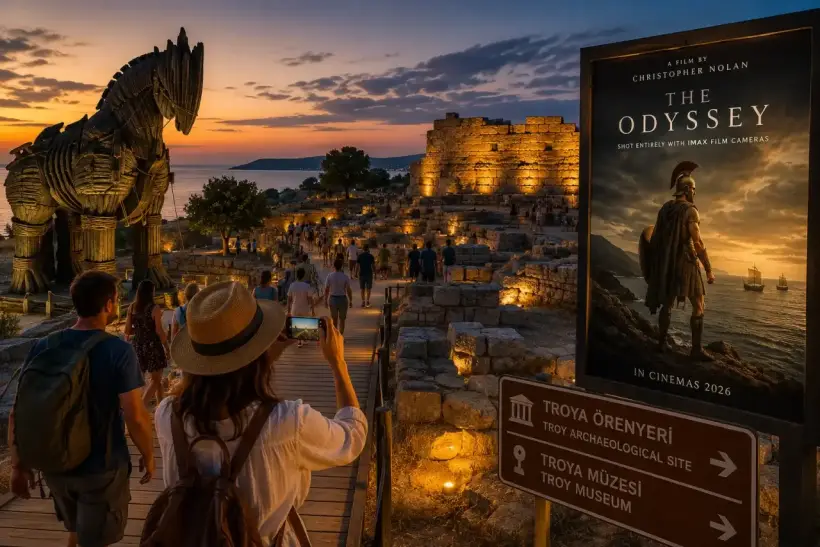
The release of Christopher Nolan’s new cinematic epic The Odyssey has sparked an unexpected economic and tourism boom in northwestern Turkey. Industry analysts have already dubbed the phenomenon the "Nolan Effect," drawing parallels to major screen-tourism trends of recent years.
Troy After Dark and Record Bookings
According to data from Turkey’s Ministry of Culture and Tourism, international visitor arrivals to the archaeological site of Troy and the Aegean coast have surged by nearly 40% over recent days compared to the same period last year.
In response to the overwhelming demand, management at the Troy Museum has extended operating hours. Tourists can now wander through the filming locations and ancient ruins in the evening under specialized artistic lighting, avoiding the peak heat of the summer sun.
"We saw a similar wave after the release of Oppenheimer, but the scale of the 'Nolan Effect' this year has exceeded all expectations. People don't just want to watch the film—they want to experience the physical locations that the director famously chooses over digital graphics," noted representatives from local tour agencies.
Screen Tourism Trends in 2026
Industry experts point to several key drivers behind the surge:
The Magic of Real Locations: Nolan’s well-known aversion to green screens and CGI continues to pull travelers eager to see the actual sets and natural landscapes in person.
A Resurgence of Interest in Antiquity: Hoteliers in Çanakkale and surrounding coastal resorts report 100% occupancy rates for the coming weeks.
Spin-off and Gastronomic Booms: Alongside archaeological site visits, tourists are heavily booking Aegean Sea cruises and culinary tours through coastal villages.
Local authorities are already developing dedicated film-themed itineraries, while airlines are considering adding extra flights to the region for the peak summer season.