







 China Nears a Decision on Fresh Stimulus
 Fines for Illegal Rentals in Spain Reach €800,000
 Australia’s Spring Auctions Rise but Remain Well Below 2025
 Number of Foreigners Holding Turkish Residence Permits Exceeds 1.27 Million
 Demand from Russian Tourists for Holidays in Georgia Rises by 20–25%
 Montenegro Property Buying Costs in 2026
US Prepares to Revoke Up to 200,000 Visas of Asylum Applicants
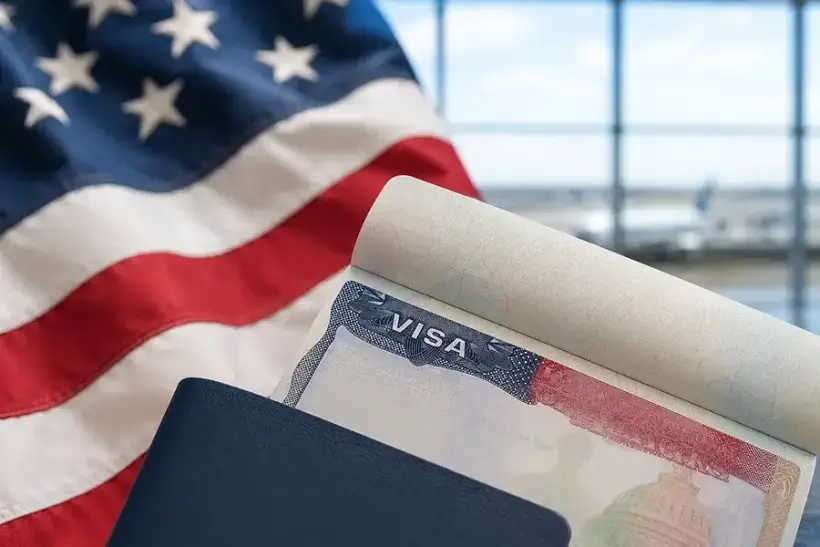
The administration of US President Donald Trump is preparing to revoke the business and tourist visas of up to 200,000 foreign nationals who have applied for asylum or are awaiting decisions on their applications. If implemented, the measure would become the largest mass visa revocation in US history and would likely face legal challenges, according to the Associated Press (AP).
State Department Prepares Mass Revocation of B1 and B2 Visas
The State Department has begun reviewing existing B1 and B2 visas. In the coming weeks, it may decide to revoke permits issued between 2016 and 2026. These visas are intended for business travel, tourism, family visits and medical treatment. When applying, applicants must confirm that they intend to return to their country of permanent residence and do not plan to seek asylum after entering the United States.
The measure would affect foreign nationals who entered the country on such visas and later sought protection or are currently awaiting decisions on their cases. State Department documents obtained by AP indicate that the initiative is being prepared. Two US officials also confirmed the information. The work is being carried out jointly with the Department of Homeland Security (DHS).
State Department spokesman Tommy Pigott confirmed coordination with DHS but did not specify how many visas would ultimately be revoked. The process will be carried out on a rolling basis, so the number may change.
Visa Revocation Will Not Lead to Automatic Deportation
Deputy Secretary of State Christopher Landau said on X on August 24 that some foreign nationals use tourist and business visas to enter the country and then seek to remain through the asylum process. He described the practice as a way of circumventing immigration law and cited the example of a Colombian citizen who entered the United States as a tourist in 2015 and later applied for asylum.
Revocation of B1 and B2 visas would not mean automatic deportation. Most foreign nationals whose asylum cases are already under consideration would be moved into another immigration category after their visas are withdrawn. They would lose their status as business or tourist visitors, while the review of their asylum applications would continue.
US officials provided this information to AP on condition of anonymity because the initiative has not yet been finalized.
US Tightens Visa Policy
Since Donald Trump returned to the White House in 2025, the US administration has steadily tightened restrictions on foreign nationals. Applicants have been required to provide more information about their social media activity, citizens of some countries have been subject to substantial visa bonds, and visa issuance has been completely suspended for nationals of certain states.
Over the past 18 months, the State Department has revoked around 175,000 visas. The restrictions have affected people convicted of or accused of crimes ranging from drunk driving to rape and robbery. Visas have also been revoked from foreign nationals who publicly criticized US policies, particularly those related to the Middle East.
Another focus has been the fight against so-called birth tourism. The Trump administration argues that some pregnant foreign women travel to the United States specifically to give birth so that their children receive US citizenship by birth. The president has repeatedly attempted to restrict the application of birthright citizenship, but such initiatives have faced legal obstacles, including challenges before the US Supreme Court.
Conclusion
Analysts at International Investment note that the Donald Trump administration is steadily expanding restrictions on foreign nationals, although not all announced measures are ultimately implemented. Many decisions are challenged in court, meaning that White House statements do not necessarily translate into new rules taking effect in their original form.
At the same time, the current environment is hardly favorable for those hoping to remain in the United States through the asylum process. Authorities are taking an increasingly tough stance on cases in which foreign nationals enter on tourist or business visas and then file asylum applications. The risks are even higher for those who cross the border illegally: criminal penalties may apply, followed by possible deportation.
Foreign nationals planning to move to the United States should therefore determine in advance the appropriate legal basis for entry and long-term residence. This may include an employment-based, family-based, investor or other visa category provided by law, or one of the available pathways to a green card. Trying to resolve immigration status only after arriving in the country is becoming increasingly risky.