







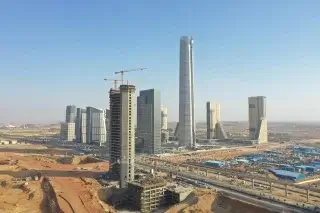
 Egypt Prepares New Law for Property Developers
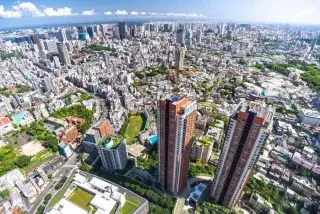 Young Japanese Buyers Turn to 50-Year Mortgages
 Argentina Narrows Tourism Gap as Arrivals Rise
 Seattle Luxury Housing Loses Its Former Momentum
 The World’s Strongest Passports for Travel, Living and Investment
 Russian Developers’ Debt Nearly Doubled in a Year
Montenegro’s Property Market Strains

Montenegro’s real estate market continues to show high prices on the coast and in Podgorica, but the construction sector does not show the same safety margin. New apartments are expensive, foreign demand remains visible and banks continue lending, yet first-quarter 2026 data point to weak growth in construction hours and a quarterly decline in work volumes — a warning sign for a market already constrained by land, permits and costs.
Montenegro’s property market remains expensive
Montenegro’s housing market in 2026 looks resilient on the surface. Prices for new apartments remain high, especially in coastal municipalities and Podgorica, but construction activity does not confirm a broad supply boom.
According to Monte Business, the average price of new residential property in Montenegro reached €2,445 per square meter in the first quarter of 2026. The coastal region remained the most expensive at €2,575 per square meter, Podgorica reached €2,395, while the northern region was much cheaper at €1,708 per square meter.
Those figures show not one unified market, but several different markets inside a small country. The coast depends on tourism, foreign buyers, diaspora capital and limited land. Podgorica is driven by administrative demand, public-sector employment, services and a shortage of modern urban housing. The north remains more affordable, but depends more heavily on infrastructure and domestic tourism.
Official data confirm the price gap
MONSTAT, Montenegro’s statistical office, notes that its new-apartment price indicator is based only on first sales contracts in new residential buildings. That matters: the statistics do not cover the resale market, commercial real estate, land or all types of investment transactions.
According to official data, the average price per square meter in new residential buildings in the first quarter of 2026 was €2,445 nationwide. In Podgorica it reached €2,395, in the coastal region €2,575 and in the northern region €1,708. In the central region outside the capital, no sales of new dwellings were recorded during the period.
For buyers, this means the official price reflects only part of the market. On the coast, especially in Budva, Tivat, Kotor and some premium projects, actual prices for liquid assets may be higher than the average. In the resale market, the spread is wider still: building condition, sea view, distance to the water, documentation and management quality can affect price more than the city itself.
Construction grows nominally but loses speed
The main risk is not the absence of demand, but the limited ability of supply to respond quickly. In the first quarter of 2026, the value of completed construction works rose 5.1% from the same period a year earlier. At first glance, that looks positive.
But quarterly momentum was weaker. Compared with the fourth quarter of 2025, the value of completed works fell 12.6%. Effective hours actually worked on construction sites increased by only 0.7% year-on-year and fell 5.9% quarter-on-quarter.
Effective hours are the hours actually worked by construction workers on sites, including regular time and overtime. If the value of works rises faster than hours, that may point less to a physical expansion of building activity and more to higher material prices, wages, contractor costs and overall project costs.
High prices do not mean a construction boom
Montenegro faces a typical problem of small coastal markets: demand is concentrated in the most attractive locations, but these are precisely the places where it is hardest to build quickly. Land is limited, permitting is complex, infrastructure does not always keep up with development, and construction materials and labor are becoming more expensive.
As a result, high prices do not automatically produce a large volume of new housing. Developers may delay projects because of permits, financing, contractor shortages, cost inflation or uncertainty over sales outside premium zones. The market can therefore remain expensive even without a major expansion of supply.
This is especially visible on the coast. Foreign buyers are willing to pay for the sea, views, marinas, tourism potential and short-term rental income. But new quality supply is limited, and some projects target the upper price segment, beyond the reach of most domestic buyers.
Podgorica becomes a shortage market for modern housing
Podgorica is different from the coast. Demand is less tourist-driven and more connected to permanent residence, work, education, government institutions and internal migration. The capital remains Montenegro’s largest urban market, where buyers include not only investors but also families.
An average new-apartment price of €2,395 per square meter in Podgorica is already creating affordability pressure. Local buyers look not only at the price per square meter, but also at the total transaction size, down payment, mortgage, renovation, furniture, parking and utility costs.
If new projects are delayed or enter the market at high price points, the gap between demand and affordable supply widens. That supports prices, but also makes the market more vulnerable to weaker incomes, higher rates or tighter bank requirements.
Loans support demand and raise risks
The banking sector remains an important support for the market. According to the Central Bank of Montenegro, total loans reached €5.59 billion at the end of March 2026, up 15% year-on-year, while deposits stood at €5.92 billion.
For real estate, this is a mixed signal. On the one hand, lending growth supports transactions, especially in Podgorica and major cities. A mortgage is a long-term bank loan used to buy property, usually secured by the home itself. Access to credit allows buyers to purchase without waiting to save the full amount.
On the other hand, rapid loan growth alongside high prices requires monitoring. If housing prices rise faster than incomes while banks continue lending actively, the market can become more sensitive to any deterioration in conditions: higher rates, weaker tourism flows, lower rental income or slower economic growth.
Local incomes lag behind prices
The average net wage in Montenegro reached €1,029 in April 2026. That is an important affordability benchmark. With a new apartment in Podgorica priced at about €2,395 per square meter, one square meter costs more than two average monthly salaries. On the coast, at €2,575 per square meter, the burden is even heavier.
For local families, this means that a significant part of new supply is effectively aimed beyond domestic demand. Diaspora buyers, foreign investors and tourism-linked capital have more liquidity and can sustain prices at levels that do not align well with local incomes.
This gap does not necessarily trigger a price decline. But it changes the structure of the market. Local buyers move into smaller apartments, more distant districts, older housing stock or postpone purchases. Investors focus on properties with clear rental yields. Developers increasingly target segments where buyers can pay in euros without relying heavily on local salaries.
The coast relies on tourism and scarce land
Montenegro’s coastal property remains the market’s main magnet. Budva, Tivat, Kotor, Herceg Novi and Bar generate demand through the sea, tourism, short-term rentals, yacht infrastructure, foreign buyers and expectations around European integration.
But the coast also carries the highest overheating risks. Prices depend on the tourist season, flight access, visa regimes, geopolitics, the country’s reputation and infrastructure quality. If rental demand falls short of expectations, a property bought at a high price may fail to deliver the required yield.
The coastal market is also uneven. Premium zones near the sea and marinas may retain demand even during a slowdown. Secondary locations, projects without infrastructure and properties with legal or construction problems become more vulnerable.
The north depends on roads, tourism and patient investors
Northern Montenegro remains the most affordable region for new apartments. The average price of €1,708 per square meter makes it much cheaper than the coast and Podgorica. But the lower price reflects not only upside potential, but also weaker demand.
For northern municipalities, infrastructure projects, roads, railways, mountain tourism and year-round economic development are crucial. Without them, the market may remain niche: interest exists, but liquidity is lower, selling periods are longer and rental models are less predictable.
Infrastructure projects, including development of the Bar–Boljare highway and railway upgrades, may gradually reshape demand geography. But such projects do not create an instant property market. Their effect appears over years and depends on jobs, tourism, services and the quality of private investment.
The second half of 2026 will bring segmentation
The base-case scenario for Montenegro is not a crash, but market segmentation. Strong coastal locations and quality projects in Podgorica may hold prices because supply is limited and demand remains resilient. Weak assets, speculative projects and secondary locations will face tougher bargaining.
Construction firms are likely to maintain positive nominal performance, but real growth may be weak. Nominal growth means an increase in current prices, without fully adjusting for inflation. If materials, wages, energy and financing become more expensive, growth in the value of completed works does not always mean more square meters are being built.
For buyers, this means stricter due diligence. View, district and price are not enough. Building permits, developer reputation, delivery schedule, infrastructure connections, building management quality, future costs and legal title all matter.
Montenegro remains strong but narrow
Montenegrin property retains structural advantages: limited coastline, the euro as the de facto transaction currency, foreign interest, tourism, rising international visibility and the prospect of European Union membership. All of this supports demand.
But the market remains small and sensitive. A modest change in external demand, lending, air access or construction costs can shift the balance. Unlike large countries, Montenegro does not have a deep domestic market that can fully replace foreign buyers.
The key question for 2026 is therefore not whether demand exists, but how high-quality and sustainable supply will be. If construction activity remains limited, prices in the best locations may stay high. But if costs, permits and financing keep pressuring developers, the market will become even more polarized.
As reported by International Investment experts, Montenegro’s real estate market looks resilient only where land scarcity and foreign demand outweigh weak construction momentum. The main vulnerability in 2026 is the lack of a safety margin: prices are already high relative to local incomes, construction is not accelerating fast enough and credit growth requires caution. In this environment, an investor should not buy “Montenegro” as a general story, but a specific property with verified legal status, clear liquidity and realistic rental economics.
FAQ: Montenegro’s property market in 2026
How much does new property cost in Montenegro in 2026?
In the first quarter of 2026, the average price of new apartments in Montenegro was €2,445 per square meter. The coastal region reached €2,575, Podgorica €2,395 and the northern region €1,708.
Why is Montenegro’s coast more expensive than other regions?
The coast is more expensive because of limited land supply, tourism demand, foreign buyers, short-term rentals, sea views and infrastructure in the most popular locations.
What is happening to construction in Montenegro?
The value of completed construction works rose 5.1% year-on-year in the first quarter of 2026, but fell 12.6% from the previous quarter. Hours worked barely increased year-on-year, pointing to limited physical growth in activity.
Why do high prices not lead to a construction boom?
Construction is constrained by land, permits, infrastructure, material costs, wages, energy, financing and shortages of quality contractors. Price growth therefore does not always translate quickly into higher supply.
Is property affordable for local buyers?
Affordability is worsening. The average net wage in April 2026 was €1,029, while one square meter of a new apartment cost about €2,395 in Podgorica and €2,575 on the coast.
Is it worth buying property in Montenegro in 2026?
A purchase may be justified in a strong location with verified documents, quality construction and realistic rental assumptions. Speculative projects and secondary locations require greater caution.