







read also
 Fines for Illegal Rentals in Spain Reach €800,000
 Australia’s Spring Auctions Rise but Remain Well Below 2025
 Number of Foreigners Holding Turkish Residence Permits Exceeds 1.27 Million
 Demand from Russian Tourists for Holidays in Georgia Rises by 20–25%
 Montenegro Property Buying Costs in 2026
 Four in Ten Companies Would Not Choose Slovakia
France Looks for Money for the 2026 Budget: Wealth Tax Fails Again
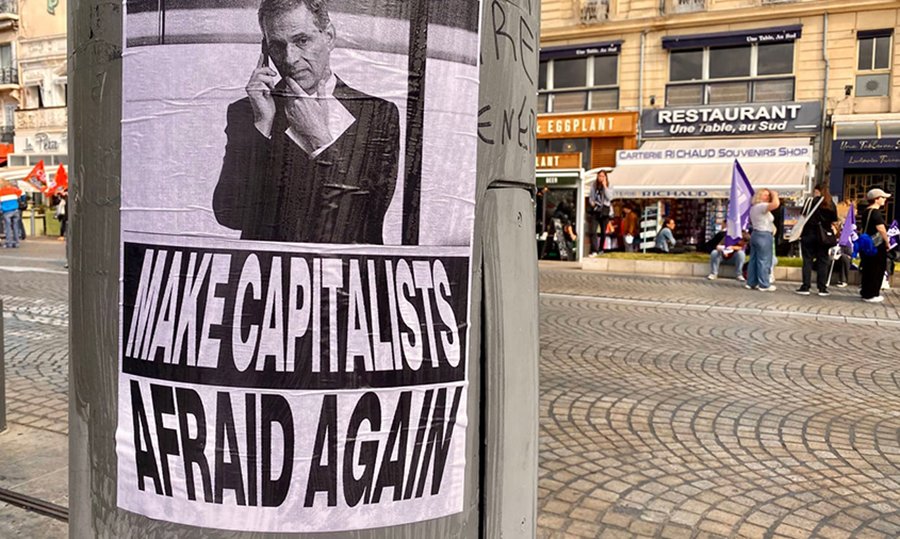
Photo: Courthouse News
Pressure is mounting on the French government, which is trying to close the budget gap mainly by freezing tax deductions and introducing new levies on the population, reports Courthouse News. The 2% wealth tax amendment has been rejected, even as protests and public discontent grow. Experts believe that the authorities will not be able to ignore the issue of involving billionaires in budget financing for much longer.
Tax Pressure
The French government needs to cut spending by about 46 billion dollars in 2026, and the key decisions affect broad social groups. Budget amendments foresee freezing the income tax scale, which effectively increases the tax burden through inflation.
Another measure is replacing the 10% tax deduction for retirees with a fixed payment of about 2300 dollars per year. These steps have become a symbol of shifting the financial burden onto the middle class, while the attempt to introduce a unified 2% tax on large fortunes was rejected by parliament.
The portal Escec-international notes that the draft budget introduces new fiscal tools aimed at major capital. The government proposes reinstating the exit tax, expected to bring about 70 million euros annually, and reducing the capital gains tax exemption period on secondary home sales from 22 to 17 years.
The document also expands the wealth tax base, adding financial assets, digital shares, insurance funds, and equity portfolios. A sharp increase is planned for the tax on share buybacks — from 8% to 33%, which is expected to generate about 8 billion euros. A separate clause introduces a minimum income tax of 20% for households earning more than 250,000 euros a year — until the budget deficit falls below 3% of GDP. Taken together, these proposals indicate an attempt to redistribute the tax burden not only to ordinary citizens, but also to owners of major assets and business structures.
The Debate Around the “Zucman Tax”
The most debated issue was parliament’s refusal to support the initiative of economist Gabriel Zucman. He proposed taxing assets over 115 million dollars at a flat annual rate of 2% — including property, income, and corporate shares. This is atypical for Europe: wealth taxes exist in France, Spain, Norway, Switzerland, Italy, and Belgium, but none of them covers unrealized income at this scale.
Experts emphasize that the ultra-rich often pay a lower effective tax rate than salaried workers because most of their capital is concentrated in corporate holdings and non-distributed profits. The simplicity of the proposed model, according to the Economic Analysis Council, makes tax evasion less likely: the fewer exceptions, the fewer opportunities for optimization.
However, critics argue that such a tax could damage France’s tech ecosystem: owners of fast-growing companies do not always have enough liquidity to pay 2% of their share value every year. This argument proved decisive for centrist and right-wing parties, which voted against the amendment.
Political Factor and Investor Implications
The demand to revise taxation on major fortunes has long gone beyond expert debate and turned into one of society’s key political requests. Mass protests in early October demonstrated that the slogan “tax the rich” is now part of the national agenda: in Marseille, protesters rallied at the Old Port with banners reading “Their yachts will run aground” and staged an improvised “fiscal workout” under the chant “Tax the rich”.
Former World Bank chief economist François Bourguignon believes the government will not be able to justify austerity if the wealthiest do not contribute equally. The gap between the real value of billionaire assets and the taxes they pay has become the central argument of critics.
Analysts at International Investment note that the redistribution of tax pressure in France is turning into a political constant: the issue of taxing major capital will continue to return regardless of vote outcomes. For investors, this means the need to factor in additional costs — but not to abandon the French market. At the same time, a broader European trend is taking shape: encouraging capital investment in the real economy instead of passive asset accumulation.
Tags: France, Taxes, Wealth Tax, Budget 2026, Economy, Investments, Politics, Billionaires, EU, Fiscal Policy