







read also
 Australia’s Spring Auctions Rise but Remain Well Below 2025
 Number of Foreigners Holding Turkish Residence Permits Exceeds 1.27 Million
 Demand from Russian Tourists for Holidays in Georgia Rises by 20–25%
 Montenegro Property Buying Costs in 2026
 Four in Ten Companies Would Not Choose Slovakia
 Gulf Countries Prepare Unified Tourist Visa
Airbus recalls more than 6,000 A320 aircraft: causes and consequences for the aviation market
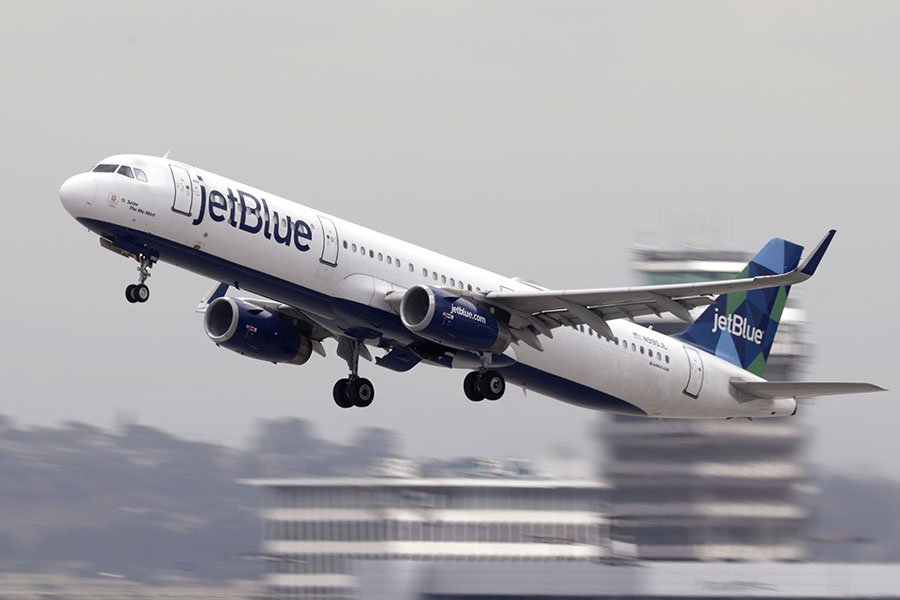
Photo: Tom’s Hardware
European manufacturer Airbus (AIR.PA) has announced a major recall of more than 6,000 A320-family aircraft — over half of the entire global fleet. The move was triggered by a flight-control malfunction involving a single jet in the United States and resulted in schedule disruptions across airports worldwide, Reuters reports.
The JetBlue incident and the cause of the malfunction
The recall is linked to an event on 30 October involving a JetBlue A321 operating in the northeastern United States, according to Tom’s Hardware. The aircraft suddenly altered its pitch angle and began a sharp descent due to a flight-control glitch — the system issued commands that the crew had not given. The pilots took manual control and deviated from the planned route. Several passengers were injured during the abrupt manoeuvre.
Regulators determined that the new software version was unable to correctly process a combination of incoming data. Airbus stated that heightened solar activity may have distorted information inside the control chain, making a software update or rollback to a previous version necessary.
Scale of the recall and associated risks
This recall is the largest in Airbus’s 55-year history and came just weeks after the A320 overtook the Boeing 737 to become the world’s most widely delivered passenger aircraft. At the time notifications were sent to more than 350 operators, around 3,000 A320s were airborne. In total, the directive affects roughly 6,000 aircraft out of the 11,300 currently in service.
According to Airbus, the software fix takes about two hours and can be performed between flights. However, some A320 variants require additional inspections and possibly hardware replacements. The company stressed that the safety risk remains very low but said the issues must be resolved before commercial operations continue.
Airline response
Airlines worldwide reported isolated schedule disruptions. American Airlines said 340 of its 480 A320-family jets require the update. Lufthansa and IndiGo temporarily grounded parts of their fleets. In Latin America, Avianca paused ticket sales for near-term dates due to the high proportion of affected aircraft. Despite pressure on maintenance centres during peak season, experts expected most jets to return to service within 24 hours — in the overwhelming majority of cases the intervention is limited to a software update.
According to the Financial Times, by Monday the work had already been completed by American Airlines, Delta Air Lines, Air India, and European low-cost carriers Wizz Air and EasyJet. FlightAware data indicated that major airports were functioning largely as normal, though localised delays persisted. In the US, the risk of disruption was amplified by the traditional Thanksgiving travel surge. Transport Secretary Sean Duffy said airlines had made significant progress in resolving the issue.
For some operators the situation proved more challenging. Avianca reported that more than 70% of its fleet was affected. Japan’s ANA completed all updates, but the process caused widespread delays and cancellations: on Saturday alone the carrier cancelled 95 flights, affecting around 13,200 passengers. Airbus CEO Guillaume Faury apologised to airlines and passengers for the significant logistical difficulties and stressed that Airbus teams were working around the clock to speed aircraft back into operation.
Weather chaos intensified the crisis
The mass A320 recall coincided with one of the toughest weeks for the US transport system. As airlines installed updates and temporarily grounded parts of their fleets, the country was hit by a powerful weather front — from tornadoes and heavy rain in the South to blizzards in the Midwest and storms on the East Coast. By midweek, the number of delayed and cancelled flights exceeded 4,000. Technical downtime caused by the Airbus directive overlapped with weather-related restrictions, creating additional disruptions.
In the South, tornadoes and severe winds affected operations at airports in Dallas and Houston. In the Midwest, snowstorms paralysed Minneapolis and several regional airports. The East Coast faced heavy rain and strong winds, causing delays in New York, New Jersey and Boston — the region with the densest aviation network in the US. Similar weather-related disruptions were reported across Asia and Europe.
According to analysts at International Investment, the overlap of crises became a stress test for global aviation. Weather anomalies are intensifying, hubs are operating at full capacity, and such overlaps will occur more frequently unless transport infrastructure and early-warning systems undergo modernisation.