







read also
 Australia’s Spring Auctions Rise but Remain Well Below 2025
 Number of Foreigners Holding Turkish Residence Permits Exceeds 1.27 Million
 Demand from Russian Tourists for Holidays in Georgia Rises by 20–25%
 Montenegro Property Buying Costs in 2026
 Four in Ten Companies Would Not Choose Slovakia
 Gulf Countries Prepare Unified Tourist Visa
Train Crash Halts Thai Rail Project
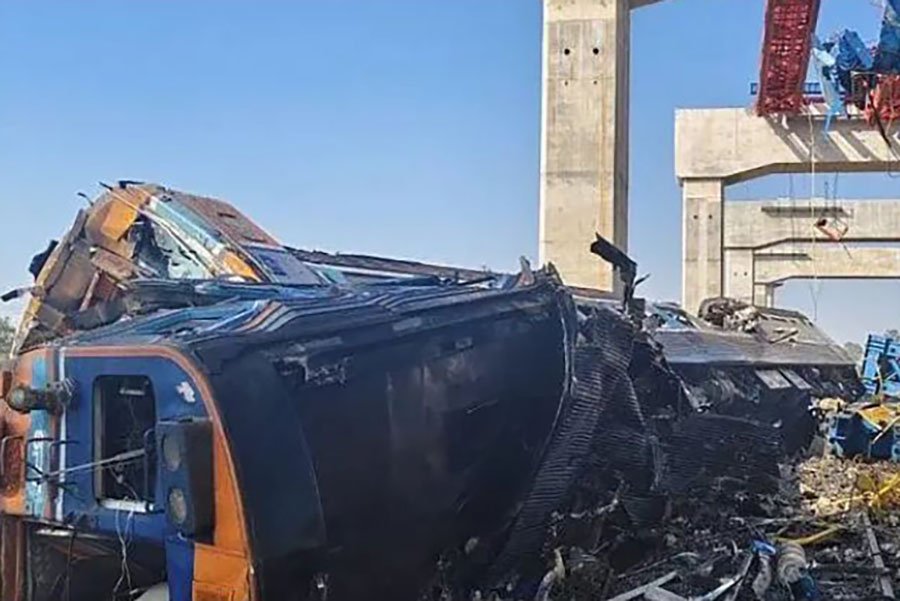
Photo: BBC
A devastating rail accident in northeastern Thailand has drawn international attention to the risks surrounding large-scale infrastructure development. In February 2026, a construction crane collapsed onto a moving passenger train in Nakhon Ratchasima province, triggering a derailment and fire that killed at least 22 people and injured dozens more.
The train was operating on a section adjacent to a Thai–Chinese high-speed rail project, part of a broader plan to enhance regional connectivity across Southeast Asia.
How the accident unfolded
The passenger train, travelling from Bangkok to Ubon Ratchathani, was struck by a crane used in the construction of an elevated rail segment. The impact caused the rear carriages to derail, with several wagons sustaining severe structural damage. Fire broke out shortly after the collision, intensifying the scale of the disaster.
Images from the scene showed overturned carriages, scattered debris and thick smoke rising from the tracks as emergency teams rushed to assist trapped passengers.
Rescue efforts and investigation
Emergency responders worked through the night to rescue survivors and provide medical assistance. Authorities confirmed that no rescue personnel were injured during the operation. The site was secured to allow investigators to begin examining the cause of the crane collapse.
Officials have not yet determined whether the incident was the result of equipment failure, human error or broader safety lapses at the construction site. A full technical investigation is now underway.
Setback for a strategic project
The accident represents a major setback for Thailand’s high-speed rail ambitions, which are partly funded through Chinese-backed investment initiatives. The project was expected to shorten travel times, improve logistics and support economic growth in the country’s northeastern regions.
Construction on the affected section has been suspended, and project timelines are likely to be reassessed following the incident.
Implications for business travel and tourism
Rail disruptions have affected both business and leisure travel. The Bangkok–northeast corridor is a key route for commercial activity, and delays have complicated movement for companies operating in the region. Freight services may also experience knock-on effects as authorities clear the site and inspect infrastructure.
For tourists, the crash underscores the reliance on transport infrastructure to support domestic travel. While the incident occurred away from major tourist hubs, delays to rail development could influence future travel patterns and accessibility.
Conclusion
The Nakhon Ratchasima train crash has highlighted the human and economic risks associated with complex infrastructure projects carried out alongside active transport networks. As Thailand continues to modernise its rail system, the tragedy reinforces the importance of stringent safety oversight and risk management.
As reported by International Investment experts, the Thai rail accident illustrates how infrastructure failures can carry far-reaching economic and reputational consequences. For investors and governments alike, robust safety governance is now viewed as a critical component of sustainable infrastructure development.