







 China Nears a Decision on Fresh Stimulus
 Fines for Illegal Rentals in Spain Reach €800,000
 Australia’s Spring Auctions Rise but Remain Well Below 2025
 Number of Foreigners Holding Turkish Residence Permits Exceeds 1.27 Million
 Demand from Russian Tourists for Holidays in Georgia Rises by 20–25%
 Montenegro Property Buying Costs in 2026
Asia Becomes the Engine of Global Aviation
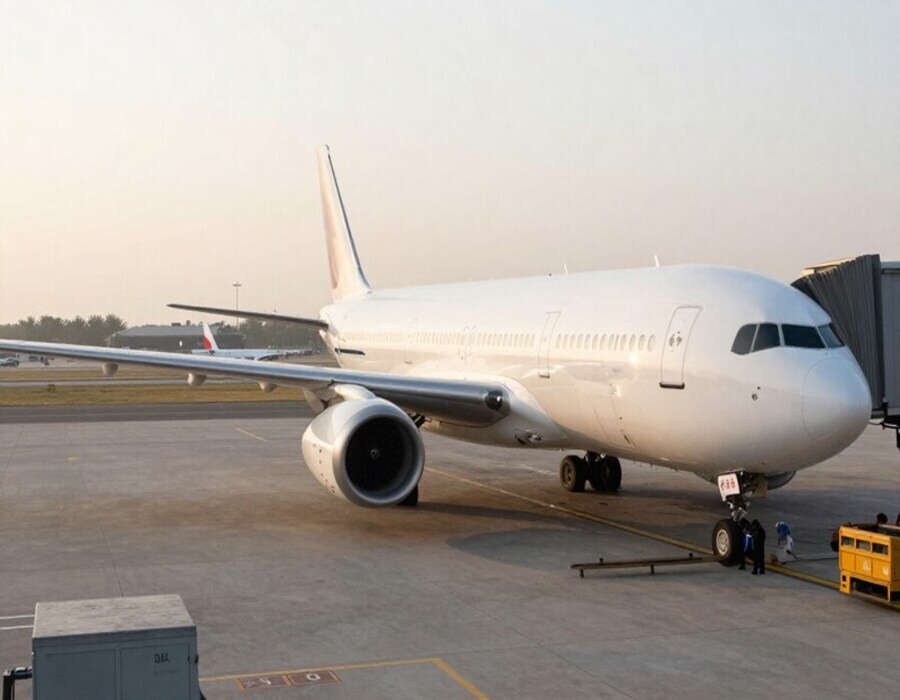
Asia’s aviation market outpaces the rest of the world
The Asia-Pacific region is rapidly emerging as the core engine of global aviation growth, reshaping how passengers, cargo and economies connect worldwide. New industry research released ahead of the 2026 Singapore Airshow confirms that the future of air travel is shifting decisively eastward. Over the next two decades, India, China and Southeast Asia will account for the bulk of global aviation expansion, with India standing out as the world’s most powerful growth engine.
In 2025 alone, international passenger traffic across Asia-Pacific rose by 8%, significantly outpacing the global average growth rate of 6.8% measured in revenue passenger kilometres. This acceleration is no longer a temporary rebound but a reflection of deep structural forces driven by economic growth, demographics and stronger regional integration.
First-time flyers and new routes reshape demand
Unlike mature markets in Europe and North America, Asia’s aviation expansion is powered by millions of new passengers entering the system each year. Rising incomes, rapid urbanisation and an expanding middle class continue to transform travel behaviour, creating sustained long-term demand rather than replacement growth.
Since 2015, Asian airlines have launched more than 600 new routes, many of which directly connect secondary and emerging cities without relying on traditional mega hubs. This network evolution reduces costs, shortens travel times and opens new economic corridors across the region, benefiting both passengers and carriers.
India emerges as the world’s strongest aviation growth engine
India occupies a central role in this transformation. Its aviation market has moved beyond rapid expansion into a phase of structural resilience. A young population, rising domestic consumption and steady economic growth continue to drive demand, while airlines expand fleets and airports scale up capacity. New regional routes are integrating smaller cities into national and international networks, fundamentally reshaping India’s aviation landscape.
India’s growth story is no longer just about adding passengers. It is about building a durable aviation ecosystem capable of supporting sustained demand over decades, making the country a focal point for aircraft manufacturers, infrastructure investors and global carriers.
China and Southeast Asia strengthen regional connectivity
China remains a dominant force in global aviation, shaping aircraft orders, airport development and air cargo flows. While its domestic market is already vast, China continues to anchor regional and global connectivity through outbound tourism, manufacturing and logistics.
At the same time, Southeast Asia is emerging as the next major growth frontier. Indonesia, Vietnam and the Philippines are seeing sharp increases in passenger numbers as tourism rebounds and regional airlines expand. Short-haul international travel within the region is growing rapidly, reinforcing intra-Asian connectivity and reducing reliance on long-haul routes.
Cargo leadership, infrastructure investment and rising challenges
Asia-Pacific has become the world’s largest air cargo hub, accounting for around 40% of global air freight demand. This reflects Asia’s central role in global manufacturing, e-commerce and supply chains. Airlines and airports are investing heavily in cargo capacity, cold-chain logistics and digital handling systems.
However, rapid growth also brings challenges. Rising costs, intense competition, labour shortages and aircraft delivery delays are pushing airlines toward consolidation and strategic partnerships. Governments are accelerating airport expansion while focusing on smarter systems such as biometric processing, digital immigration and advanced air traffic management to improve efficiency and sustainability.
As reported by experts at International Investment, Asia’s aviation surge represents a fundamental rebalancing of the global air transport system rather than a short-term cycle. With India, China and Southeast Asia driving demand, investment decisions made across the region will increasingly shape fleet strategies, route networks and technological adoption worldwide.