









Seoul Housing Heat Returns
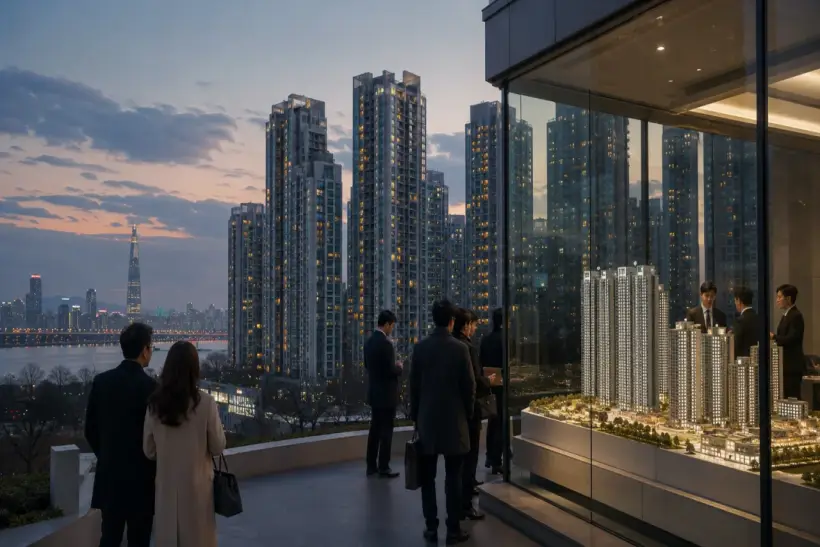
Apartment prices in Seoul accelerated in mid-May, adding pressure on the Bank of Korea before its next rate decision. The move puts housing back at the center of monetary policy as officials weigh inflation, household debt, a volatile won and external shocks linked to the Middle East conflict.
Seoul’s apartment rally gains speed
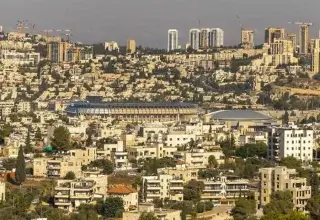
South Korea’s capital is again testing the limits of monetary policy. Bloomberg reported that apartment prices in Seoul rose 0.28% in the week through May 11, the fastest weekly increase since Jan. 26, when prices climbed 0.31%. The advance marked the 67th consecutive week of gains, while nationwide apartment prices rose 0.06%.
The numbers matter beyond the property market. For the Bank of Korea, the country’s central bank, faster home-price gains in Seoul increase the risk that lower borrowing costs could reignite mortgage demand and household leverage. That complicates any move toward policy easing.
Why housing complicates the rate debate
In April, the Bank of Korea kept its base rate unchanged at 2.50%. The central bank cited uncertainty from the Middle East war, stronger inflation pressures, downside risks to growth and volatility in financial and foreign-exchange markets. The base rate is the benchmark policy rate that shapes funding costs across the banking system and affects loans, deposits, mortgages and the currency.
The same statement said consumer inflation rose to 2.2% in March, short-term inflation expectations increased to 2.7%, and annual inflation was likely to come in considerably above the February forecast of 2.2%. That narrows room for rate cuts: looser policy could support growth, but it may also stimulate housing demand and add pressure to prices.
The capital is pulling away from the regions
Early-May data already showed a widening regional split. Chosun Biz, citing the Korea Real Estate Board, said apartment sales prices rose 0.04% nationwide in the week through May 4, while Seoul gained 0.15% and the greater capital area rose 0.08%. Non-capital regions fell 0.01%.
That divergence reflects a structural feature of South Korea’s housing market. Seoul concentrates jobs, universities, financial services and high-income employment. As a result, apartment demand in the capital remains resilient even when regional markets are weak. For policymakers, the challenge is that one national interest rate applies to the whole economy, while the overheating is concentrated in a few high-demand districts and suburbs.
Housing statistics have become policy signals
The Korea Real Estate Board describes its national housing-price survey as a statistical tool used to assess market conditions and support housing policy. The survey covers sales prices, jeonse prices and monthly rents; jeonse is South Korea’s long-term rental system in which tenants pay a large refundable deposit instead of, or alongside, a much smaller monthly rent.
For the central bank, such data have become part of the financial-stability assessment. In April, policymakers said it was necessary to monitor whether stabilization in housing prices in Seoul and the surrounding area, as well as household debt, would be sustained. The May acceleration weakens that assumption.
A tax deadline may have tightened listings
Tax timing also appears to have affected supply. Seoul Economic Daily reported that apartment-price gains in Seoul slowed to 0.18% in the first week of May as urgent listings were absorbed before the expiration of a capital-gains-tax moratorium for multiple-home owners. Once those bargain listings were exhausted, market participants expected a shortage of fresh supply.
When available listings shrink, even moderate demand can push prices higher. In Seoul, that effect is amplified by limited land for new construction, dense employment concentration and persistent demand for apartments near transit, schools and large preferred residential complexes.
Assessed prices show the scale of the rebound
Another signal came from publicly assessed prices, which are used for tax and administrative purposes. The Korea Times reported that officially announced apartment prices in Seoul rose 18.67% in 2026, the fastest pace in five years, driven by gains in upscale districts and areas along the Han River.
Assessed values are not the same as market transactions, but they show how far asset values have already moved. For homeowners, that increases paper wealth. For first-time buyers, it raises the entry barrier. For the government, it deepens the political divide between owners and renters.
The 2025 surge set the stage
Seoul entered 2026 after a sharp rise. Korea JoongAng Daily reported that apartment sale prices in the capital increased 8.71% in 2025, the fastest gain in 19 years based on weekly apartment-price trend data.
That means the latest acceleration is not a rebound from a deep correction. It comes on top of an already elevated base. Even small weekly moves are therefore politically sensitive because they shape buyer expectations, bank lending behavior and sellers’ decisions about whether to list.
Mortgages, inflation and the won now overlap
The Bank of Korea’s dilemma is that housing, inflation and the exchange rate are now part of the same risk cluster. In April, policymakers pointed to higher oil prices, rising government-bond yields, a stronger US dollar and a jump in the won-dollar exchange rate into the 1,500 range after the Middle East conflict escalated.
Keeping rates unchanged may increase pressure on growth. Cutting rates may give Seoul’s mortgage-driven housing demand another boost. That is why housing is no longer a secondary indicator for South Korea’s central bank. It is one of the main constraints on monetary policy.
As experts at International Investment report, Seoul’s renewed price acceleration shows that South Korea’s housing problem cannot be explained by the interest-rate cycle alone. The critical risk is that the capital continues to absorb capital, jobs and expectations of future gains while regional markets remain weak. In that structure, rate cuts could disproportionately support already overheated areas rather than the broader economy. For investors, Seoul still offers short-term price resilience, but also rising exposure to regulatory tightening, tax changes and a more hawkish Bank of Korea.
FAQ
Why are Seoul apartment prices rising again?
Prices are being supported by limited supply, job concentration, demand for well-connected districts and expectations of further gains. In early May, the depletion of urgent listings linked to tax timing also tightened available supply.
Why does Seoul housing matter for the Bank of Korea?
The central bank monitors financial stability as well as inflation. Rapid housing gains can increase mortgage lending, household debt and asset-market risks.
What is the Bank of Korea base rate?
It is the central bank’s benchmark policy rate. It influences borrowing costs, deposit rates, mortgage pricing and broader financial conditions.
What is jeonse in South Korea?
Jeonse is a Korean rental system in which a tenant provides a large refundable deposit, usually instead of regular monthly rent or with a much smaller monthly payment.
Can the Bank of Korea cut rates in 2026?
A rate cut would depend on inflation, growth and financial-stability risks. Faster Seoul apartment-price growth makes easing harder because cheaper credit could add fuel to housing demand.