







 US Introduces Visa Bonds of Up to $20,000 for Tourists From 50 Countries
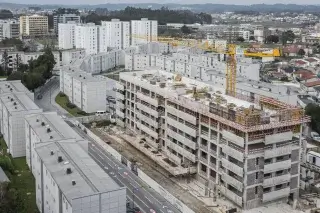 Portugal Secures €1.5 Billion for Social Housing
 Mortgage Lending in Georgia Increased by Nearly 50%
 Irish Homes Are 17% Overvalued as Supply Lags
 Buses from Latvia to Russia and Belarus May Be Cancelled
 Egypt’s Economy Accelerates to 5.1%
Australia’s Data Boom Keeps Rates Higher

Australia’s data-centre boom, estimated by Bloomberg at about A$111 billion, is turning from a technology story into a macroeconomic force, as artificial intelligence and cloud infrastructure raise demand for construction, electricity, imported equipment and capital, complicating the Reserve Bank of Australia’s fight against inflation.
Data centres become an inflation factor
Sydney — Australia is facing an unusual case in which investment in digital infrastructure may support long-term growth while also keeping interest rates elevated. A large capital wave into data centres — specialized facilities that house servers, cooling systems, power equipment and network infrastructure — is no longer a narrow technology-sector issue.
Bloomberg reported on May 29, 2026, that Australia’s A$111 billion data-centre boom could help keep interest rates higher for longer. The logic is straightforward: if the economy receives a large investment impulse while inflation is already elevated and resources are constrained, the central bank has less room to loosen monetary policy quickly.
Monetary policy is the management of interest rates and financial conditions through which a central bank influences inflation, credit, consumption and investment. In Australia, that task has become more difficult as inflation has reaccelerated and digital-infrastructure investment has begun competing for labour, materials, land, electricity and financing.
The RBA sees pressure on economic capacity
The Reserve Bank of Australia raised the cash rate target by 25 basis points to 4.35% in May 2026. A basis point is one hundredth of a percentage point. The central bank said inflation was likely to remain above target for some time and that risks to inflation expectations were tilted to the upside.
For the data-centre market, this matters because the central bank looks not only at consumer prices but also at capacity pressures. If major investment projects create additional demand for construction, engineering services, electrical equipment, land and power, they can support employment and income while also adding pressure to costs.
Australia’s economy was already operating with elevated capacity pressures. In that setting, a new investment cycle does not automatically deliver an immediate productivity gain. At first, it often means more orders, more imports, more construction activity and stronger demand for skilled workers.
AI needs power plants, not only servers
The main source of new demand is artificial intelligence, meaning software systems that process large volumes of data, identify patterns and perform tasks that previously required human input. Training and running these systems require powerful servers, graphics processors, cooling systems and constant electricity supply.
Data centres differ from ordinary offices or warehouses because their key resource is not floor space alone but electrical capacity. Operators need megawatts, grid reliability, backup power, cooling, fibre connections and proximity to large customers.
That is why the digital boom quickly becomes an energy issue. The Australian Energy Market Operator uses dedicated forecasts of data-centre electricity consumption for long-term power-system planning. That shows the sector is now treated as a distinct source of future demand rather than a small part of commercial energy use.
Construction gets a new source of overheating
Investment in data centres is strengthening the construction cycle at a time when Australia is already facing housing shortages, rising infrastructure costs and shortages of skilled labour. Building a data centre requires not only concrete and steel but also complex engineering systems: transformers, cable networks, switchgear, cooling, fire-safety systems and backup power.
That makes such projects competitors for infrastructure construction, housing, energy assets and industrial property. If the same pool of contractors, engineers and electricians is serving several fast-growing sectors, labour costs and delivery times can rise.
The Australian Bureau of Statistics has noted that rising investment in data centres is already visible in economic statistics. But because much of the equipment is imported, the short-term contribution to gross domestic product can be smaller than the headline capital expenditure. Gross domestic product is the value of all goods and services produced in an economy.
Imported equipment reduces the GDP effect
Data centres require servers, chips, storage systems, networking equipment and specialized cooling technology. Much of this is produced outside Australia. As a result, the investment boom raises imports and can widen trade gaps in specific categories even as domestic construction and services expand.
This is an important difference from a traditional infrastructure project. A road, bridge or rail line typically has a high share of local work. A data centre is also built on local land and connected to the local grid, but its technological core is often purchased globally.
For the central bank, this investment boom is ambiguous. On one hand, it increases the country’s capital stock and may improve future productivity, digital security and service exports. On the other hand, during construction it supports demand and may limit the speed at which inflation falls.
The power grid becomes the main bottleneck
The Australian Energy Market Commission proposed new technical standards for data-centre grid connections in 2026. It said cloud computing, artificial intelligence and digital services are creating unprecedented demand for energy-intensive facilities, while unclear technical rules could threaten grid stability.
Grid stability means the ability of the power system to maintain the balance between electricity production and consumption without outages, voltage problems or emergency failures. For data centres, this is critical: even a short disruption can cause data loss, service failures and financial damage.
For the power system, data centres are also challenging. They consume large amounts of energy almost continuously, while solar and wind output varies by weather and time of day. Therefore, growth in digital infrastructure requires not only more renewable generation but also networks, batteries, backup capacity and flexible demand management.
Sydney and Melbourne concentrate demand
The largest demand is concentrated around Sydney and Melbourne, where corporate customers, financial firms, telecommunications networks, cloud providers and much of the population are located. For data centres, latency matters. Latency is the time it takes for information to travel from a user to a server and back. The closer the facility is to the customer, the faster the service.
But the largest cities also face the tightest constraints on land, grid capacity, water, construction resources and approvals. Investors therefore seek sites with access to electricity, construction logistics and rapid fibre connectivity.
In Australia, digital sovereignty has become an additional factor. Digital sovereignty means the ability of a country to store and process critical data within its own jurisdiction, under national security and access rules. For government, banks, healthcare companies and defence users, that turns local data centres into strategic infrastructure.
High rates change project economics
For data-centre developers, elevated interest rates mean more expensive capital. Projects require large upfront spending, while returns depend on long-term contracts with cloud providers, technology companies, government and corporate clients. If debt costs rise, investors demand higher returns or reconsider project timing.
High rates also change the competition for capital. Money flowing into data centres could otherwise go into housing, logistics, energy or transport. That is not necessarily negative for the economy, but when construction resources are limited, it raises questions about priorities.
The Reserve Bank’s forecasts imply that the market-implied cash rate may rise further by the end of 2026. That suggests investors are not expecting a quick return to cheap money, especially if inflation risks remain elevated.
The digital boom supports jobs but not lower prices
Data-centre investment creates jobs in construction, energy, engineering, cybersecurity, operations and maintenance. It can also strengthen Australia’s appeal as a regional cloud and artificial-intelligence hub in the Asia-Pacific.
From an inflation perspective, however, the effect is mixed. New infrastructure may improve productivity in the future, but in the short term it consumes resources. If the economy is already close to capacity, that demand can support wage growth in shortage occupations and raise construction-service prices.
That explains why a technology investment wave can be good news for long-term growth but bad news for borrowers hoping for rapid cuts in mortgage and corporate rates. The central bank cannot ignore investment demand if it keeps inflation above target.
Environmental risks become political
Data-centre growth is also generating environmental debate. Critics point to electricity consumption, emissions, grid strain and water use for cooling. Supporters argue that modern facilities can stimulate renewable generation, use more efficient equipment and sign long-term clean-energy contracts.
Clean Energy Finance Corporation and Baringa have described the sector as an important part of the future energy system, while also calling for a major increase in renewable generation, storage and coordinated policy. That captures the central trade-off: data centres can be part of digital and energy modernization only if the power system keeps pace.
For state governments, the choice is difficult. Rejecting new projects could weaken Australia’s position in the global AI race. Approving projects too quickly without grid and environmental requirements could raise electricity costs, trigger local opposition and increase infrastructure pressure.
Australia competes with the US and Asia for capital
The global data-centre market is in an investment supercycle. Artificial intelligence, cloud computing and real-time data processing are pushing technology companies to seek sites with reliable energy, stable legal systems, available land and access to customers.
Australia has several advantages: political stability, developed financial markets, high digital adoption, demand from government and business, and a geographic role between North America and Asia. But it also has constraints: expensive labour, complex approvals, long networks, competition for renewable energy and distance from major equipment manufacturers.
CBRE has described Australia as an attractive market for data-centre investment because of artificial-intelligence demand, resilient pricing and a competitive cost base. But attractiveness does not remove the question of how quickly the country can build energy and grid capacity.
Rates may stay higher for longer
The link between data centres and interest rates does not mean they alone determine the Reserve Bank’s decisions. Rates are shaped by inflation, the labour market, oil prices, fiscal policy, household consumption, the Australian dollar and global financial conditions. But a large investment boom is an additional factor that prevents the economy from cooling sharply.
If tens of billions of dollars of projects enter construction at the same time, they will support employment and demand for resources. That can limit downturn risk but also make it harder to return inflation to the 2–3% target range.
For households, this means the digital boom can carry an indirect mortgage cost. Even if consumers never directly use a specific data centre, they live in an economy where large infrastructure spending affects rates, construction costs, electricity and fiscal choices.
Who pays for infrastructure becomes the key question
The central issue for the next few years is cost allocation. Data centres require grid connections, substations, backup capacity, water, roads and engineering infrastructure. If operators bear all these costs, projects become more expensive. If part of the cost falls on the broader system, industry and households may face higher tariffs.
Regulators will have to decide how costs are shared between data-centre operators, network companies, energy producers and end users. That will affect not only project returns but also public support for digital infrastructure.
For Australia, this matters because the country is trying to decarbonize electricity, expand housing supply, modernize networks and control inflation at the same time. The data-centre boom adds another major source of demand to an already crowded investment agenda.
According to experts at International Investment, Australia’s data-centre boom should not be viewed only as a technology victory or an energy threat. It is a new type of macroeconomic asset that can raise future productivity while already competing for capital, land, electricity and skilled labour. Unless the state requires operators to fund grid connections, clean power and local infrastructure in advance, digital growth may become a hidden tax on the economy through higher rates, tariffs and construction costs.