







 Vietnam Mortgage Surge Pushes Homes Out of Reach
 Lithuanian Apartment Prices Accelerate Across Major Cities
 London Flats Lose Value Ahead of Leasehold Reform
 Construction of the Batumi–Sarpi Highway Begins in Georgia
 Baltic Property Investment Accelerates in 2026
 Hong Kong and Singapore Renew Their Expat Rivalry
EES Delays Threaten European Tourism
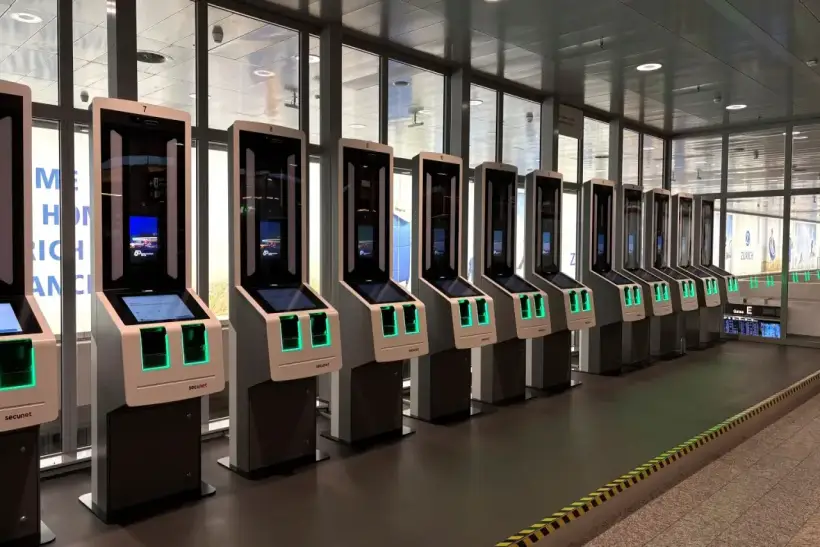
Europe’s Entry/Exit System is designed to make borders more secure and digital, but its rollout has become a risk for the tourism season. According to WTTC, if EES border queues reach three to four hours, Europe could lose up to 41 million arrivals from key long-haul markets and tens of billions of dollars in visitor spending.
A digital border has become an economic risk
The European Entry/Exit System, or EES, was designed as a technological upgrade for Schengen borders. It replaces manual passport stamping with digital entry and exit records, helps monitor permitted stays and strengthens checks on non-EU nationals travelling for short periods.
But in the travel industry, EES is increasingly discussed not only as a security tool, but as an operational risk. Hospitality Net, citing World Travel & Tourism Council analysis, warns that if border delays reach three to four hours, up to 41 million European arrivals from the United Kingdom, the United States, Canada and Australia could be at risk. The visitor spending linked to those trips is estimated at about $45.4 billion.
For Europe, this is not just an airport technology problem. It is a competitiveness issue. Travellers may accept biometrics as a new norm, but they are far less willing to accept uncertainty: whether border control will take 20 minutes or three hours, whether they will miss a connection, whether they will miss a train, and whether their holiday will begin with a queue and stress. In tourism, waiting is part of the product, and a bad wait reduces willingness to travel.
Who EES affects
EES applies to non-EU nationals travelling to the Schengen area for short stays. This includes visitors from the United Kingdom, the United States, Canada, Australia and other countries whose citizens enter visa-free or with short-stay visas. The system records passport data, the date and place of entry and exit, refusals of entry, facial images and fingerprints where required.
The official logic is simple: digital records should replace stamps, reduce overstays and make checks more reliable. For travellers, this means the first entry can take longer because biometric registration must be completed. Later checks should be faster, but only if equipment works, data are stored correctly, and staff and passengers understand the process.
The transition period is the weak point. Major airports, seaports, rail terminals and land crossings handle different passenger flows, infrastructure and levels of readiness. If a border point lacks kiosks, staff or queue space, a digital system quickly becomes a physical bottleneck.
Why three hours can change travel decisions
WTTC focuses not only on delays, but on traveller behaviour. Europe remains attractive for long-haul markets, but a trip already requires major spending: flights, hotels, insurance, transport, visas or electronic authorisations, event tickets, restaurants and excursions. If the risk of a multi-hour queue is added, some travellers choose another destination.
Families, older travellers, passengers with connections, business travellers and short-break visitors are especially sensitive. For them, three hours at the border may not be an inconvenience, but a disruption to the entire itinerary. On a short trip, losing half a day is significant.
The psychological effect also matters. Even if most passengers clear checks faster, news of long queues can change destination perception. Travel demand reacts not only to actual risk, but to expected risk. If Europe becomes associated with border chaos, part of the demand shifts to Turkey, the Middle East, Asia, Latin America or domestic trips.
Long-haul markets matter especially for revenue
The United Kingdom, United States, Canada and Australia matter not only because of arrival numbers, but because of spending. Long-haul visitors often book longer trips and spend more on hotels, restaurants, museums, retail, transport and excursions. They support not only airports and hotels, but also city centres, luxury retail, cultural institutions, tour operators and small businesses.
Losing part of that demand is painful even when headline tourism volumes remain high. Europe may preserve domestic and regional travel numbers but lose part of its revenue quality if long-haul visitors begin to avoid the region. For Paris, Rome, Barcelona, Amsterdam, Athens, Lisbon, Prague, Vienna and other cities, this is especially sensitive.
The hospitality sector is already dealing with a more cautious consumer. Growth in domestic and regional travel supports occupancy, but it does not always replace long-haul visitor spending. EES therefore creates a risk not only to arrival numbers, but to average visitor value.
Airports and airlines warned in advance
IATA and European airports warned in advance that the EES rollout required more flexibility. The aviation sector asked the European Commission to ensure that Schengen member states could partially or fully suspend EES procedures until the end of October 2026 to avoid peak-summer disruption. The industry argued that without such flexibility, the system could create queues precisely when European airports are under maximum strain.
The problem is that a border delay quickly spreads across the whole chain. If passengers spend too long at border control, they delay boarding, miss connections, increase pressure on staff, require rebooking, create queues at support desks and raise terminal stress. This is not a local delay in one zone, but an operational problem for the whole airport.
For seaports and rail terminals, the risks are even more complex. At locations with juxtaposed border controls, such as routes from the UK to France, queues can form before departure. If cars, coaches or train passengers cannot clear checks in time, disruption spreads to schedules, roads and logistics.
Europe faces a security-versus-convenience conflict
EES shows the classic conflict in modern border policy. Governments want more security, better tracking of permitted stays and digital control. The tourism industry wants fast, predictable and convenient borders. In theory, these goals are not contradictory; during implementation, they often collide.
If the system works perfectly, it may speed up border crossings in the long term. Digital travel history, biometrics and automated checks should reduce manual work and errors. But if the system launches without enough preparation, passengers experience not efficiency, but another procedure.
For Europe, this matters because tourism is part of the region’s competitive position. Secure borders are necessary, but if they become too slow, the region loses appeal. In global competition for travellers, ease of entry has become as important as hotel prices or air connectivity.
The seasonal peak increases the threat
EES risk is particularly high in summer. During peak season, airports operate closer to capacity, families travel with children, there are more infrequent travellers, a larger share of tourists are unfamiliar with procedures, and any disruption turns into queues more quickly. Even a small increase in processing time per passenger can create hours of waiting under heavy flows.
If registration takes several minutes rather than one minute, the pressure grows exponentially. A queue does not simply become longer; it begins to block terminal space, kiosk approaches, security flows and boarding areas. For airports, this is not only a service issue, but a crowd-management safety issue.
That is why WTTC and aviation groups emphasise coordination. The tourism season cannot be handled through the legal launch of an IT system alone. It requires staff, infrastructure, clear communication, testing, fallback procedures and the ability to ease checks temporarily if queues become unmanageable.
Smaller border points are more vulnerable than large hubs
Large airports have more resources, but also larger flows. Smaller airports, island destinations, seasonal resorts, ferry terminals and land crossings may be even more vulnerable because they have less space, fewer staff and less ability to expand capacity quickly.
For tourism regions, this is critical. Many European destinations depend on seasonal flights and peak weeks. If the border works slowly during those weeks, the region loses not only current traffic, but also reputation. A visitor who spends three hours in a queue on arrival may not return and may tell others.
Islands, resort airports and destinations with a high share of British and North American visitors are especially sensitive. For them, EES is not an abstract European reform, but a factor in hotel occupancy, restaurant spending, car rental, excursions and local tax revenue.
Hotels and tour operators must prepare customers
For hotels, EES means guest communication needs to be reviewed. A hotel does not control the border, but it can reduce customer stress by explaining the procedure in advance, recommending arrival timing, helping with transfers, offering flexible check-in and protecting reservations when flights or queues cause delays.
Tour operators and online travel agencies also need to account for delay risk in itineraries. Tight connections, packed excursion schedules on arrival day, rigid transfer times and non-refundable services can create dissatisfaction even if border control is outside the company’s control.
For the premium segment, the issue is even more sensitive. Wealthy customers pay for convenience and predictability. If Europe loses its seamless-arrival experience, some luxury demand may choose destinations with easier entry experiences, including the Middle East, Turkey, selected Asian hubs or private-island markets.
The economic damage extends beyond tourism
The potential $45.4 billion in visitor spending is not only hotel revenue. It includes restaurants, retail, culture, transport, museums, events, guides, car rentals, rail operators, small businesses and city budgets. Tourism spending spreads through the economy and creates a multiplier effect.
If some visitors cancel or choose elsewhere, the losses are not limited to airports. Hotel occupancy falls, retail turnover weakens, tips and service-worker income decline, and local operators lose revenue. In Southern European countries, where tourism accounts for a large share of employment, such losses can become politically sensitive.
EES may also widen regional gaps. Major capitals with strong brands may absorb delays more easily because travellers still want to go there. Smaller destinations and secondary cities may lose visitors faster if the journey becomes too complicated.
What Europe needs to do
Europe’s main task is not to abandon EES, but to make the system predictable. That requires four conditions. First, enough kiosks, e-gates and trained staff. Second, consistent and clear communication for travellers before departure. Third, flexible temporary mechanisms during peak periods. Fourth, continuous queue monitoring and public data on border processing times.
Travellers should not learn about biometric registration for the first time at the airport. Airlines, airports, consulates, travel websites and hotels should explain in advance who must use EES, what data are collected, how long it may take and how to prepare. The fewer surprises, the less operational chaos.
It is also important not to confuse EES and ETIAS in communication. EES is the entry and exit registration system at the border. ETIAS is a separate electronic travel authorisation expected later. If travellers mix the two systems up, errors and delays increase.
Tourism is entering the age of border experience
The global tourism industry increasingly evaluates not only attractions, hotels and prices, but also the quality of crossing the border. Border experience is becoming part of destination competitiveness. A country can spend millions on promotion and still lose demand because of an airport queue.
This is especially important after the pandemic, when travellers became more sensitive to rules, documents and sudden restrictions. People want to travel, but they do not want uncertainty. If a digital border promises convenience, it must work as convenience, not as an additional barrier.
Europe remains one of the world’s strongest tourism regions. Its cultural, historical and natural capital is enormous. But in 2026, the competition is not only for the desire to visit, but for confidence that the trip will begin without chaos. EES will test whether Europe can combine security and hospitality.
As experts at International Investment report, the risk of EES lies not in border digitalisation itself, but in a poor transition from passport stamps to biometric control. The critical factor for European tourism is not the legal launch of the system, but actual border-crossing time during peak season. If Europe does not keep queues under control, part of long-haul tourism demand may shift to destinations where entry is simpler and holidays begin faster.