







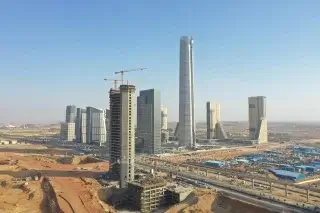
 Egypt Prepares New Law for Property Developers
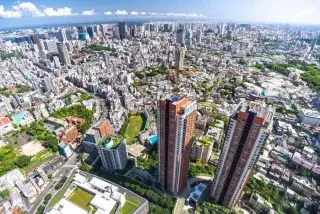 Young Japanese Buyers Turn to 50-Year Mortgages
 Argentina Narrows Tourism Gap as Arrivals Rise
 Seattle Luxury Housing Loses Its Former Momentum
 The World’s Strongest Passports for Travel, Living and Investment
 Russian Developers’ Debt Nearly Doubled in a Year
In Geneva, protesters set a Tesla on fire and attacked a UN office ahead of the G7 summit
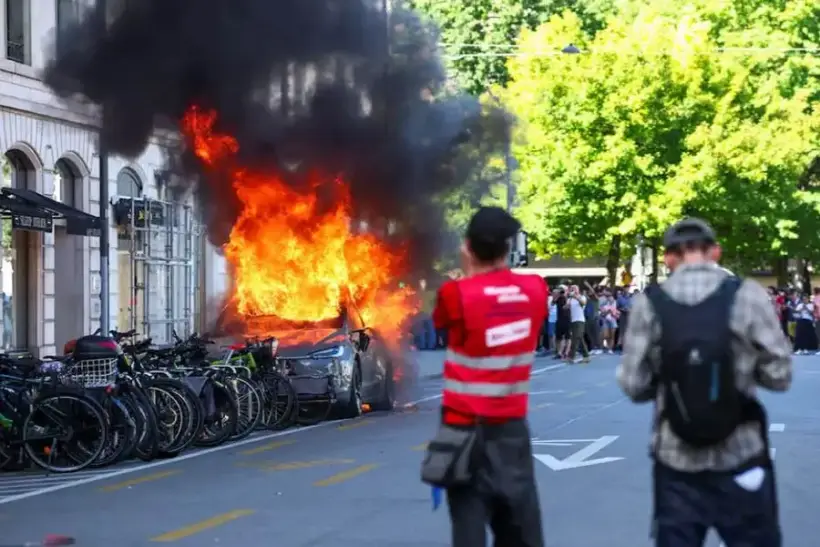
Thousands of people took to the streets of Geneva ahead of the G7 summit, which opens on June 15 in Évian-les-Bains, France. What began as a peaceful demonstration escalated into clashes with police: protesters set fire to a Tesla vehicle, smashed windows of a United Nations agency building, and threw stones at law enforcement officers, Reuters reports.
Peaceful march turns into unrest
According to police and organizers, around 20,000 people took part in the march. The protest initially remained calm, but later some demonstrators began targeting sites they see as symbols of capitalism and international institutions.
During the unrest, a parked Tesla electric vehicle was set on fire. A United Nations agency office was also attacked, with participants breaking windows and damaging property.
Witnesses say some protesters pulled cobblestones from the streets and threw them at police. In response, law enforcement used tear gas, which spread across central parts of the city — affecting bystanders as well, including children.
On the eve of the protest, Geneva authorities strengthened security measures. Many shops and commercial premises were preemptively boarded up, and hundreds of police officers were deployed to prevent possible unrest. “This is an attempt to intimidate people and discourage them from coming out to protest,” said protest participant Mattia Piccard.
Protest against the power of wealthy nations
Protesters argue that G7 countries represent a system in which key political and economic decisions are made by a small group of states. “For me, this is a meeting of rich people that once again shows how some continue to accumulate wealth while others are left behind,” said participant Pippa Saugy.
Criticism of G7 countries was also voiced by members of other civic movements. Demonstrator Clélia Colin said she was protesting gender inequality. “The values represented by the G7 are completely misogynistic and contribute to inequality,” she said.
The Tesla incident also took on political symbolism among protesters. Reuters notes that Tesla owner Elon Musk, who previously served as an advisor to U.S. President Donald Trump, became the world’s first person to surpass a net worth of one trillion dollars last week.
Protests against G7 summits have been taking place regularly for many years. Participants traditionally oppose capitalism, globalization, social inequality, and the climate policies of leading world powers.
The summit in Évian
The G7 summit is being held from June 15 to 17 in Évian-les-Bains on the shores of Lake Geneva. It brings together leaders from France, the United Kingdom, Canada, Germany, Italy, Japan, and the United States, along with representatives of the European Union.
Leaders of the Group of Seven gathered in Évian-les-Bains on June 15 following an unexpected diplomatic breakthrough between the United States and Iran. Washington and Tehran announced a preliminary agreement to end their war, which has become one of the key developments shaping the opening of the summit.
Discussion of the agreement has already been added to the summit agenda. The meeting will also focus on the war in Ukraine, global economic imbalances, and reducing dependence on critical minerals supplied mainly by China. Key topics also include energy, international trade, and shifting global supply chains.
Conclusion
Analysts at International Investment note that events in Geneva and the start of the G7 summit in Évian-les-Bains are closely intertwined: street protests in the Swiss city form a stark contrast to the negotiations of world leaders on security, economics, and geopolitics. The unrest highlights the high level of public tension surrounding global institutions and decisions made by the Group of Seven.
Amid street protests, several major crisis areas remain at the center of the summit’s agenda. Additional momentum is given to the talks by the unexpected agreement between the United States and Iran, which has already become a key factor in the international agenda.
The G7 summit is effectively opening under a dual pressure — external, driven by major conflicts and diplomatic shifts, and internal, reflected in large-scale protest sentiment. In the coming days, it will become clear whether leaders can reach coordinated decisions amid growing fragmentation in global politics.