










The UK Has Switched to eVisas: What Will Change for Foreign Nationals
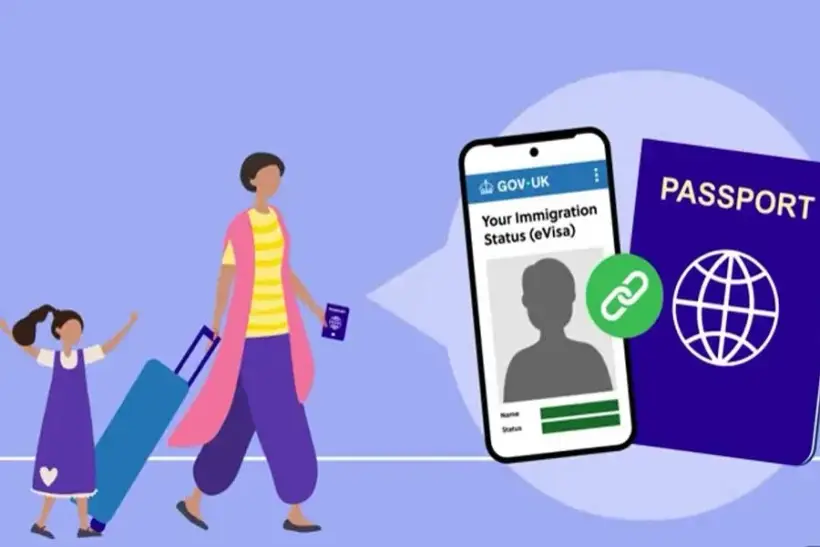
The United Kingdom has completed the digitalisation of its immigration system, gradually replacing physical documents with electronic records. From 1 July 2026, new entry and residence permissions are issued in the new format. Instead of a visa sticker in the passport, applicants will use an eVisa, according to the UK Home Office.
Transition to the digital system
The system was introduced gradually in 2018, and by July 2026 the UK completed the transition to an electronic format for confirming immigration status. Millions of people have already received an eVisa. The Home Office states that the change does not affect foreign nationals’ rights or the conditions of their stay in the country.
Once an application for entry or permission to stay in the UK is approved, the details are stored in the UK Visas and Immigration (UKVI) system as an eVisa. An eVisa is not issued as a separate document; it is a digital record containing information about the individual and their immigration status. It replaces previous physical evidence of status.
Before travelling to the UK, individuals should log into their account, check their eVisa details and make sure that the information about their permission is correct.
Who can get a UK eVisa
Access to the electronic system is available to anyone who holds a UK visa, including permission to enter or stay in England, Scotland, Wales or Northern Ireland, as well as people with indefinite leave to remain in the UK.
The UKVI system can also provide digital confirmation for people who are exempt from immigration control, such as diplomats, and a digital certificate confirming the right of abode in the UK.
In some cases, switching to an eVisa remains voluntary. This applies to holders of physical immigration documents without an expiry date that confirm permanent status in the UK, as well as people who still have a valid visa sticker in their passport. To move to the digital format, these users will need to submit a no time limit application.
How to create a UKVI account
Contact details and documents
To register a UKVI account, applicants need an email address and phone number that will be used to sign in. They will also need one of the following options to confirm their identity:
- a valid passport and application reference number (Global Web Form, GWF, or Unique Application Number, UAN);
- a valid passport and biometric residence permit (BRP) number;
- an expired BRP.
A BRP can be used for 24 months after the expiry date shown on the card or until 31 December 2026, whichever comes first.
Creating an account for another person
The UK government also allows people to create and manage a UKVI account on behalf of someone else. This may be required for parents of minors, legal representatives, or individuals assisting people who are unable to use online services independently.
In these cases, the representative’s email address and phone number can be used during registration. If the person later becomes able to manage their own account or a child turns 18, the contact details must be updated and replaced with the individual’s own information.
What to do after registration
After creating an account, users must confirm their identity and link it to their eVisa through a smartphone using the identity verification app.
If a person does not have a suitable device, a valid passport or BRP, UK authorities provide alternative verification options depending on the circumstances.
Access to the eVisa becomes available only after the digital record has been linked to the UKVI account. If this step was not completed during registration, it can be done later.
Who needs to create a UKVI account
A UK Visas and Immigration (UKVI) account is required for anyone who holds a UK visa or indefinite leave to remain status. If a spouse or children move to the UK as dependants of the visa holder, each family member will also need a separate account.
Some users may already have a UKVI account. It may have been created automatically if a person previously used the UK Immigration: ID Check app to confirm their identity, applied through the online system, replaced a physical document with an eVisa or participated in the EU Settlement Scheme.
The Home Office recommends not creating a new account if one already exists. Users can check whether they have an account by attempting to sign in and view their eVisa.
Who does not need an eVisa yet
An eVisa is not required for people visiting the UK using an Electronic Travel Authorisation (ETA), or for those who have permission to stay in the Channel Islands, the Isle of Man or Gibraltar.
Holders of physical documents confirming permanent residence rights in the UK can retain their status after submitting a no time limit application.
Paper documents will also continue to be issued for international travel in cases where a person cannot use a standard passport. From 11 March 2026, details of new Home Office travel documents are automatically linked to UKVI accounts. After a decision is made, information about the new document appears in the user’s profile within two working days. However, the physical document must still be carried when travelling abroad.
Benefits of eVisa
The UK Home Office highlights several advantages of the electronic format. Unlike physical documents, an eVisa cannot be lost, stolen or damaged. Once a decision has been made on an application, foreign nationals no longer need to wait for a separate document to arrive. If a passport or another travel document is held by a visa centre during the application process, it will be returned before the procedure is completed.
The digital system is also expected to simplify the process of proving immigration status. eVisa holders will find it easier to pass checks when entering the UK and provide information to employers, landlords and other organisations.
In addition, authorities will be able to share immigration status information automatically with certain government departments and public bodies upon request. This will reduce the need for foreign nationals to collect and submit such information themselves.