







 Argentina Rents Rise but Lag Inflation
 Hungary Plans Wealth Tax Above 1 Billion Forints
 China Rewrites Its New-Home Sales Model
 Apartment Sales in Tbilisi and Batumi Reached $485 Million in July
 Migrant Regularization Changes Spain’s Labor Market Statistics
 Lithuania’s Economy Accelerates in the Second Quarter
Russians Abroad Could Lose Property and Money in Russia
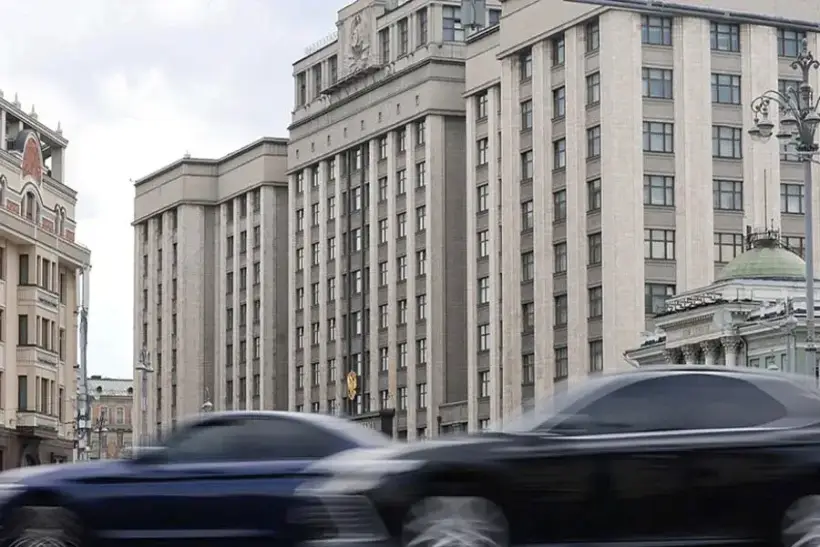
The State Duma has passed in the second and third readings a package of laws concerning Russian citizens abroad who evade criminal or administrative penalties. They may face restrictions on their property and funds, as well as bans on real estate transactions and business activities.
New Russian laws affecting relocated citizens
On July 22, 2026, the State Duma unanimously adopted two bills in the second and third readings. They introduce temporary restrictive measures against Russian citizens who are outside the country and evade enforcement of criminal or administrative penalties. The laws will next be reviewed by the Federation Council and then sent to the Russian president for signing. The provisions will come into force on the date of official publication.
The grounds for applying the measures include calls to violate Russia’s territorial integrity, calls for sanctions against the country, discrediting the Russian Armed Forces, and violations of legislation on foreign agents.
State Duma Chairman Vyacheslav Volodin said the amendments would create additional conditions for implementing the principle of inevitable punishment and ensuring the rule of law. He stressed that the new provisions target citizens who left Russia after being held accountable and continue to stay abroad while avoiding the enforcement of their sentences.
How Russians abroad will be restricted
The adopted amendments provide for 14 temporary measures against citizens who evade punishment. These include suspending the registration of property rights and real estate transactions in Russia, blocking funds and other assets, and restricting the right to drive vehicles and access government and municipal services in electronic form.
Russian citizens falling into this category will also be prohibited from registering as individual entrepreneurs or self-employed individuals. They will not be able to use consular services. For example, obtaining a new international passport may become difficult.
Another measure will prohibit credit institutions from providing access to software used for money transfers, including mobile banking applications and official bank websites. As a result, Russians abroad subject to the restrictions will lose access to online transfers and many other financial operations.
How the restriction procedure will work
The Ministry of Justice of Russia will make decisions on introducing or lifting temporary restrictions. To apply the measures, several conditions must be confirmed: a court verdict recognizing a citizen as guilty of a crime must have entered into force, the person must be confirmed as evading criminal or administrative punishment, and the person must be located outside Russia.
The Ministry of Justice will maintain a list of individuals subject to restrictions, which will be published on the ministry’s official website. A person included in the list will have the right to submit a written, reasoned request to the Ministry of Justice asking to be removed from the register.
The law also provides for possible humanitarian payments to close relatives of individuals subject to restrictions. Such payments will be approved by an interdepartmental commission, with its procedures and membership determined by the Russian president.
The amount of the monthly payment will be set by the Russian government in coordination with the Central Bank. The payments will be financed from blocked funds or other assets belonging to the person subject to restrictions, or from money held in a special account.
Why Russia is tightening legislation
During the preparation of the bills, the State Duma cited difficulties in bringing to justice citizens who are outside Russia. According to data from the Prosecutor General’s Office of Russia, during the first 11 months of 2025 foreign countries refused to extradite 109 wanted individuals. In 2024, Russia received refusals on 102 extradition requests.
Vasily Piskaryov, head of the State Duma Committee on Security and Anti-Corruption, said that among those who could not be returned to Russia were people accused of murder, kidnapping, drug trafficking, fraud, corruption-related offenses and other crimes. According to him, 29 cases involved corruption and 23 were related to terrorism.
He said that some relocated citizens were being presented as political dissidents, while Russian authorities consider them involved in activities directed against the interests of the country. This position is also supported by Alexey Zhuravlev, first deputy chairman of the State Duma Committee on Defense, as well as other lawmakers. The law was adopted unanimously.
Possible consequences for investors
International Investment analysts note that the new rules reflect a broader trend toward expanding state control mechanisms over citizens. For owners of real estate and other assets in Russia, the changes create an additional legal risk factor.
For investors, this means that investment decisions should take into account not only property performance, profitability and market conditions, but also changes in national legislation and political trends.
The new rules do not automatically apply to all Russians living abroad or owning property in Russia. However, the overall trend shows that investors need to pay greater attention to ownership structures, potential restrictions and changes in the regulatory environment when planning investments.
Overall, investments in Russia have been considered high-risk since 2022.