







 Hungary Plans Wealth Tax Above 1 Billion Forints
 China Rewrites Its New-Home Sales Model
 Migrant Regularization Changes Spain’s Labor Market Statistics
 Lithuania’s Economy Accelerates in the Second Quarter
 Israel Cuts Rate to 3.25% for Third Meeting
 Russian and Belarusian Owners List More Latvian Property
Apartment Sales in Tbilisi and Batumi Reached $485 Million in July
Tatiana Borodina
Georgia’s residential real estate market remains highly active, although July showed noticeable differences in market dynamics. The number of transactions and prices continued to rise in Tbilisi, while sales in Batumi declined after a strong first half of the year. The combined value of apartment transactions in the two cities reached $485 million in July, according to Colliers.
Housing Prices and Transactions in Tbilisi
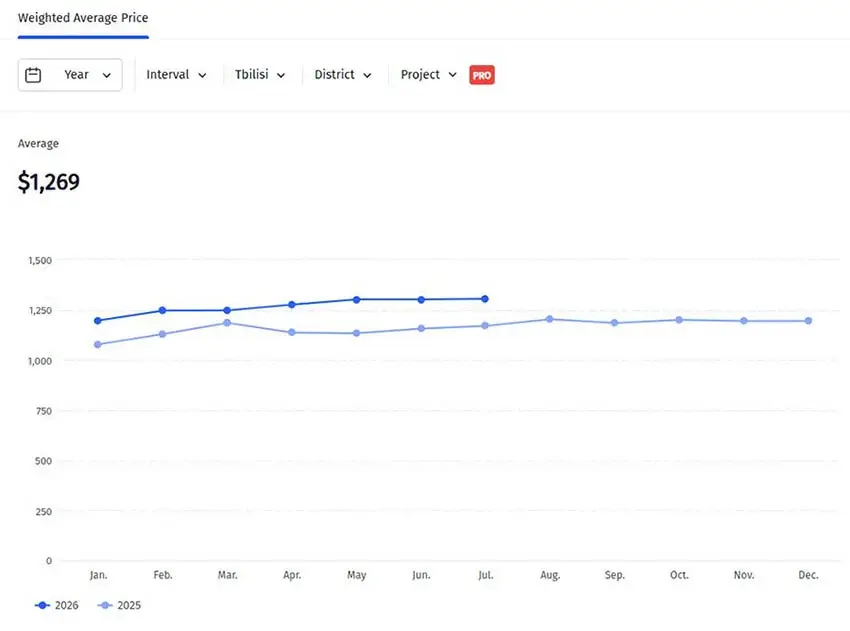
In the first half of 2026, the weighted average price of apartments in new projects in Tbilisi increased by 14.5% in the city center, 10.2% in the suburbs, and 9.5% in the wider center compared with January–June 2025. Prices rose by 11.7% in the primary market and by 9.5% in the secondary market.
Among older projects, the strongest increase was also recorded in the city center, at 15.6%. Other locations posted gains of 10.2% and 8.5%, while the citywide average rose by 12.9%. Colliers notes that the results in this segment were affected by the relatively small number of registered transactions.
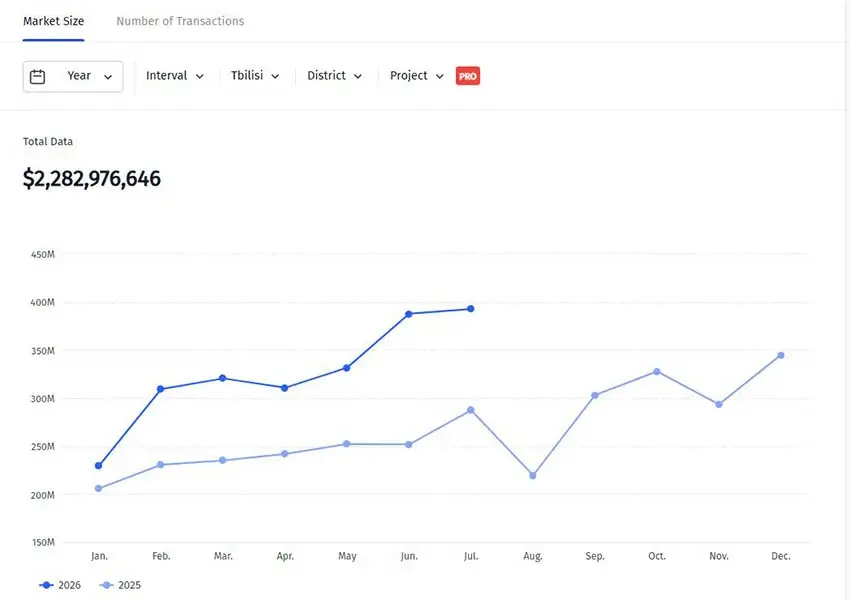
In July, 4,486 apartment transactions were registered, up 22.8% from a year earlier. Their combined value increased by 36.7% to $393 million. Georgian citizens remained the main buyers, while foreigners accounted for 12%.
Sales in new projects rose by 29.8%. The increase reached 30.5% in the primary market and 28.9% in the secondary market. Samgori accounted for 44% of the overall increase in transactions involving new apartments. The weighted average price in this segment rose by 14.7% in the wider center, 13.3% in the city center, and 10% in the suburbs. Across Tbilisi, prices increased by 10% in the primary market and 9.6% in the secondary market.
The number of transactions in older projects increased by 1.6%. Price dynamics across different areas varied more significantly, with increases of 15.1%, 12.8%, and 2.3%. The citywide average rose by 13.8%.
Batumi Housing Market
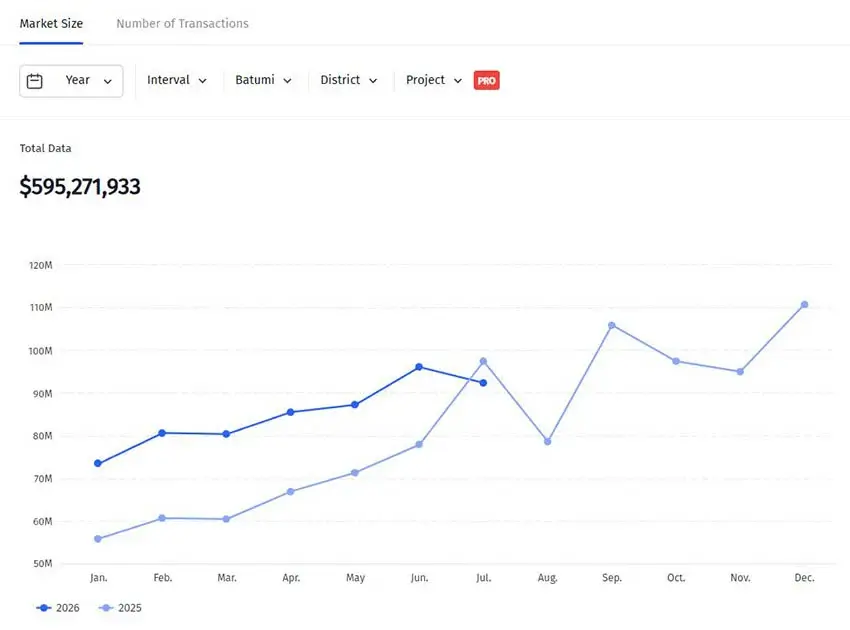
In the first half of 2026, 7,838 apartment transactions were registered in Batumi, 11.4% more than in the same period of 2025. Their combined value increased by 29% to $507 million.
Sales in new projects rose by 12.9%, while transactions in older projects declined by 6.3%. The primary market grew by 9.8% and the secondary market by 15.5%. The share of foreign buyers increased to 45%, while the share of Georgian citizens fell to 50%. Foreign buyers accounted for 83% of the overall increase in the number of transactions.
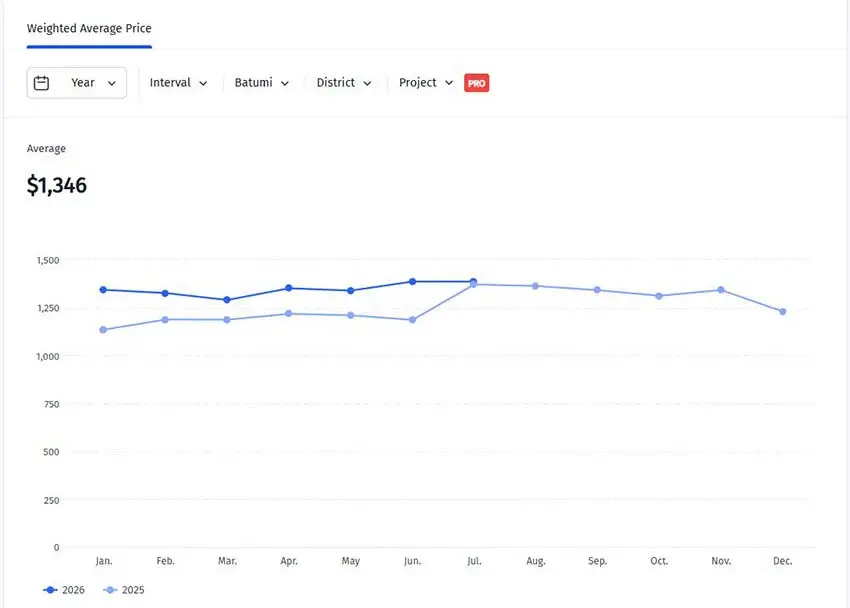
The weighted average price of apartments in new developments rose by 14.2% to $1,360 per sq. m. The increase reached 17.4% in the primary market and 11.1% in the secondary market. Colliers notes that some of these transactions are registered with a delay, which may distort the way price dynamics are reflected in the statistics.
In July, the number of transactions fell by 11.8% to 1,378, while their combined value declined by 5.2% to $92 million. The share of foreign buyers increased to 48%, while Georgian citizens accounted for 50%. Sales in new projects decreased by 11.1%, while transactions in older projects fell by 22.4%. The primary market recorded a 32.8% decline, while the secondary market grew by 19.1%. Colliers attributes the sharp decrease to the high comparison base of July 2025, when large batches of transactions were registered in several projects.
The weighted average price of apartments in new projects edged down by 0.1% to $1,376 per sq. m. The figure declined by 14.4% in the primary market and increased by 9.1% in the secondary market. The result was affected by the bulk registration of one high-priced project a year earlier: excluding it, primary market prices in July would have risen by 2%.
Investors in Georgia Are Choosing Higher-Yield Formats
Investment demand in Georgia remains strong, but the structure of investment is changing. Nino Absandze, founder of the Georgian Real Estate Association (GREA), notes growing interest among foreign investors in projects at the pre-sale stage. Some investors are purchasing packages of 30–50 apartments at once, targeting returns of around 25–30% over a relatively short period.
GREA links this demand to the limited choice of alternative investment instruments in the country. Real estate remains a way to preserve capital and generate income. At the same time, rental yields have been declining for the third consecutive year, gradually changing the attractiveness of this investment strategy.
International Investment analysts note that this trend is particularly visible in Batumi. High construction volumes are expanding the supply of investment apartments and intensifying competition in the rental market. If new supply continues to grow faster than demand, pressure on rental rates and property prices may increase, potentially leading to a more significant decline in values.
Against this backdrop, hotel real estate may offer investors a more resilient alternative. Premium properties appear particularly attractive, as they are less dependent on mass-market supply and cater to wealthier tourists. This format may provide more stable occupancy and returns compared with standard investment apartments.