







 Alta Banka Collapse in Serbia: What Happens to Russian Depositors' Money
 Covivio Hotels Revenue Grows 4.7% as European Markets Split
 Lithuanian Apartment Prices Accelerate Across Major Cities
 Georgia's Tourism Revenue Hits Record High
 Norway's Sovereign Fund Commits €1.5bn to European Warehouses
 Market Rout of October 2026: Can Branded Hotels Protect Capital?
Germans Seek Temporary Asylum in Russia
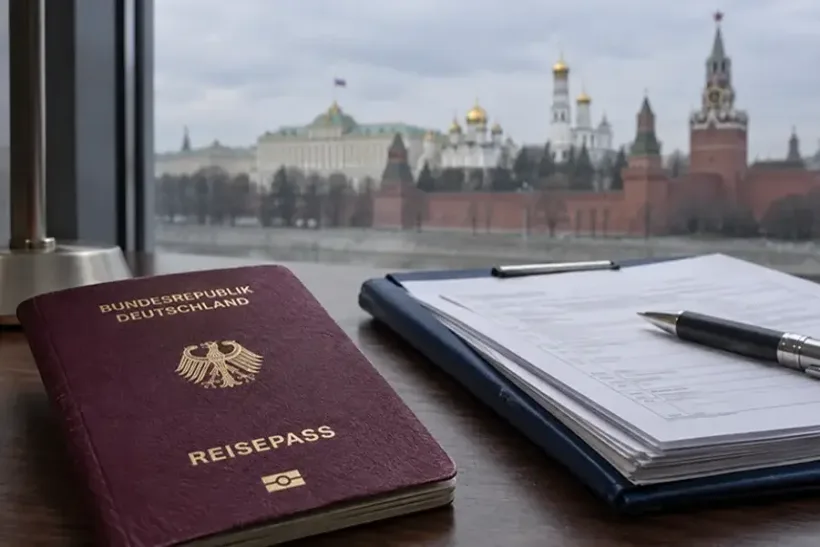
German citizens applied for temporary asylum in Russia more often than nationals of any other EU country in January–September 2026. During this period, the Russian Interior Ministry received 49 applications from German nationals. Latvia ranked second (36), followed by Lithuania (12), TASS reported, citing materials from the Russian Interior Ministry.
Protection for Foreign Nationals in Russia
Nine-Month Trends
In January–September 2026, Russia registered 3,802 applications for temporary asylum from foreign nationals. More than half came from Ukrainian citizens — 2,056, or 54.1%. This was 18.6% fewer than in the same period of 2025 (2,527). Next were Syria (641), Afghanistan (190), Uzbekistan (93) and Iran (88). Together, the five countries accounted for 3,068 applications, or 80.7% of the total.
Countries with the most applications for temporary asylum in Russia, January–September 2026.
|
Country |
Applications |
|
Ukraine |
2,056 |
|
Syria |
641 |
|
Afghanistan |
190 |
|
Uzbekistan |
93 |
|
Iran |
88 |
|
Total for five countries |
3,068 |
In the first half of 2026, the Interior Ministry received 2,562 applications from all foreign nationals, followed by another 1,240 in the third quarter. July–September therefore accounted for 32.6% of applications submitted over the nine months.
Europeans in Russia
EU countries accounted for 3.6% of all applications for temporary asylum in Russia. In January–September 2026, citizens of 15 EU member states submitted 136 applications. The top three countries accounted for 97 applications, or 71.3% of the EU total.
Applications for temporary asylum in Russia from EU countries, January–September 2026.
|
Country |
Applications |
|
Germany |
49 |
|
Latvia |
36 |
|
Lithuania |
12 |
|
Italy |
7 |
|
Estonia |
7 |
|
France |
6 |
|
Bulgaria |
4 |
|
Czech Republic |
4 |
|
Greece |
3 |
|
Poland |
3 |
|
Hungary |
1 |
|
Denmark |
1 |
|
Spain |
1 |
|
Netherlands |
1 |
|
Slovakia |
1 |
|
Total |
136 |
Germany had also ranked first among EU countries in previous years. Its citizens submitted 111 applications in 2023, 116 in 2024 and 93 in 2025. In the first half of 2026, 40 applications were registered, followed by another nine in the third quarter.
The remaining 39 applications were distributed among 12 countries. Italy and Estonia accounted for seven each, France for six, Bulgaria and the Czech Republic for four each, and Greece and Poland for three each. One application each was registered from citizens of Hungary, Denmark, Spain, the Netherlands and Slovakia.
Temporary Asylum Conditions in Russia
Temporary asylum in Russia is available to foreign nationals and stateless persons who need protection from being returned to their home countries. Grounds may include circumstances that qualify a person for refugee status or humanitarian reasons preventing deportation. A territorial office of the Interior Ministry decides whether to grant the status after reviewing the application.
The procedure for obtaining temporary asylum in Russia requires an in-person application and verification of the applicant's information. Applications cannot be submitted electronically. If approved, the person receives a certificate confirming their identity and legal right to remain in the country.
The status is granted for up to one year and may be extended if the grounds for protection remain valid. Certificate holders can work without a separate work permit and receive healthcare under compulsory medical insurance. Filing an application does not mean it will be approved: the Interior Ministry's figures record applications submitted, not certificates issued.
Trends and Outlook
The January–September 2026 figures indicate limited interest among EU residents in obtaining temporary asylum in Russia. Even in countries with the highest numbers of applications, the figures are measured in dozens. Most applications continue to come from Ukraine, Syria and Afghanistan rather than EU member states.
The prospects for a significant increase in applications from Europe appear limited. Hostilities on Ukrainian territory, strained relations between Russia and the European Union, and sanctions-related restrictions create uncertainty for prospective migrants. Under these conditions, Russia is unlikely to become a major destination for Europeans seeking protection.
Individual applications may nevertheless continue for personal or humanitarian reasons. Future trends will depend on conditions in applicants' countries of origin, international relations and Russia's rules for foreign nationals. Temporary asylum statistics do not cover all forms of immigration and cannot establish how many people move to Russia on other grounds.