







 Egypt Prepares New Law for Property Developers
 Young Japanese Buyers Turn to 50-Year Mortgages
 Argentina Narrows Tourism Gap as Arrivals Rise
 Seattle Luxury Housing Loses Its Former Momentum
 The World’s Strongest Passports for Travel, Living and Investment
 Russian Developers’ Debt Nearly Doubled in a Year
Asunción Moves Into Luxury
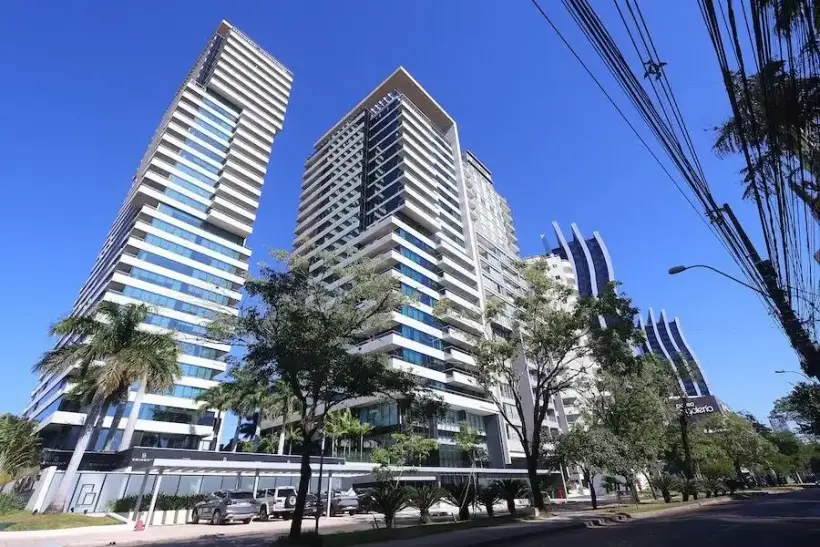
Asunción’s luxury property market has become one of South America’s more closely watched segments: demand for standalone homes priced between $500,000 and $800,000 is outpacing supply, foreign buyers are competing with Paraguayan families and prime districts are approaching full rental occupancy. For Paraguay, this is no longer only a local housing trend, but a sign that the capital is becoming a regional hub for capital, tax migration and urban modernization.
Asunción’s premium market faces a shortage
Asunción long remained an undervalued market compared with Buenos Aires, São Paulo, Montevideo and Santiago. In 2026, that is changing. Demand is rising for quality houses, modern apartments, gated developments and homes in districts close to schools, business centers and commercial infrastructure.
The Asunción Times reports that standalone homes priced between $500,000 and $800,000 are moving quickly, while the market’s main problem is the shortage of the right product. Buyers are looking not just for a large property, but for a modern home with high construction quality, a plot of at least 540–600 square meters, privacy, security, a garden, a swimming pool and a covered outdoor area for family gatherings.
For Asunción, this is an important shift. Premium demand is becoming more demanding: an old house in a good district is no longer enough. Buyers want a functional layout, high ceilings, four en-suite bedrooms, generous social areas, outdoor space and a clean legal history.
Who is buying luxury property in Paraguay
Affluent Paraguayan families remain the core of demand, upgrading their living standards and moving capital into real estate. But foreign buyers, especially from Argentina and Brazil, are becoming more important. For them, Paraguay looks calmer, cheaper and more tax-friendly than many neighboring markets.
The buyer motive is also changing. Foreigners are increasingly looking not only for an investment asset, but for a primary or semi-permanent family residence. That raises the importance of schools, healthcare, secure neighborhoods, the business environment and transport access. In this logic, Asunción competes not only on price, but also on everyday quality of life.
The tax environment reinforces the trend. Paraguay applies a territorial tax principle: in general terms, taxes are levied on income generated inside the country, while foreign income may remain outside local taxation if the rules are met. This makes the country visible to entrepreneurs, rentiers, digital professionals and families seeking a lower tax and administrative burden.
Demand reshapes the capital’s residential map
The most sought-after purchase zones are concentrated in Asunción’s northern and central residential districts. Santísima Trinidad and Mburucuyá stand out as key areas for home purchases. In the premium rental segment, Manorá, Las Lomas, also known as Carmelitas, Ycuá Satí and Villa Morra remain strong.
These districts combine several factors: proximity to corporate centers, shopping areas, restaurants, private schools, healthcare and main transport corridors. For foreign families, this is especially important because it reduces the practical risk of relocation and makes the city more predictable.
Rental rates reflect the status of these locations. In premium districts, rents reach $11–13.50 per square meter, compared with a wider city average of about $6–10. For investors, this is one of the key arguments: returns are generated not only by capital appreciation, but also by steady rental demand from expatriates, entrepreneurs and affluent local tenants.
Occupancy reveals the shortage
Raúl Constantino, president of the Paraguayan Chamber of Real Estate Developers, says occupancy across Asunción is around 97%, rising to near-full capacity in the best locations. Occupancy is the share of occupied or rented units in the total available stock.
Such a level points to a structural shortage. If quality assets are almost never vacant, the market sends a clear signal to developers: demand already exists, but the product must match the expectations of high-income buyers and tenants. That differs from a speculative boom in which almost anything is built in anticipation of price growth.
High occupancy also carries risk. If construction accelerates too quickly, the market may receive too many similar apartments while the shortage of standalone homes on larger plots persists. The main question for Asunción is therefore not only how much to build, but what to build and where.
High-rise development changes neighborhood character
Paraguay’s capital is growing upward. Asunción’s municipality said more than 288 construction projects have already been approved, some under construction and others due to start later. This is changing the city’s skyline and turning traditional residential zones into denser urban environments.
For the luxury-home market, this is both an opportunity and a threat. New buildings bring infrastructure, commerce, services and liquidity. At the same time, towers next to standalone homes can reduce privacy, views and the feeling of a protected residential environment.
In districts such as Santo Domingo and Manorá, buyers are already evaluating not only the current character of a street, but its likely future trajectory. If a tower can be built next door, the long-term value of a plot changes. In a luxury market where privacy is part of the price, planning risk becomes as important as house condition or renovation quality.
Developers see a niche in new-generation houses
The clearest shortage is modern standalone homes on larger plots. Much of the existing supply consists of old or partially renovated houses, where layouts, engineering systems and the balance between building and land no longer meet buyer expectations.
Paraguayan buyers place high value on outdoor space. Gardens, pools and quinchos — covered outdoor areas for cooking and receiving guests — are seen as basic features in the premium segment, not optional extras. In local housing culture, a house is not only private space but also a place for family and social life.
Market analysts see the ideal ratio as keeping built area at no more than about 60% of the plot. This balance preserves open space and helps the property meet premium demand. For developers, it means lower density, but a potentially higher price for the right product.
Paraguay’s economy supports real estate demand
The macroeconomic backdrop remains one of Paraguay’s strongest advantages. The International Monetary Fund points to favorable medium-term prospects, controlled inflation, prudent public debt and adequate international reserves. For property buyers, that reduces part of the country risk.
Paraguay’s Ministry of Economy and Finance expects gross domestic product to grow by 4.2% in 2026. Gross domestic product is the value of all goods and services produced in a country in a year and is one of the main measures of economic size. The forecast points in particular to contributions from construction, energy and water production.
The World Bank estimates Paraguay’s real gross domestic product growth at 6.6% in 2025, above earlier expectations, driven by robust private consumption and investment. That background supports housing demand: when the economy grows, business families, entrepreneurs and investors are more likely to move profits into property.
A low entry point remains an advantage
Compared with other regional capitals, Asunción still offers a relatively low entry point into the premium segment. A house priced at $500,000–800,000 in a good area of the capital looks competitive for buyers comparing the market with Uruguay, Chile, Brazil or certain districts of Argentina.
For foreigners, the cost of living matters as much as the purchase price. Paraguay remains cheaper than many South American countries for daily expenses, home maintenance, staff, food, some services and tax burden. That makes real estate purchases part of a broader relocation strategy.
But a low entry point does not mean low risk. The market is less transparent than more mature jurisdictions. Title history, land ownership, construction permits, engineering condition, district rules and future development all require careful review. For foreign buyers, legal due diligence is not a formality but a core part of the transaction.
Asunción competes on more than price
The capital’s new investment appeal is built on a combination of macroeconomic stability, tax simplicity, improving urban infrastructure, a shortage of quality stock and rising international demand. But the market’s long-term success will depend on the quality of the urban environment.
Premium buyers want security, schools, healthcare, restaurants, shopping centers, green areas, transport access and manageable urban planning. If the city grows chaotically, some advantages may be lost: private homes may be surrounded by towers, roads may become congested and infrastructure may lag.
For developers, this means moving toward a more complex product. Building square meters is no longer enough. Projects must protect privacy, work with landscaping, management, security and the future liquidity of the asset.
Investors should focus on quality, not hype
Asunción’s premium market is still at an early stage of international recognition. That creates an opportunity to enter before prices converge with more expensive regional markets. But the early stage also creates the risk of overpricing, especially if sellers begin embedding future expectations rather than current liquidity into prices.
The most resilient assets are in established prestigious districts with infrastructure, rental demand and a clear social environment. The least predictable projects are those selling only the idea of future growth without a strong location, quality execution or real rental demand.
For the rental market, the key test will be whether high occupancy can be maintained. If expatriates, foreign entrepreneurs and local families continue competing for limited quality stock, rental rates may remain resilient. If developers bring too many similar apartments to the same districts, part of the segment will face pressure.
As reported by International Investment experts, Asunción’s luxury real estate has stopped being a hidden niche, but it is not yet a mature market. The main opportunity lies in the shortage of quality homes and rising international demand. The main risk is that rapid high-rise development and weak urban planning may undermine the very qualities premium buyers are willing to pay for: privacy, space, security and predictability.
FAQ: luxury real estate in Asunción
Why is demand for luxury real estate rising in Asunción?
Demand is supported by affluent Paraguayan families, foreign buyers from Argentina and Brazil, Paraguay’s tax appeal, relatively low living costs and a shortage of quality homes in prestigious districts.
How much do premium homes in Asunción cost?
The most active standalone-home segment is roughly between $500,000 and $800,000. In the best locations or for larger properties, prices can be higher.
Which districts are considered premium in Asunción?
Santísima Trinidad and Mburucuyá are especially sought after for home purchases. Manorá, Las Lomas, Ycuá Satí and Villa Morra are strong in the premium rental segment.
What are premium rents in Asunción?
In premium districts, rents reach around $11–13.50 per square meter, compared with a broader city range of about $6–10 per square meter.
What do luxury home buyers want?
Buyers want modern homes with quality construction, plots of 540–600 square meters, four en-suite bedrooms, high ceilings, a garden, swimming pool, quincho and a high level of security.
What are the risks in Asunción’s property market?
The main risks are rapid high-rise development, possible loss of privacy in prestigious districts, legal due diligence, construction quality and the potential oversupply of similar apartments.