












Paraguay Sharpens Its Tax Appeal
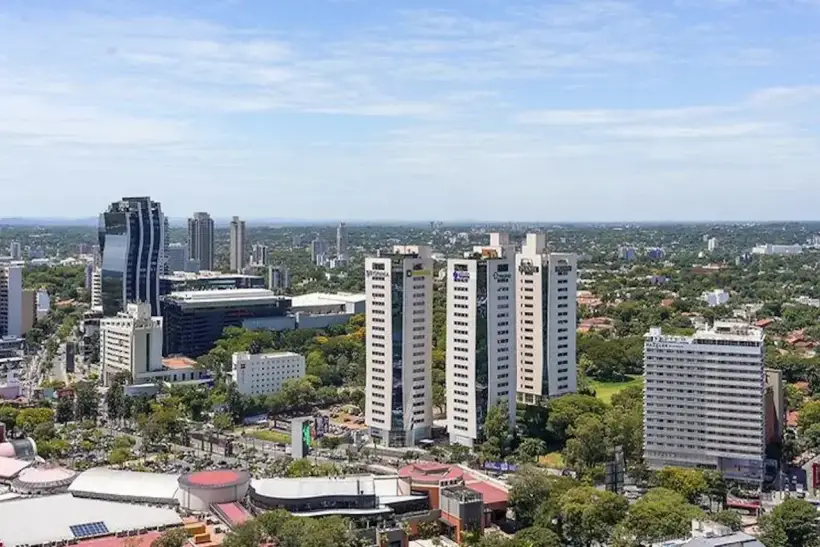
Paraguay is gaining visibility as one of Latin America’s most competitive low-tax jurisdictions. A territorial tax system, a 10% business income tax, a standard 10% value-added tax and moderate personal income tax rates are drawing attention from entrepreneurs, investors and mobile residents, but the regime depends on careful source-of-income analysis, tax-residency evidence and compliance with rules in other countries.
Paraguay turns tax simplicity into a relocation pitch
Paraguay is increasingly appearing in tax-residency discussions for foreigners. The attraction is built around a relatively simple framework: the country mainly taxes Paraguayan-source income, while foreign-source income may fall outside local taxation if it is correctly classified. For international entrepreneurs, capital owners, freelancers and dividend recipients, that makes Paraguay a potential alternative to higher-tax jurisdictions in Latin America and Europe.
Paraguay Sovereign, a commercial residency and tax guide, markets the country as offering 0% tax on qualifying foreign-source income, a 10% corporate tax rate, a 10% value-added tax rate and separate procedures for legal residency, RUC tax registration and a tax-residency certificate. The headline “0% foreign income” still needs caution: it does not cancel tax obligations in a country of citizenship, former tax residence or the jurisdiction where income is actually generated.
The territorial system is the core advantage
Paraguay’s tax reform has been in force since January 1, 2020. It expanded the source and territoriality principle, introduced rules for digital services and added transfer-pricing rules, which are designed to control prices in transactions between related companies and prevent artificial profit shifting. These measures formed part of a broader effort to modernise the national tax system.
In practical terms, the territorial approach means the source of income matters more than the taxpayer’s passport and not only the place of residence. Income from business, assets, rights or services connected to Paraguay can be taxable locally. Income genuinely generated outside the country and without a Paraguayan source is treated differently. That distinction has become the centre of Paraguay’s marketing to internationally mobile clients.
Business profits are taxed at 10%
Paraguay’s business income tax is called Impuesto a la Renta Empresarial, or IRE. It applies to Paraguayan-source income, profits and gains from primary, secondary and tertiary economic activities, including agriculture, commerce, industry and services. PwC lists the rate at 10% and also notes simplified regimes for medium-sized and small businesses.
For investors, the low rate is only part of the picture. Companies still need registration, accounting, expense documentation, correct source-of-income analysis and compliance with related-party rules. For businesses with cross-border payments, contracts, the actual place where services are performed, the customer base and banking documentation become central.
VAT remains low by regional standards
Paraguay’s value-added tax, known locally as IVA, has a general rate of 10%. A 5% rate applies to selected goods and transactions, including residential leasing, real estate sales, some basic food products, agricultural goods, certain livestock products and human-use medicines. Law No. 6380/19 also sets the 10% rate for other cases unless a special rule applies.
That puts Paraguay in a comparatively low-tax position for consumption taxes. But a low rate does not mean a lack of reporting. Companies and sole traders selling goods or providing services inside the country still need to manage invoices, input tax, buyer status and the character of each transaction.
Personal income tax is moderate
Paraguay’s personal income tax applies to Paraguayan-source income. Income from personal services is taxed under a progressive scale of 8% up to 50 million Paraguayan guaranies, 9% from 50,000,001 to 150 million guaranies and 10% from 150,000,001 guaranies. If gross income from personal services does not exceed 80 million guaranies, no tax is due. The capital-gains rate for individuals is listed at 8%.
That structure matters for foreign residents. A freelancer, consultant or online-business owner must analyse where the service is actually performed, who the client is, where the result is used and how payments are documented. A wrong source-of-income classification can change the tax outcome.
Residency is more than one document
Paraguay is often marketed as a country with accessible tax residency, but the issue is easy to oversimplify. PwC states that an individual is deemed tax-resident in Paraguay if they spend more than 120 days in a year in the country. Commercial advisers also separate legal residency, RUC tax registration and a tax-residency certificate, which may be needed for banks or foreign tax authorities.
For international tax planning, that is not enough unless tax ties with the former country are also broken. Many jurisdictions assess the centre of vital interests, available housing, family, employment, bank accounts and the place of effective business management. A paper move may not persuade the tax authority of the exit country, even if Paraguayan documents have been obtained.
A limited treaty network raises due-diligence demands
Paraguay has a limited double-tax treaty network. PwC lists agreements to avoid double taxation with Chile, Qatar, Taiwan, the United Arab Emirates and Uruguay, as well as the November 2021 signing of the Agreement on Mutual Administrative Assistance in Tax Matters. It also notes that tax credits are not applicable for income taxes paid abroad.
For investors, this is critical. If income is taxed at source in another country, Paraguay’s territorial system may not fully solve the double-taxation issue. The final result depends on the paying country, the type of income, treaty coverage and the recipient’s status. Dividends, interest, royalties, capital gains and payments through companies require especially careful analysis.
Global tax scrutiny is increasing
Paraguay’s low-tax regime operates in a world of tougher transparency standards. The Council of the European Union updated its list of non-cooperative tax jurisdictions in February 2026; Paraguay is not included among jurisdictions that do not cooperate with the EU and does not appear among countries with pending tax-governance commitments. At the same time, the EU list shows the broader direction of travel: low rates are now assessed alongside information exchange, anti-base-erosion standards and real economic substance.
For private clients, the era of low-tax residency without a paper trail is fading. Banks, brokers and payment providers increasingly require proof of source of funds, tax identification numbers, residency documentation and the economic rationale for transactions. For companies, the key issue is not only the rate, but the ability to prove substance — real presence, management, staff, office, counterparties and a business purpose.
as reported by International Investment experts, Paraguay is genuinely competitive as a low-tax jurisdiction, but its advantages are often marketed too simply. A 0% rate on foreign-source income works only when the source of income is correctly determined and it does not override the rules of the exit country. The main risk for investors and relocating individuals is not the Paraguayan tax rate itself, but a weak tax file: without evidence of a real move, economic presence and a clean break from former tax residency, a low-tax structure can turn into a dispute with another jurisdiction.
FAQ in English
Does Paraguay tax foreign-source income?
Paraguay follows a territorial principle. Taxation is generally linked to Paraguayan-source income, while foreign-source income may fall outside local tax if correctly classified. This does not remove tax obligations in another country if tax residency or withholding tax still applies there.
What is Paraguay’s corporate tax rate?
The main business income tax rate, IRE, is 10% for Paraguayan-source income. Simplified regimes are available for certain medium-sized and small businesses.
What is the VAT rate in Paraguay?
The general value-added tax rate is 10%. A 5% rate applies to selected categories, including some food products, medicines, residential leasing and real estate transactions.
What is the personal income tax rate in Paraguay?
Income from personal services is taxed at 8%, 9% or 10%, depending on net income levels. Capital gains for individuals are taxed at 8%.
Is Paraguayan legal residency enough for tax residency?
No. Legal residency, RUC tax registration and a tax-residency certificate are different elements. For international planning, it is also necessary to assess whether the former country still treats the person as a tax resident.
Is Paraguay a tax haven?
Paraguay is a low-tax jurisdiction with a territorial system, but that does not mean automatic anonymity or no reporting. Banks and tax authorities increasingly require proof of source of funds, tax status and genuine economic presence.