







 Vietnam Mortgage Surge Pushes Homes Out of Reach
 Lithuanian Apartment Prices Accelerate Across Major Cities
 London Flats Lose Value Ahead of Leasehold Reform
 Construction of the Batumi–Sarpi Highway Begins in Georgia
 Baltic Property Investment Accelerates in 2026
 Hong Kong and Singapore Renew Their Expat Rivalry
Philippines Braces for Inflation Surge
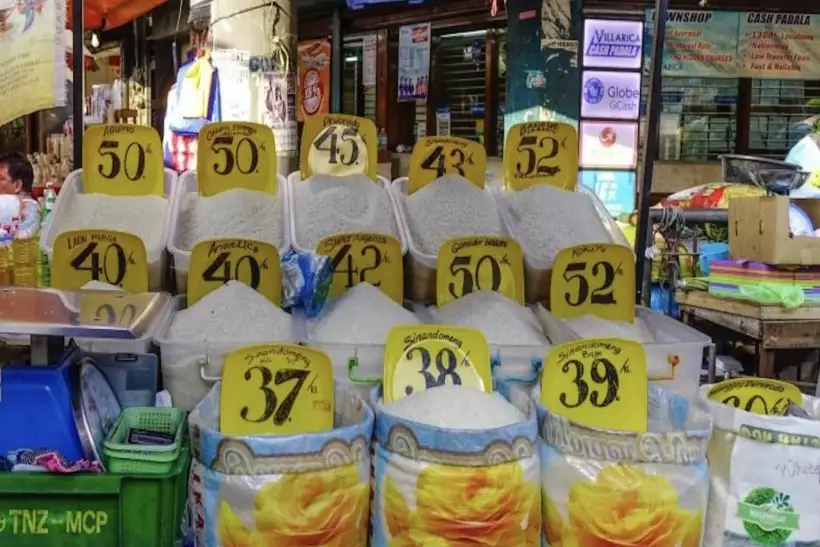
The Philippine central bank warned that inflation may have stayed above 7% in May after April’s jump to a three-year high. Rising rice, vegetable, meat, fuel and utility prices, together with a weaker peso, are increasing pressure on households and raising the odds of tighter monetary policy in one of Southeast Asia’s largest economies.
Philippine inflation may accelerate again
Bangko Sentral ng Pilipinas expects annual inflation in May 2026 to fall within a 7.1% to 7.9% range. That would mean consumer-price growth remained well above the central bank’s 2–4% target band for a second straight month.
The warning follows a sharp April increase. The Philippine Statistics Authority said headline inflation rose to 7.2% in April from 4.1% in March, the fastest pace since March 2023. Average inflation for January–April reached 3.9%, but the April surge quickly changed the policy outlook for the central bank, businesses and households.
Bloomberg reported that the central bank sees inflation potentially rising further in May. For policymakers, the timing is difficult: the economy still needs domestic demand, but higher food, fuel and transport costs are already eroding real incomes and may require additional interest-rate increases.
Rice is again a political price
Food is the main domestic pressure point. Food inflation accelerated to 6.1% in April from 2.7% a month earlier. Rice, the basic staple for Filipino households, was one of the most visible drivers. Local reports based on PSA data showed rice prices rising 13.7% year on year, compared with 3.5% in March.
In the Philippines, rice is more than one item in the consumer basket. It is a social indicator that quickly shapes public judgment of the government. Higher rice prices are especially painful for low-income households, where food takes a larger share of spending. Even when the causes include supply, weather or logistics, the political effect is immediate.
In its May forecast, the BSP cited higher prices of rice, vegetables and meat among the factors pushing inflation upward. That means the price shock is no longer only about oil and transport. It is moving into daily purchases and becoming more visible to consumers.
Fuel has spread into transport and utilities
Energy is the second source of pressure. Transport inflation surged to 21.4% in April from 9.9% in March. Housing, water, electricity, gas and other fuels rose 8.2% after 4.7% a month earlier. The pattern shows that the oil shock has already moved through several layers of the economy.
The Philippines is highly exposed to imported energy. When oil prices rise because of conflict in the Middle East, the country is hit through fuel prices, transport fares, delivery costs, business expenses and household expectations.
The central bank’s economic materials noted that higher rice and fish prices reflected increased post-harvest and transport costs, while transport inflation rose with higher domestic petroleum prices. That link matters: expensive oil in the Philippines quickly becomes expensive food.
A weaker peso adds imported inflation
The third factor is the exchange rate. In its May forecast, the central bank pointed to peso depreciation against the US dollar as another source of price pressure. For an import-dependent economy, this is critical: a weaker currency raises the cost of oil, fertilizers, food imports, industrial inputs and some consumer goods.
The peso also affects business expectations. If companies expect import costs to keep rising, they are more likely to pass them on through prices. That raises the risk of second-round effects, in which the initial shock from oil and food turns into broader inflation.
For the central bank, the currency channel creates a dilemma. A weaker peso can help exporters and reduce external imbalances, but it also fuels inflation. If households begin to expect further price increases, the regulator may have to act more forcefully.
The central bank has already raised rates
Bangko Sentral ng Pilipinas has already moved toward tighter policy. By late May, the target reverse repurchase rate, the central bank’s main policy rate, had been raised to 4.5%. The regulator described the move as necessary to safeguard price stability as the inflation outlook deteriorated amid the Middle East shock.
The reverse repurchase rate is the benchmark through which the central bank manages short-term liquidity conditions in the financial system. When the rate rises, borrowing costs for businesses and households gradually increase, demand cools and inflation expectations should ease. But when price growth is driven by oil and food, the effect of rate increases is limited and delayed.
BSP Governor Eli Remolona has signalled the possibility of stronger action, including an off-cycle rate increase. The key dates for markets are the May inflation release on June 5 and the next policy meeting on June 18. If the actual number lands near the top of the BSP’s forecast range, pressure on the central bank will intensify.
The economic risk is inflation with weaker growth
The Philippine economy faces an uncomfortable mix. High inflation calls for tighter policy, but excessive rate increases can weaken consumption, investment and credit. In a country where domestic demand is a major driver of growth, this is not a technical central-bank debate but a question of economic momentum.
Inflation hits lower-income households hardest. They spend a larger share of their budgets on food, transport, electricity and gas. Those are the categories rising fastest. In such conditions, wage gains may not be enough to prevent a decline in purchasing power.
The impact on business is also uneven. Retailers, transport operators, small companies and food-related businesses face rising costs and limited ability to pass them on without losing customers. Banks and financial markets are watching how far the central bank is willing to go and whether inflation control will mean more expensive credit.
May inflation will set the policy tone
The May inflation figure will show whether April was a one-off shock or the start of more persistent price pressure. The lower end of the BSP’s forecast range, 7.1%, would already mean inflation remains extremely elevated. The upper end, 7.9%, would bring the country closer to a scenario in which a standard 25-basis-point move may look too cautious.
A basis point is one-hundredth of a percentage point. A 25-basis-point increase means a move, for example, from 4.25% to 4.5%. In normal conditions, that is a standard step for many central banks. During a sharp inflation surge, policymakers sometimes use larger increases to cool expectations more quickly.
For the Philippines, the main risk is that inflation stays above target not only in 2026 but also into 2027. If households and companies believe high price growth will persist, they change behaviour: they demand higher wages, raise prices earlier, cut savings and bring purchases forward. Once that happens, returning inflation to target becomes harder.
A Middle East shock has become a domestic crisis
The Philippine case shows how an external war can quickly become a domestic economic crisis for import-dependent countries. A Middle East conflict first changes oil prices and supply conditions. Fuel and transport then become more expensive. Food, electricity, services and consumer goods follow. At the end of the chain, the central bank has to raise rates even though the original shock comes from abroad.
For the government, this means coordination is essential. Monetary policy can restrain expectations, but it cannot produce rice, lower global oil prices or repair logistics. Fighting inflation requires not only interest rates, but also measures on food supply, imports, inventories, transport and targeted support for poor households.
The Philippines has lived through sharp price increases before, and the political lesson is consistent: inflation driven by food and fuel quickly moves beyond financial statistics. It becomes a test of trust in the state, family-budget stability and the government’s ability to protect basic living costs.
As International Investment experts report, the inflation shock in the Philippines is dangerous not only because of the May number but because price pressure is spreading rapidly from oil into food, transport and the exchange rate. The central bank can raise interest rates, but monetary tools cannot replace weak food logistics or reduce dependence on imported fuel. The critical risk is that the country tries to treat a structural shock only with expensive money: that may cool demand, but it will not remove the causes of the price rise. For investors, the Philippines remains a promising Southeast Asian economy, but 2026 shows that its macroeconomic resilience increasingly depends on oil, the peso and the price of rice.
FAQ
Why is inflation rising again in the Philippines?
Inflation is being driven by higher food prices, especially rice, vegetables and meat, as well as fuel, transport, utility costs and peso depreciation against the dollar.
What is the BSP’s inflation forecast for May 2026?
Bangko Sentral ng Pilipinas expects annual inflation in May to range from 7.1% to 7.9%.
What was inflation in April 2026?
Inflation rose to 7.2% in April from 4.1% in March, the highest reading in about three years.
Why is rice so important for Philippine inflation?
Rice is a basic staple for most households. When rice prices rise, family budgets are affected quickly, especially among lower-income groups.
What is the Philippine central bank doing?
The central bank has raised its main policy rate to 4.5% and has signalled that further action is possible if inflation risks continue to rise.
Can higher interest rates stop the price increase?
Higher rates can cool demand and inflation expectations, but they do not directly solve high oil prices, food supply problems, logistics costs or currency pressure.
Why does the Middle East conflict affect the Philippines?
The Philippines depends heavily on imported energy. When the conflict raises oil prices, fuel, transport, delivery and production costs rise across the economy.