







read also
 Slovakia Reforms Building Rules as Housing Starts Slide
 EU Proposes New Restrictions on Short-Term Housing Rentals
 Canada Fast-Tracks Tax Rulings for C$1 Billion Investments
 China Nears a Decision on Fresh Stimulus
 Fines for Illegal Rentals in Spain Reach €800,000
 Australia’s Spring Auctions Rise but Remain Well Below 2025
Inflation in Israel has fallen to 2.5%, housing prices have been declining for six months
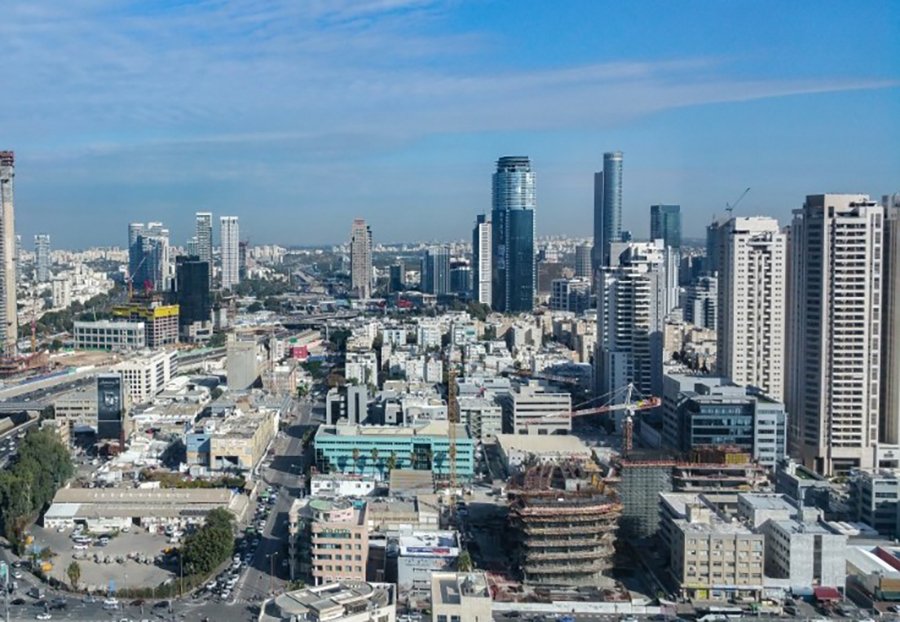
Photo: Pxhere
Israel’s consumer price index fell by 0.6% in September, while annual inflation remains at 2.5%. The housing market is still under pressure: apartment prices have been declining for the sixth month in a row and have cumulatively fallen by more than 2% since spring, reports YnetNews. Analysts expect monetary policy to ease.
The September decline was much deeper than a year ago, when the index fell by just 0.2%. The biggest downward pressure came from lower prices for fresh fruit, transportation and leisure services, as well as a 16% drop in airfares due to falling demand and the return of foreign carriers. At the same time, some categories — including fresh vegetables — are still rising, while rents and medical services increased by 0.3%, which did not change the overall trend toward slower inflation.
Housing market dynamics
In the rental market, contract renewals saw an average increase of 2.6%, while new tenants faced a rise of 5.3%. Meanwhile, purchase prices continue to fall: comparing July–August transactions with June–July shows a drop of 0.6%, and the cumulative decline over six months exceeds 2%. On an annual basis, growth has almost stalled — the index is up only 0.7%, signaling a cooldown after an overheated phase.
In Jerusalem, prices rose by 1% over the past two months and by 4.2% year-on-year. In the North, the figures are 0.2% and +8.4% respectively. In Haifa –0.4% and +3.7%. In the South — a decline of 0.8% and an increase of 2.8%. In Tel Aviv and the Central district — 0.9% and 1.8% over two months, 1.5% and 2.9% over a year, pointing to downward adjustment mainly in the most expensive segments.
In the new-build segment, prices fell by 1.2% in July–August 2025 compared with the same period of 2024. The share of subsidized deals rose from 31.7% to 39.4%, which increased the impact of this segment on the averages. Excluding subsidized sales, the drop is 0.2%. Annual growth is minimal — only 0.5%.
Apartment prices
Tel Aviv
According to Nadlan Center, Q3 2025 became a turning point for the Tel Aviv market: the price of 4-room apartments fell to 4.3 million shekels ($1.316 million), marking a 15.5% annual decline. Five-room units dropped to 5.18 million shekels ($1.585 million), down 21%, though sales volume was minimal.
Even 3-room apartments, traditionally the most liquid, now average 3.516 million ILS ($1.076 million) — a 4.3% yearly decline. Across the Tel Aviv district, the average price of a 4-room apartment is 3.275 million ILS ($1.003 million), reflecting a 7.6% annual drop.
Central district
In major cities surrounding Tel Aviv, the decline is more moderate. Average prices for 4-room apartments:
Netanya (–6.3%) — 2.46 million ILS ($753,000);
Holon (–7.5%) — 2.21 million ILS ($677,000);
Ashdod (–4.1%) — 2.13 million ILS ($652,000);
Ramat Gan (–3.9%) — 3.16 million ILS ($969,000).
In the Central district, which includes these locations, the average is 2.537 million ILS ($777,000), down 0.9% year-on-year, confirming that the correction affects primarily the high-budget core of the metropolitan area.
Other cities
Jerusalem shows the opposite trend: the average price of a 4-room apartment reached 3.36 million ILS ($1.029 million), up 8.9%. Two-room units rose 15.8% to 2.1 million ILS ($643,000), three-room homes increased 10.3% to 2.63 million ILS ($804,000). Across the district, the average 4-room price climbed 10% to 3.036 million ILS ($930,000).
Haifa sees stable pricing for the largest units — 1.86 million ILS ($569,000), while 3-room apartments rose 5.8% to 1.31 million ILS ($401,000). The district average is 1.858 million ILS ($569,000), up 3.1%.
Be’er Sheva recorded a 2.3% increase in the average price of 4-room homes — up to 1.32 million ILS ($404,000), still the lowest among major cities. The Southern district average is 1.562 million ILS ($478,000), +0.7%. In the Northern district — 1.53 million ILS ($469,000), +7.2%.
Thus, price gaps between regions are widening: central areas are correcting downward, while peripheral districts remain supported by demand.
Outlook
Economists expect the Bank of Israel to cut rates by 0.25% at the next meeting. The anticipated decision is directly linked to slowing inflation and six consecutive months of declining home prices. Analysts say cheaper credit may partially support demand, but a market reversal will only be possible if purchasing power recovers and prices stabilize.
Housing remains extremely expensive, and many Israelis continue to look abroad — in particular, there is rising activity in Georgia’s property sector. Future dynamics will depend on how quickly developers adjust pricing strategies, analysts at International Investment note.