







 Australia’s Spring Auctions Rise but Remain Well Below 2025
 Number of Foreigners Holding Turkish Residence Permits Exceeds 1.27 Million
 Demand from Russian Tourists for Holidays in Georgia Rises by 20–25%
 Montenegro Property Buying Costs in 2026
 Four in Ten Companies Would Not Choose Slovakia
 Gulf Countries Prepare Unified Tourist Visa
Europe’s Prefab Housing Market Moves Into Faster Growth
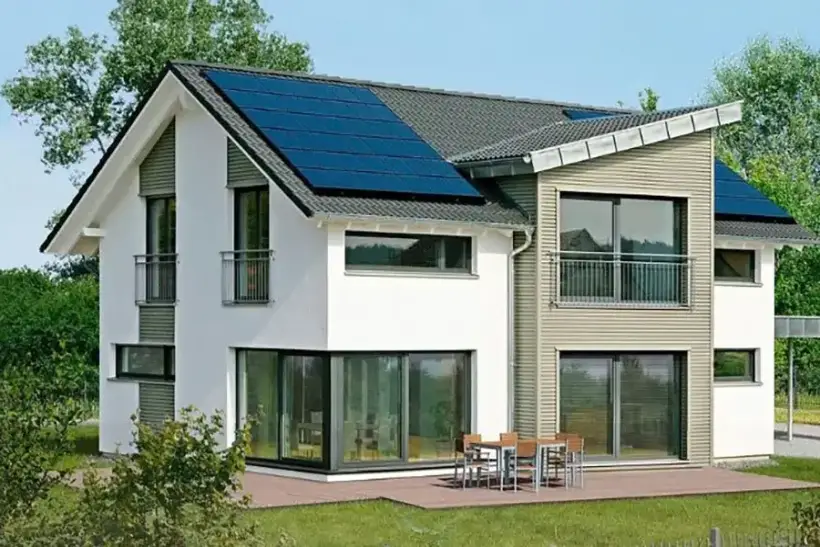
Europe’s prefabricated housing market is entering a new expansion phase
Europe’s prefabricated housing market is moving from a niche construction format into a broader housing strategy as the region struggles with supply shortages, high housing costs and rising building expenses. Mordor Intelligence estimates the European prefabricated housing market at $34.64 billion in 2025, rising to $37.10 billion in 2026 and reaching $52.15 billion by 2031, which implies a 7.05% CAGR over 2026–2031. The report ties that growth to chronic skilled-labour shortages, stronger factory-based production and the appeal of faster, more predictable delivery models.
That growth is unfolding against a much wider housing affordability problem. Eurostat says house prices in the EU rose 53% between 2010 and 2024, rents increased 25%, and construction producer prices for new residential buildings climbed 56% over the same period. In that environment, industrialised and offsite housing systems are gaining a far stronger economic rationale than they had only a few years ago.
Prefab housing is becoming part of European housing policy
The main change is that prefab and modular construction are increasingly being treated not only as technologies, but as tools of housing policy. On its Affordable Housing Plan page, the European Commission says the future European Strategy for Housing Construction will promote advanced construction materials and methods, including offsite and modular construction, together with digitalisation, in order to raise productivity and reduce housing costs.
That gives prefab housing both a market impulse and an institutional one. The EU plan is built around boosting housing supply, mobilising investment and cutting administrative barriers, all of which directly support business models that depend on repeatable designs, faster permitting and scalable factory-led delivery. That is why interest in prefabricated housing is now rising not only from developers and private capital, but also from affordable housing programmes and public-sector procurement frameworks.
The market is still led by single-family units, but multifamily is growing faster
According to Mordor Intelligence, single-family prefab units accounted for 61% of the European market in 2025. Even so, multifamily housing is expected to grow faster, with an 8.7% CAGR through 2031. That matters because it suggests prefab housing in Europe is no longer confined mainly to detached homes and is increasingly moving into denser urban and institutional formats.
Materials are also revealing where the market is headed. Timber held the largest share at 42% in 2025, while cross-laminated timber is projected to be the fastest-growing material with a 9.4% CAGR through 2031. In Europe, that gives timber-based prefab a strong position because climate goals, carbon accounting and low-emission construction rules increasingly reward lower-carbon housing systems.
Germany leads the market while the Netherlands is growing fastest
The geography of the market is becoming more defined. Mordor Intelligence says Germany contributed 35% of European prefab housing revenue in 2025, making it the region’s dominant market. The report also notes that automation levels in leading German factories already exceed 80%, helping reduce cycle times and stabilise product quality.
The Netherlands, however, is identified as the fastest-growing national market, with a forecast CAGR of 9.2% over 2026–2031. Mordor links this to near-instant type-approval frameworks, which underlines how critical standardisation and approval speed are becoming for market growth. In practical terms, regulatory throughput is starting to matter almost as much as land prices or financing costs.
Traditional construction pressures are strengthening the prefab case
The expansion of prefab housing is not just about innovation. It is also about the weakening economics of conventional building. Housing Europe says residential construction in Europe is expected to hit a 10-year low in 2025, while high costs and limited financing continue to constrain both new housing delivery and energy-efficient renovation. That backdrop favours construction models that promise tighter cost control and more reliable delivery schedules.
Eurostat’s cost data reinforce that view. Construction prices for new residential buildings in the EU were 56% higher in 2024 than in 2010. When conventional building costs rise that sharply, industrialised construction methods are more likely to be seen as a structural answer to affordability pressure rather than a fringe design choice.
Prefab housing is increasingly tied to affordable housing supply
The European policy agenda makes prefab especially relevant for the affordable housing segment. The Affordable Housing Plan explicitly calls for boosting housing supply, reducing red tape, accelerating permitting and creating a new pan-European investment platform together with the EIB and national promotional institutions. That means prefab housing may increasingly grow not only through the private low-rise market, but also through urban and institutional housing pipelines.
This is also important from a social housing perspective. Housing Europe notes that public, cooperative and non-profit actors already play a significant counter-cyclical role in several countries: Dutch housing associations deliver one-third of new housing completions, French associations nearly 30%, and municipal housing companies in Finland about one-fifth. If prefab housing becomes more deeply integrated into these supply systems, its growth path could extend well beyond the private detached-home segment.
What it means for investors, developers and Europe’s housing market
The practical conclusion from the Mordor report and EU housing policy is that prefab housing in Europe is no longer a peripheral market. It is growing faster than many traditional housing segments and is being supported by three powerful forces at once: a supply shortage, higher construction costs and an institutional shift toward offsite building. Germany stands out as the largest revenue base, the Netherlands as the fastest-growing national case, and timber and modular formats as the clearest beneficiaries of the current cycle.
As International Investment experts report, the real meaning of Europe’s prefab acceleration is that the housing market is now looking not only for more capital, but for a different production model. As long as housing prices, rents and building costs remain elevated while residential construction stays weak, prefabricated housing is likely to be treated increasingly as an infrastructure answer to the affordability crisis rather than simply an architectural format. For investors, that opens stronger interest in factory production, timber-based systems, urban infill programmes and platforms that can scale housing delivery quickly for cities and affordable housing providers.
FAQ
How large is the European prefabricated housing market in 2026?
Mordor Intelligence estimates the market at $37.10 billion in 2026.
How fast is the market expected to grow?
The forecast is 7.05% CAGR from 2026 to 2031, reaching $52.15 billion by 2031.
Which country leads the market?
Germany is the largest market, contributing 35% of revenue in 2025.
Which segment is growing faster, single-family or multifamily?
Single-family still leads by current share, but multifamily is growing faster with an expected 8.7% CAGR.
Why is prefab housing becoming important for the EU?
Because the European Commission is linking offsite and modular construction to higher housing supply, better construction productivity and lower delivery costs.